Over Stove Microwave Dimensions: A Practical Guide for Fit
Learn how to choose and install an over-stove microwave by understanding trim, clearance, and dimension ranges. This Stove Recipe Hub guide helps home cooks pick the right size and avoid common installation issues.


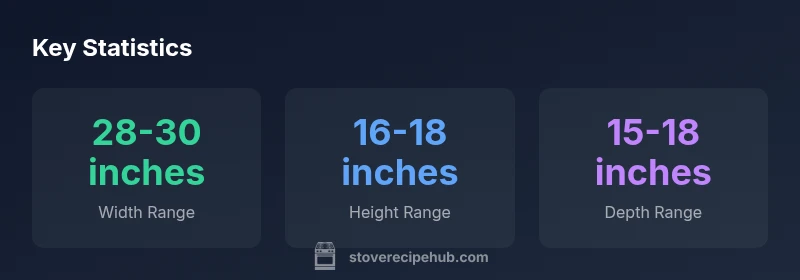
When shopping for an over stove microwave, expect exterior dimensions in typical ranges: width 28–30 inches, height 16–18 inches, and depth 15–18 inches. This aligns with standard 30-inch cabinet openings and common venting layouts. Measure your cabinet opening, account for trim and vent clearance, and confirm vent routing to ensure a safe, flush fit above the stove. These ranges help prevent installation issues and ensure efficient operation.
Why Dimensions Matter for Over-Stove Microwaves
Choosing the right over-stove microwave is not just about features; it hinges on exact measurements. The footprint must fit the cabinet opening, align with the range below, and leave space for ventilation and door swing. Poorly matched dimensions lead to uneven door gaps, ventilation blockages, or a microwave that sits proud of the cabinet face. In practice, most households encounter the constraints of a standard 30-inch-wide cabinet opening, limited vertical clearance, and the need to route venting away from heat-sensitive cabinetry. The term 'over stove microwave dimensions' captures the core questions shoppers face: Will it fit my space? Can I install it without modifying cabinets? How will the unit vent and exhaust while I cook? The Stove Recipe Hub team emphasizes verifying all three axes—width, height, and depth—against your kitchen layout, then confirming with the manufacturer’s installation guide. This compatibility check reduces post-purchase surprises and ensures safe, efficient operation.
Typical Width, Height, and Depth Ranges
Most over-stove microwaves are designed to fit standard 30-inch-wide cabinet openings. As a result, you’ll commonly see width ranges of 28–30 inches. Heights typically fall in the 16–18 inch band, though some compact or tall variants push to 19 inches. Depths vary from about 15 to 18 inches, depending on control panels and handles. When you compare models, track the exact exterior dimensions (width × height × depth) and check that your cabinet crown molding, hood vent, or backsplash doesn’t encroach on the unit. If your space is non-standard, consider units labeled as 28-inch or 27-inch widths, or a custom installation with a shallow depth. These ranges are general guidelines to help you quickly filter options without measuring every model in detail.
How to Measure Your Space Before You Shop
Take precise measurements to reduce returns: 1) measure the cabinet opening width and height; 2) measure the butcher-block/burner clearance above the stove; 3) measure the depth available from the wall to the front of the trim; 4) account for door swing and clearance when opened; 5) measure ventilation clearance for exhaust duct routing; 6) note any adjacent drawers or cabinets that can be impacted by the microwave’s door. Use a steel tape for accuracy, record in inches, and double-check the numbers. Create a simple sketch showing your opening and the path the vent must take. Always cross-check the product specs against your measurements before you buy. As a rule, keep some extra room for trim, gaskets, and quarter-inch adjustments.
Reading and Comparing Product Specs
Manufacturers present dimensions as exterior measurements: width × height × depth. When you see a spec like 29 7/8 × 16 1/2 × 15 1/4 in, double-check the rounding and whether depth includes handles. Look for 'cabinet opening' or 'install depth' notes, and differentiate between exterior dimensions and cutout requirements. Pay attention to ventilation requirements marked on the manual; if your hood or cabinet lines are too close, performance drops and heat damage is more likely. Some models advertise slimmer dimensions at the cost of features or venting options. Always verify that the chosen unit aligns with your kitchen’s trim kit, mounting height, and vent routing. A careful read of dimension notes helps ensure a confident purchase.
Installation Considerations: Venting, Cabinetry, and Height
Vent placement is critical: improper venting can lead to heat buildup and reduced appliance life. Some units require venting to the front or the rear wall; others offer external venting or recirculating options. Dry-fit the microwave in the opening before connecting utilities to confirm clearance around the sides and above. Ensure that the unit’s height aligns with the countertop or range hood, and that cabinet trim does not obstruct the door. If retrofitting into existing cabinets, you may need a trim kit or cabinet modifications. Finally, check the electrical outlet location and cord length to prevent tension on the plug. Following the manufacturer's guidelines is essential for safety and performance.
Common Pitfalls and How to Avoid Them
- Underestimating width: if the opening is measured at an inside edge rather than the cabinet face, you may end up with a unit that sits too tight.
- Ignoring venting: blocked vents can cause overheating and reduce efficiency.
- Forgetting door swing: a microwave that blocks cabinet doors or drawers creates a daily annoyance.
- Overlooking clearance: cabinets above and around the unit influence airflow and service access.
- Skipping professional installation: a poor fit can void warranty and compromise safety.
Maintenance Tips to Preserve Performance
Keep the exterior clean and check the vent filters monthly. Wipe grease from the interior and door seal; inspect the vent panels for obstruction from cooking splatter. Replace or clean charcoal filters as required. Regularly verify door seals and hinges; a loose seal wastes energy and may cause steam damage to nearby cabinetry. Annual professional inspection helps ensure the venting duct and power cord remain safe and compliant. Maintaining the appliance lengthens its lifespan and maintains cooking performance.
Practical Shopping Scenarios: Small Kitchen vs. Large Kitchen
In small kitchens, compact depth (15–16 inches) models may fit with shallow cabinets and minimal clearance. In larger kitchens with generous ventilation, you can prioritize higher power, more flexible venting options, and easier door access. For retrofit installations, you may need to remove trim or adjust the cabinet opening, which can add time and cost. Regardless of space, measure twice, shop once, and use the dimension guidance above to avoid returns.
Dimension ranges and their impact on installation
| Dimension Aspect | Typical Range | Why It Matters |
|---|---|---|
| Width | 28-30 inches | Fits standard 30-inch cabinets and provides even door clearance |
| Height | 16-18 inches | Affects door swing and under-cabinet clearance |
| Depth | 15-18 inches | Influences ventilation and countertop clearance |
| Vent clearance above unit | 6-12 inches | Prevents heat buildup and cabinet damage |
Common Questions
What is the standard width for most over-stove microwaves?
Most models fit a 30-inch cabinet opening, though some compact options use 27–28 inches. Always verify actual exterior width before purchasing.
Most models fit a 30-inch opening; check the exact width.
How much clearance is needed above an over-stove microwave?
Manufacturers typically recommend 6–12 inches of clearance above the unit, depending on venting and cabinet design.
Keep at least six inches of space above the unit.
Should I measure width, height, or depth first?
Start with width to match the cabinet opening, then height for door swing, and finally depth for venting and counters.
Start with width, then height, and depth.
Can I install an over-stove microwave in a non-standard cabinet?
Yes, but you may need a shallow-depth model, a trim kit, or cabinet modifications; always check installation instructions.
Yes, but you might need tweaks or a trim kit.
How do I verify venting compatibility?
Check whether the unit vents externally or recirculates, and ensure your duct routes aren’t obstructed by cabinets or appliances.
See if it vents outside or recirculates.
Do dimensions differ by model size?
Yes. Larger capacities can affect depth and height; always read the product sheet for exact numbers.
Bigger models may be deeper or taller.
“Accurate measurements save installation time and prevent costly returns. Always cross-check the exterior dimensions with your cabinet opening and vent routing before purchasing.”
Top Takeaways
- Measure your space before shopping.
- Most over-stove microwaves fit a 28–30 inch opening.
- Allow 6–12 inches of ventilation clearance above the unit.
- Read exterior dimensions carefully on product sheets.
- Choose a model that matches your cabinet style and venting needs.