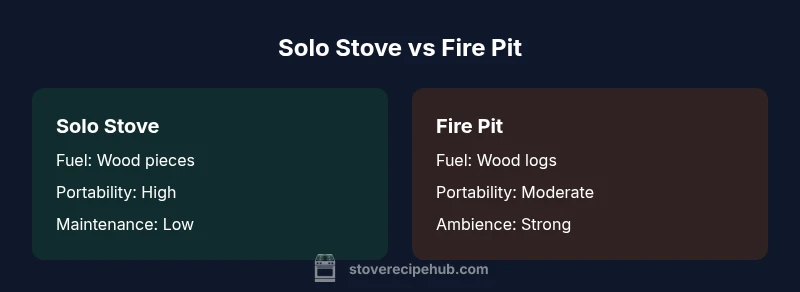
Solo Stove vs Fire Pit: A Practical Comparison Guide
An objective, feature-by-feature comparison of solo stove vs fire pit, focusing on fuel, efficiency, portability, safety, and cost to help home cooks and outdoor enthusiasts choose the best option.


For most home setups, a solo stove typically delivers cleaner burns, higher portability, and easier cleanup than a traditional fire pit. If you prioritize ambiance, larger flames, and a lower upfront footprint, a fire pit has its advantages. The best choice depends on where you cook, how you entertain, and your safety preferences.
What is a Solo Stove and What is a Fire Pit?
According to Stove Recipe Hub, solo stove vs fire pit represents two distinct approaches to outdoor heat and cooking. In this section we define each option, their typical designs, and core use cases. A Solo Stove is a compact, stainless steel unit designed to optimize air flow and burn efficiency with a small fuel load. It uses a concentric burn chamber to improve combustion and reduce smoke. A traditional fire pit is a broader category that ranges from simple metal bowls on a stand to large stone-ring installations. It delivers a dramatic flame profile and a social, gathering-focused ambiance, but can produce more smoke and require more fuel management. For home cooks and casual backyard gatherings, the choice often hinges on portability, cleanup, safety, and the mood you want to set. Throughout this guide, we compare solo stove vs fire pit in practical terms to help you decide what fits your space and routines. The takeaway: the right choice balances convenience with character, not just flame size.
Core Differences at a Glance
Here is a concise framework to understand the core differences between solo stove and fire pit, focusing on what matters most to home cooks and DIY enthusiasts. Portability, fuel source, cleanup, and safety are the big four. If you value moving the setup between deck and trail, the solo stove typically wins on portability and tidy burns. If you want a large, visible flame for ambience and a social focal point, a traditional fire pit often excels, provided you follow local rules and safety precautions. This quick scan helps you frame the deeper analysis that follows in later sections.
Fuel Type and Clean Burn: Wood, Gas, and the Smoke Factor
Fuel type is the first practical divide between solo stove and fire pit. A Solo Stove typically relies on wood pieces or small twigs, optimized through secondary combustion to minimize smoke and maximize heat with less ash. It excels when fuel is plentiful but compact storage is essential. A traditional fire pit often uses wood logs and, depending on design, can support gas inserts for cleaner, smoke-free ambiance. Gas-fired pits are common where open flames are restricted or where a constant flame is desired without wood consumption. When you compare solo stove vs fire pit on emissions and air quality, expect the wood-burning option to produce more visible smoke, especially in windy conditions, while gas options minimize smoke but value ambiance differently. Consider local burn bans and ventilation needs when choosing.
Heat Output, Efficiency, and Flame Control
Heat output and efficiency hinge on design and fuel. A Solo Stove’s closed combustion chamber concentrates heat and reduces wasted energy, delivering impressive efficiency for its size. It excels at quick, clean burns and predictable flame discipline, which helps when you’re cooking or keeping a small area warm. A traditional fire pit generates a broader flame footprint with a larger visible blaze, offering dramatic warmth and social energy but often sacrificing some efficiency due to radiant heat loss and wind-driven embers. Flame control is typically easier with a solid, enclosed unit than with an open pit. When assessing solo stove vs fire pit heat performance, think about space constraints, desired flame character, and safety margins for nearby seating and heat-sensitive materials.
Portability, Setup, and Aesthetics
Portability and setup shape daily usability. A compact Solo Stove is lightweight, fits on balconies, decks, and camping setups, and usually requires less space for storage. Setup can be nearly instant, with straightforward ignition and minimal ash cleanup. A fire pit varies from portable, small metal bowls to large stone rings that demand more assembly, larger storage space, and more fuel. Aesthetics also matter: some homeowners favor the rustic glow of a fire pit, while others prefer the modern, minimal look of a compact stove. The difference in design directly affects where you place the unit, how often you move it, and how guests interact with the flame at social gatherings.
Safety Considerations and Maintenance
Safety is a core consideration in choosing between solo stove vs fire pit. Enclosed stoves reduce flare-ups and loftier embers, enhancing risk management on wooden decks and high-traffic patios. Open pits require protective screens, spark guards, and routine ash disposal, which can be a maintenance drag but offers a classic fire experience. Maintenance for a Solo Stove is typically easier: periodic cleaning, ash removal, and inspection of burn chambers. Fire pits demand more ash clearing, occasional grate or ring checks, and careful fuel management to minimize clinkers and uneven burning. For both options, keep a water source or extinguisher nearby, respect wind conditions, and follow manufacturer guidelines for distance from structures and combustible materials.
Cost, Value, and Longevity
Cost considerations are central when deciding between solo stove vs fire pit. Solo Stoves generally come in a price range that favors portability and compactness, with models designed for travel and small spaces. Fire pits span a broader spectrum, from inexpensive portable bowls to higher-end built-in stone features that can transform a patio. While upfront costs differ, total cost of ownership should account for fuel, maintenance, and replacement parts. Stove Recipe Hub analysis shows that for small spaces, mobility, and frequent relocation, the compact stove often yields lower long-term costs due to reduced fuel waste and cleanup.
Comparison
| Feature | Solo Stove | Fire Pit |
|---|---|---|
| Fuel type | Wood (twigs, small pieces) | Wood logs (and options for gas) |
| Heat efficiency | High efficiency due to enclosed burn chamber | Broad flame; lower efficiency in windy conditions |
| Portability | High portability; compact and easy to move | Lower portability; larger footprint and heavier |
| Best for | Cooking on the go, small spaces, quick setup | Ambience and social gatherings, larger flame |
| Maintenance | Minimal ash; easy cleaning | More ash and fuel handling; more cleanup |
| Cost range | $60-$300 | $150-$800 |
Upsides
- Better fuel efficiency and cleaner burns for compact setups
- Portable and lightweight for camping or balconies
- Lower maintenance and easier cleanup in many cases
- Safer on decks with built-in safety features
Downsides
- Limited maximum flame size and ambience versus large pits
- Upfront cost can be higher for premium models
- Not always ideal for very large gatherings or dramatic flames
- Some models require wind and weather considerations
Solo stove generally wins on portability and clean burns; fire pits win on ambience and large-scale flames
If portability and quick, clean burns are priorities, choose a solo stove. If you want a dramatic, social flame and a larger hot area, a traditional fire pit may be better. The best choice depends on your space, use cases, and safety needs.
Common Questions
Which is better for camping: a Solo Stove or a traditional fire pit?
For camping, a Solo Stove often wins on portability and clean burning, while a compact fire pit may be preferable when ambiance and social interaction are the focus. Consider weight, fuel availability, and wind exposure.
For camping, go with the lighter, cleaner option if you want easy setup and less smoke; choose a small fire pit if you value a bigger flame at camp gatherings.
Is a Solo Stove safer than a traditional fire pit?
Safer is a relative term. Solo Stoves reduce smoke and embers due to enclosed burn chambers, which helps on decks and near structures. Open fire pits require screens, clearances, and careful placement to minimize flare-ups.
Generally safer for small spaces because of the contained burn, but you must still follow all safety guidelines.
How do fuel costs compare between the two options?
Fuel costs depend on usage and fuel type. Wood for a stove or pit can be inexpensive if you source it responsibly; gas-fire pits may cost more per hour but offer cleaner burns. Planning for seasonality helps you estimate ongoing costs.
Fuel costs vary; wood is cheap if you collect responsibly, gas is steadier but pricier over time.
Can these be used indoors or in enclosed spaces?
Both options are designed for outdoor use. Using open flames indoors is dangerous and typically prohibited due to carbon monoxide buildup. Always follow manufacturer guidelines and local regulations for outdoor-only use.
No, use outdoors only unless the product is explicitly rated for indoor use.
What maintenance steps are common to both options?
Regular cleaning after use, ash removal for wood-burning options, and inspection of racks, burn chambers, and spark screens are common. Store in a dry area to prevent rust and check seals or hardware periodically.
Clean after use, check for rust, and store dry to extend life.
What should I consider for heat output and safety around seating?
Measure the space and position seating at safe distances. A flame that’s too close to furniture or overhangs increases risk. Choose a model with a stable heat zone and consider wind direction for consistent performance.
Keep seating at safe distances and pick a model that matches your space.
Top Takeaways
- Prioritize space and mobility to pick a stove over a pit
- Consider ambient flame size for social gatherings
- Factor local burn rules and ventilation into your decision
- Account for maintenance needs when budgeting long-term
- Use fuel availability and costs to compare total ownership