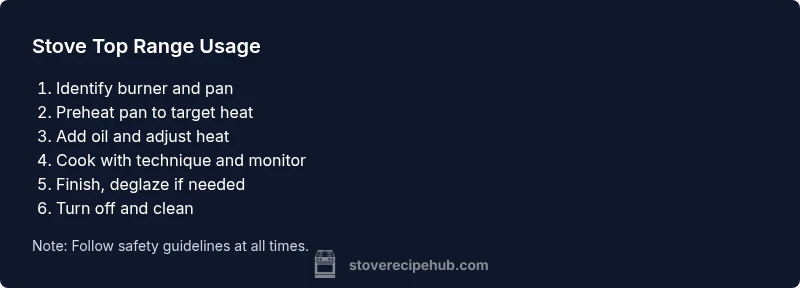
Stove Top Range Mastery: A Practical Guide
Learn to operate, maintain, and maximize efficiency on your stove top range with practical safety tips, heat-control techniques, and everyday cooking guidance for home cooks.


With this guide, you will learn to operate a stove top range safely, select the right burner, control heat precisely, and perform essential maintenance to keep cookware performing well. Before you start, assemble essential tools, choose compatible pans, and review basic safety steps. The goal is confident, consistent stove-top cooking for everyday meals.
What is a stove top range and how it differs from a traditional oven
The stove top range refers to the burners mounted on the cooktop of a range, used for pan-based cooking. It differs from a traditional oven, which provides enclosed heating for baking or roasting. On a stove top range you control heat directly at the pan, offering faster feedback and more immediate changes in temperature. This distinction matters for home cooks who rely on searing, sautéing, simmering, or quick reductions. The stove top range can be powered by gas, electric coils, or induction, each with its own advantages in terms of control, response time, and heat distribution. Understanding the differences helps you select the right equipment and adapt techniques to your kitchen setup. If you’re upgrading from a single oven to a dual cooking surface, you’ll gain more flexibility for weeknight meals and multitasking.
Core components: burners, controls, and safety features
A stove top range comprises several key parts that influence performance. Burners come in various sizes and styles—from true gas flames to electric coils or induction plates. Controls can be knobs or digital interfaces, and they translate your intent into heat changes at the pan. Safety features may include flame-failure devices, automatic shut-off, and child-lock mechanisms. Regular inspection ensures knobs move smoothly, burner ports are clear, and ignition is reliable. When choosing cookware, look for flat, stable bottoms that make even contact with the heat source. Cleaning and maintenance of grates, burner caps, and the surrounding surface prevent hot spots and uneven heating.
Essential heat control principles for precise cooking
Heat control is the backbone of good stove top cooking. High heat is best for searing or bringing liquids to a rapid boil, while medium heat maintains steady simmering. Low heat is for gentle reductions and keeping sauces warm without scorching. When cooking, preheat the pan to the desired surface temperature, then adjust the burner to maintain the target heat. Indirect heat can be used for delicate tasks like simmering a sauce while keeping the pan bottom evenly heated. Understanding how different burners respond helps you reproduce results reliably.
Safe operation: steps for starting, simmering, and shutting off
Safety starts before ignition. Ensure proper ventilation and remove any flammable items from the vicinity. Turn on the correct burner, select a suitable pan, and preheat for 1–2 minutes. Add oil or fat if required, then adjust heat to the recipe’s target. Maintain focus, stir or flip as needed, and avoid leaving a hot pan unattended on a high flame. When finished, turn off the burner, wait for the pan to cool slightly, and clean the surfaces. Regularly check for gas odors or unusual smells—if detected, stop and ventilate, then contact a professional if needed.
Cleaning and maintenance routine to extend life
A simple routine keeps a stove top range performing well. After cooking, wipe down surfaces with a mild soapy solution and a non-abrasive cloth. Clean burner ports or coils according to manufacturer guidelines, and remove any trapped debris from grates. Deep-clean at least monthly, focusing on heat distribution surfaces and vent areas. For induction or glass tops, use a non-abrasive cleaner to avoid scratches. A light routine reduces buildup and helps maintain efficient heat transfer.
Fuel types and burner configurations
Stove tops may be gas, electric, or induction. Gas provides instant feedback and strong high heat; electric coils offer durability and even heat across larger pans; induction delivers rapid response with high efficiency when paired with magnetic cookware. Burner configurations vary: single large burner for wide pots, dual or triple rings for multitasking, and auxiliary simmer burners for delicate sauces. Understanding your fuel type and burner arrangement helps you select cookware and set expectations for speed, control, and energy use.
Common cooking techniques on a stove top range
Searing, sautéing, and deglazing are staples for stove top cooking. Start with a hot pan and minimal oil to seal in flavor, then reduce heat to finish or simmer. Browning onions, searing meat, and building rich sauces all rely on precise heat and timing. For sauces, deglaze with a small amount of liquid to lift fond and incorporate it back into the sauce. Braising in a shallow pan with a lid is another technique that benefits from a controlled, moderate heat.
Troubleshooting common issues
Uneven heating often stems from warped pans, poor contact, or dirty burner surfaces. If a burner won’t ignite, ensure fuel is available, the gas line is clear, and the ignition electrode is clean. If temperatures seem off, recalibrate by testing with a thermometer and comparing against expected ranges. If heat feels inconsistent, inspect the pan bottom and burner ports for obstructions. For continued problems, consult the manufacturer’s guidelines or a licensed technician.
Energy efficiency and cost-saving tips
Efficiency on a stove top range improves with proper pan size, matched burner to pan, and keeping the surface clean. Use a lid to trap heat when simmering or boiling, and avoid preheating longer than necessary. Plan meals to minimize the number of burner changes, and maintain cookware in good condition to maximize heat transfer. Proper ventilation can also reduce energy loss by directing heat more effectively.
Getting the most from accessories and cookware
Invest in heavy-bottom pans for even heat distribution and durable lids for moisture retention. Avoid warped or dented cookware that won’t sit flat on the burner. Use silicone handles or gloves to protect hands during high-heat work and consider a cast iron skillet for multitasking—searing on the stove, then transferring to finish in the oven if needed. Proper storage and organization reduce time spent searching for the right tool.
Quick safety drills and checklists
- Check that the area around the stove is clear of flammable items. - Ensure ventilation is on or windows are open. - Test a burner ignition and flame stability before cooking. - Keep a metal lid or baking sheet handy to smother small flare-ups. - Turn off all burners when not in use and store cookware safely. - Inspect cords, electrical outlets, and gas connections regularly for signs of wear.
A practical weekly maintenance plan (example schedule)
Daily: wipe spills, check knobs for smooth operation, and return cookware to its storage. Weekly: inspect burner ports, clean grates, and wipe the control panel. Monthly: inspect hoses or gas lines where applicable, test ignition reliability, and perform a deeper clean of all surfaces. Maintain a simple log to track issues and repairs over time.
Tools & Materials
- Stovetop-compatible cookware set (at least one skillet and one pot)(Flat, stable bottoms for even contact with heat.)
- Oven mitts or heat-resistant gloves(Protect hands during high-heat tasks.)
- Silicone-tipped tongs(Gentle grip; avoids scratching cookware.)
- Dish soap, warm water, non-scratch scrub pad(For routine cleaning and grease removal.)
- Soft cloth or microfiber towel(For quick wipe-downs and polishing.)
- Instant-read thermometer (optional but recommended)(Useful for precise temperature targets.)
- Timer or smartphone timer(Helps manage simmering and searing durations.)
- Ventilation (range hood or window)(Improves airflow and comfort during cooking.)
Steps
Estimated time: 30-45 minutes
- 1
Select the right burner and pan
Choose a burner sized to the pan bottom for even heat distribution. Place the pan on the burner and stabilize it before turning on the flame or coil.
Tip: Matching pan size to burner prevents heat waste and minimizes wobble. - 2
Preheat the pan
Turn the burner to your target setting and allow the pan to preheat for 1–2 minutes. A properly preheated pan improves sear and reduces sticking.
Tip: Test heat by a light spray of water; it should dance and evaporate quickly. - 3
Add oil and adjust heat
Add oil or fat, wait until it shimmers, then adjust the heat to maintain the desired cooking temperature.
Tip: Overheating oil can smoke; back off if you see smoke and reduce heat slightly. - 4
Cook with technique
Use bold motion for searing, then reduce heat for sautéing or simmering. Stir or turn as needed to promote even browning.
Tip: Avoid overcrowding the pan to prevent steaming and uneven browning. - 5
Finish and deglaze if needed
Finish cooking, remove from heat, and deglaze the pan if building a sauce by adding a small amount of liquid and scraping up fond.
Tip: Deglazing adds depth of flavor with minimal effort. - 6
Turn off and clean
Turn off the burner, allow the pan to cool briefly, and clean surfaces to remove residue.
Tip: Keep a routine cleaning schedule to preserve burner performance.
Common Questions
What is the difference between gas, electric, and induction stove tops?
Gas tops offer immediate heat response and high heat capabilities. Electric tops are durable with steady heat but slower to respond. Induction tops heat cookware directly via magnetic fields and require compatible cookware. Each type affects heat control and cookware choice.
Gas, electric, and induction each offer different heat responses and cookware needs. Induction is fast and efficient but needs magnetic pots.
How do I know which burner setting to use for a task?
Start with medium heat as a baseline, then adjust up for searing and down for simmering. Use a thermometer or visual cues to judge the stage of the cook.
Begin at medium heat and adjust based on how the food looks and smells as it cooks.
Is it safe to leave a burner unattended?
Unattended cooking is risky. Stay nearby for high-heat tasks and never leave a gas flame unattended. For long simmering, use timers and a covered pot if appropriate.
No—monitor high-heat cooking and set a timer if you need to step away briefly.
How often should I clean burners and grates?
Clean burners and grates after heavy use and at least once a week to prevent buildup that reduces efficiency and heat distribution.
Clean them regularly; a little maintenance goes a long way.
What ventilation do I need when using a stove top range?
Ensure proper ventilation with a range hood or open window to remove heat, steam, and cooking odors, especially when using high heat.
Have ventilation when you cook to keep the kitchen comfortable and safe.
Watch Video
Top Takeaways
- Learn heat control fundamentals for reliable stove-top results
- Safety comes first: ventilation, ignition, and mindful handling
- Maintenance and cleaning prevent performance drop
- Choose appropriate cookware for your burner type
- Practice common techniques to build confidence