Stove vs Burner: A Practical Home-Cook Guide
A detailed, analytical comparison of stoves and burners, covering control, heat distribution, space, cost, and maintenance to help home cooks choose the right setup.


Stove vs burner is not a simple brand choice; it’s about capacity, control, and space. For multi-dish cooking, a full stove with multiple burners and a larger surface offers greater versatility, while a standalone burner excels in small kitchens or portable setups. The best option balances meal size, layout, and maintenance needs. See our detailed comparison below.
Why the Stove vs Burner Debate Matters
In everyday cooking, the difference between a stove and a burner is more than semantics; it determines how you plan meals, manage time, and organize your kitchen workflow. The stove is typically a fixed, multi-burner appliance integrated into a countertop or standalone range, while a burner can be a single portable unit or a single burner on a compact electric or gas setup. When you think in terms of stove vs burner, you’re weighing capacity, control, installation requirements, and long-term costs. According to Stove Recipe Hub, choosing the right configuration can transform weeknight dinners into efficient, predictable tasks rather than improvisational bursts. The Stove Recipe Hub team found that households cooking for families or entertaining guests frequently benefit from more burners and better pan coverage, which reduces the juggling of pots and pans. Conversely, renters or urban dwellers with tight spaces often lean toward one or two portable burners, prioritizing flexibility and cost. The goal of this article is to help you quantify these differences, translate them into real-world decisions, and avoid over-investing in features you may never use.
Core Differences at a Glance
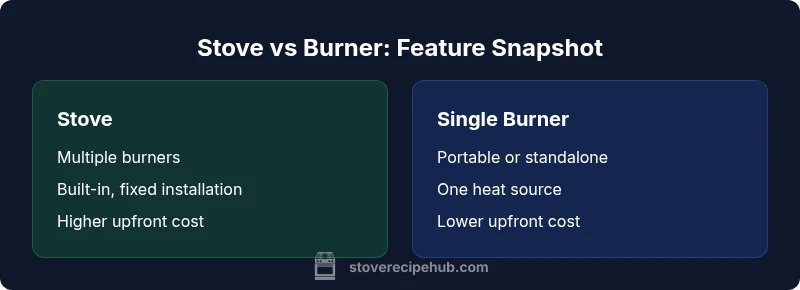
- Scope and footprint: A stove, typically a built-in range with multiple burners and sometimes an oven, is designed for sustained, multi-pot cooking. A burner, whether portable or a standalone unit, focuses on one heat source and minimal footprint. This fundamental difference drives most of the other trade-offs.
- Control interfaces: Stoves offer multiple knobs and often separate controls for each burner; a single burner setup centers on a single control, sometimes with simple on/off or adjustable flame or heat settings.
- Installation considerations: A stove usually requires a dedicated installation, ventilation, and clearance, whereas a burner can be a plug-in appliance or sit on a countertop, requiring far less space.
- Maintenance and longevity: Stoves tend to be built for heavier use and longer lifespans but demand more regular upkeep; burners are easier to clean and repair but may need more frequent part replacements if heavily used.
- Versatility vs portability: Stoves excel in versatility for diverse cooking styles; burners shine in portability and flexibility, especially in small kitchens or for outdoor use.
- Price and total cost: Stoves involve higher upfront costs and potential installation charges; burners can be cheaper initially and scaled with portable setups, though long-term costs may vary with use.
Comparison
| Feature | Stove | Single Burner |
|---|---|---|
| Control precision | High: multiple knobs for each burner, allows coordinated multi-dish planning | Medium: single knob with standard heat settings for one heat source |
| Heat distribution | Broad, even heat across several burners; ideal for large pans and simultaneous dishes | Focused heat on one burner; best for single-dish cooking or quick tasks |
| Fuel type | Gas or electric range with multiple burners (often includes an oven) | Typically a gas or electric unit with one heat source; portable or built-in options available |
| Installation/Portability | Fixed installation in kitchen; requires ventilation and dedicated space | Portable or countertop-friendly; easy to move and reposition |
| Maintenance | More surfaces and components to clean and service; longer-term upkeep expected | Fewer parts; easier to clean but parts may wear out with heavy use |
| Price/Cost of ownership | Higher upfront cost; installation charges may apply; can last for decades with proper care | Lower upfront cost; ongoing costs depend on usage and replacements; discretionary upgrades common |
| Best For | Large households, serious multi-dish cooking, and space for a full range | Small kitchens, apartments, or portable setups needing a single heat source |
Upsides
- Versatility with multiple burners enables simultaneous cooking.
- Better heat control for batch cooking and recipes requiring timing precision.
- Integrated ovens and broilers in many stoves expand cooking options.
- Longer lifespan and sturdy construction when properly maintained.
- More reliable if you regularly cook for groups or entertain.
Downsides
- Higher upfront cost and potential installation complexity.
- Larger footprint requires more space and ventilation.
- Maintenance can be more involved and time-consuming.
- Less flexibility if your space constraints demand portability.
Stove generally offers superior versatility for serious home cooking; a single burner wins in compact spaces and portability.
Choose a stove if you cook large meals or value a built-in oven; opt for a burner when space, cost, and portability are your primary concerns.
Common Questions
What is the practical difference between a stove and a burner?
A stove is typically a fixed, multi-burner appliance (often with an oven) designed for diverse cooking tasks. A burner is a single heat source, which can be portable or part of a smaller setup. The practical difference lies in capacity, footprint, and how you plan meals—stoves support complex, multi-dish cooking, while burners excel at space-saving or portable needs.
In short, stoves are bigger and more versatile; burners are smaller and more portable. Both have their place depending on your space and cooking style.
Can I replace a stove with a burner for everyday cooking?
You can, but it will limit your simultaneous cooking options. A single burner can handle basic tasks, but you’ll miss the ability to run multiple pots at once without planning around timing. Consider your typical meal size and whether you frequently cook in parallel.
A burner can cover many simple meals, but you’ll likely cook fewer things at the same time compared to a stove.
Are gas stoves safer than electric burners?
Safety depends on installation, ventilation, and usage rather than the fuel type alone. Gas requires proper venting and leak checks; electric units reduce gas-related risks but still demand safe handling of hot surfaces. Always follow manufacturer guidelines and local codes.
Both can be safe when installed correctly and used wisely; ventilation and good maintenance matter most.
What maintenance does a stove require?
Stoves typically need regular cleaning of burners, grates, and knobs, plus periodic inspection of gas lines or electrical connections. If your stove has an oven, the oven cavity and seals also require occasional servicing. Routine calibration and vent cleaning support consistent performance.
Keep burners clean, check knobs, and service the oven seals if your stove includes an oven.
Is a portable burner sufficient for everyday cooking in an apartment?
A portable burner can cover basic daily cooking in small spaces, but it may limit how you cook larger meals or entertain guests. If your typical week involves quick meals or limited space, a compact burner can be practical; for regular batch cooking, a small stove might be better.
A portable burner can work daily, but you might outgrow it if you cook larger meals often.
Top Takeaways
- Assess your space before choosing equipment size.
- Prioritize heat control and pan compatibility for your common recipes.
- Factor in ventilation needs and maintenance effort.
- Portability matters for renters or outdoor cooking enthusiasts.