Stove vs Hob: A Comprehensive Side-by-Side Guide
An analytical guide to stove vs hob: definitions, heat control, installation, and maintenance, with practical tips for home cooks deciding between a freestanding range and a separate cooktop.


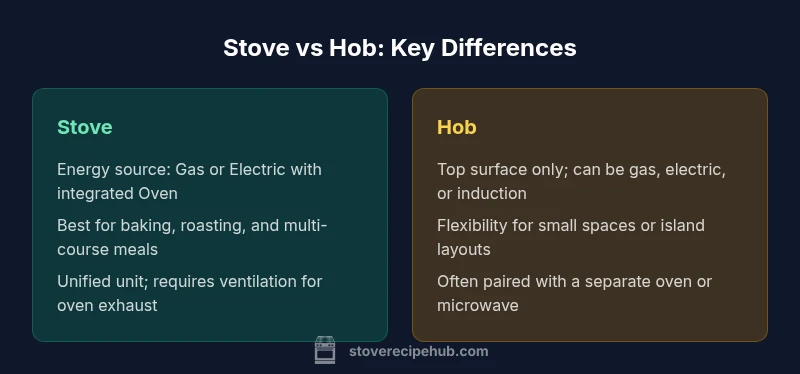
Stove vs hob is a terminology and design comparison that matters in how you cook at home. A stove (freestanding range) combines an oven with a top cook surface, while a hob is the top cooking area on its own, often found as part of a separate unit. Choice depends on space, fuel, and your cooking habits.
What 'stove' and 'hob' mean in modern kitchens
According to Stove Recipe Hub, the terms stove and hob are sometimes used interchangeably, but they describe different configurations with distinct implications for how you cook. In many markets a stove refers to a freestanding appliance that combines a cooktop with an integrated oven, and sometimes a warming drawer. A hob, by contrast, is the flat top surface you place pots on, which may sit on a standalone unit or be part of a larger range; it can be gas, electric, or induction. For home cooks, clarifying stove vs hob matters because heat distribution, pan stability, and access to baking features vary between formats. The Stove Recipe Hub team emphasizes planning around your most frequent tasks—sautéing, searing, simmering, and baking—rather than relying on terminology alone. By aligning your kitchen layout and purchase choices with how you actually cook, you reduce surprises and improve consistency. In practice, many kitchens blend both concepts; understanding what you own helps you optimize ventilation, cookware selection, and future upgrades. This article uses stove vs hob as a framework to compare capabilities, costs, and everyday usability across common kitchen layouts.
Fuel types and heat control differences
Heat is the most visible distinction in stove vs hob. A freestanding stove, often gas-powered or electric, provides burners on the top and an integrated oven, enabling simultaneous top heat and baking. A hob focuses on the top surface and may sit as part of a separate unit or as the top section of a range; hobs can be gas, electric, or induction, with heat control that emphasizes direct pan response rather than oven functionality. For home cooks, gas stoves deliver robust flame heat; induction hobs offer rapid, precise adjustments with efficient energy use, while electric coils on a standalone hob can be slower to respond. The Stove Recipe Hub analysis shows that heat-up times and temperature stability affect everything from delicate sauces to high-heat searing. If your weekly menu includes roasting or baking, a stove with an oven offers a unified workflow; if your meals revolve around quick sautéing with limited space, a single high-quality hob may suffice.
Installation and space considerations
Choosing between stove vs hob inevitably touches on layout and space. A stove (freestanding range) requires a dedicated footprint, proper ventilation, and a hood or venting system to handle oven exhaust and combustion byproducts. It often needs a gas line or a dedicated electrical circuit and can be heavier to install. A hob, by comparison, is usually more flexible in placement: it can sit on a kitchen island, be integrated into a peninsula, or sit atop a counter with a separate oven or microwave nearby. Because hobs require less overall cabinet space and may not demand a full venting setup, they can be ideal for compact kitchens or renters. However, ensure there is adequate clearance for heat, spill management, and safe handling of cookware, especially with induction or gas options that behave differently from traditional coil tops.
Maintenance, cleaning, and longevity
Maintenance considerations differ between stove and hob configurations. A stove with an oven adds an additional cleaning task: you must keep the oven cavity and door clean, and you’ll service burners and ignition systems over time. A hob top usually presents a simpler surface to wipe down; gas, electric, or induction burners each have their own care requirements, such as burner caps, drip trays, and ceramic glass for some electric tops. Longevity is influenced by usage patterns: baking frequency, spill management, and the quality of the controls determine how long the appliance remains efficient. Regular cleaning after cooking and periodic checks of gas lines or electrical connections can prevent small issues from becoming expensive repairs. With thoughtful maintenance, both stove and hob setups can last many years, but the total lifetime cost depends on your cooking style and the warranty terms.
Performance under common stove-top tasks
Home cooks switch between tasks such as simmering, browning, searing, and delicate reductions; the choice between stove vs hob can alter outcomes. Stoves with ovens are advantageous for weeknight roasts and baked desserts, offering predictable temperatures and fan-assisted modes that stabilize oven heat. Hobs excel at quick adjustments and precise pan control for sautéing and delicate reductions, especially induction tops that respond instantly to changes in heat. Pan compatibility matters: cast iron and stainless steel work well on many gas stoves, while induction hobs require ferromagnetic cookware. The Stove Recipe Hub team notes that for searing meats, the immediate heat from gas burners is often preferred, whereas induction tops shine with precise simmering. In practice, many cooks will pair a high-quality hob with a separate oven or a small countertop oven to balance speed, control, and capacity.
Cost and value: price ranges and lifecycle
Price and value are central to any stove vs hob decision. A full stove (freestanding range with oven) tends to have a higher upfront cost and a longer installation process, driven by the oven, burners, and exhaust needs. A separate hob, whether gas or electric or induction, generally costs less upfront and can fit tighter spaces, but you may need to buy or rent a separate oven if baking is part of your routine. Lifecycle costs depend on energy efficiency, maintenance frequency, and parts availability. Some homeowners see greater long-term value from a single combined unit that covers both top cooking and baking; others prefer modular setups that let them upgrade the hob or oven separately without replacing the entire system. The Stove Recipe Hub analysis suggests evaluating total energy use, potential maintenance costs, and resale value when weighing options.
Safety and regulatory considerations
Safety is a core factor when weighing stove vs hob. Gas installations require compliant piping, proper ventilation, and professional installation; improper setup can lead to gas leaks or carbon monoxide exposure. Electric and induction tops require grounded outlets and appropriate electrical circuits, with attention to cord management and heat dissipation. In both setups, keep flammable items away from burners, use pan lids to control splatter, and follow manufacturer safety guidelines for ignition and emergency shut-off. Regulatory standards vary by region, but common-sense practices—keeping children away from hot surfaces, turning off burners when not in use, and scheduling regular inspections—help prevent accidents. Stove Recipe Hub emphasizes investing in a certified installer for gas lines and ensuring proper hood ventilation for any full-range unit.
Design and kitchen layout implications
Your choice between stove and hob influences the overall kitchen design. A stove with an oven creates a focal point and often drives the layout of cabinets, counter space, and a chimney hood. It can support a balanced workflow with a natural cooking triangle: oven, sink, and refrigerator; the oven location often guides traffic flow and storage. A standalone hob offers flexibility: you can place it on an island, on a peninsula, or in a compact corner, reducing the need for a large appliance enclosure. This layout flexibility matters in small apartments or open-plan spaces where your cooking zone must integrate with seating and dining. Pan placement, heat radiance, and splash protection should all factor into the visual rhythm and ergonomics of the kitchen. When planning, think about what you cook most, where you entertain, and how much cleanup you want to manage in front of guests.
When to choose stove vs hob: best-for scenarios
Most households benefit from a stove if baking, roasting, or multi-course meals are common: the integrated oven streamlines workflows and keeps everything in one location. Choose a hob if you have limited space, a tight budget, or a preference for modular upgrades—especially if you can pair it with a separate oven or a small wall oven. For renters or tiny kitchens, a compact induction hob paired with a microwave-oven can offer reliable performance without committing to a full range. For dedicated chefs, a professional-grade range with heavy-duty gas burners and a convection oven may be the ideal long-term investment. In all cases, consider your cooking style, space, and how you’ll maintain the appliance over time. Stove Recipe Hub’s framework helps you decide based on real-world use, not marketing promises.
Authority references and further reading
For deeper understanding of appliance safety and energy considerations, consult authoritative sources. This section lists widely recognized references you can explore to complement the guidance above and verify best practices in real-world scenarios: - https://www.energy.gov - https://www.nist.gov - https://www.osha.gov
Comparison
| Feature | Stove (freestanding range with oven) | Hob (cooktop) |
|---|---|---|
| Fuel type | Gas or electric range with oven | Gas/electric/induction cooktop |
| Heat control and responsiveness | Integrated oven and burners; oven bake mode included | Top-surface control; depends on heat source (gas/induction/electric) |
| Maintenance and cleaning | Oven plus top burners; more surfaces to clean | Top surface only; simpler for cleaning; oven may be separate |
| Space and installation | Requires built-in footprint, ventilation hood, possible gas line | More flexible placement; may sit on counter or island |
| Energy efficiency & lifecycle | Combined appliance efficiency; oven adds load | Top-only efficiency depends on heat source; oven may be separate |
| Best for | Versatile cooking including baking and roasting | Compact spaces or budget-focused setups |
Upsides
- Versatile cooking with integrated oven for baking and roasting
- Easier to upgrade whole unit or keep components separate
- Often higher resale value in certain markets
- Broad cookware compatibility with gas, electric, and induction options
Downsides
- Higher upfront cost and more complex installation
- Larger footprint and ventilation requirements
- Potentially higher maintenance costs for multiple components
- Top-only hob may limit baking capabilities unless paired with an oven
Stove is generally the more versatile choice for home cooks, while a hob offers space-saving flexibility and lower upfront cost.
If baking and roasting are frequent, the stove wins for one-stop functionality. If you prioritize compact design, lower initial investment, or modular upgrades, a hob can be the smarter fit.
Common Questions
What is the main difference between a stove and a hob?
The main difference is that a stove (freestanding range) combines a cooktop with an integrated oven, while a hob is the top cooking surface that may sit on a separate base or countertop and can be gas, electric, or induction. This affects baking capability, heat control, and layout decisions.
A stove includes an oven; a hob is just the top surface. This changes how you bake versus how you cook on the surface.
Which setup is better for baking-heavy cooking?
For frequent baking, a stove with an integrated oven provides a more streamlined workflow and consistent oven performance. A hob can work if you pair it with a separate oven, but that adds another appliance and potential layout considerations.
If you bake a lot, a stove is usually the simpler, more integrated choice.
Are stoves harder to install than hobs?
Stoves often require more space, ventilation, and in some cases gas line work or a dedicated electrical circuit. Hobs are generally easier to place and may need less extensive venting, especially if used with a separate oven.
Stoves can be more involved to install due to the oven and venting requirements.
What safety considerations should I keep in mind?
Gas installations require professional setup and venting; induction and electric tops need proper electrical wiring and clearance. Across both, keep flammables away, use lids to manage splatter, and follow manufacturer safety guidelines.
Safety first: get proper installation, keep areas clear, and follow manuals.
How does cost typically compare between stove and hob?
Stoves usually cost more upfront due to the oven and integrated components, plus installation. Hobs cost less to start, but you may need a separate oven, which adds to the total over time.
Expect higher upfront cost for a stove; hob setups can be cheaper initially.
What cookware works best with induction hobs?
Induction hobs require ferromagnetic cookware, such as cast iron or some stainless steel. Non-magnetic cookware won’t heat efficiently, so you may need to upgrade certain pots.
With induction, use magnetic pots for best results.
Top Takeaways
- Prioritize your cooking routines to guide the choice
- Stove = top heat plus oven; hob = top heat, possible separate oven
- Consider space, ventilation, and future upgrades
- Induction hobs offer fast, precise control; gas stoves excel at high heat
- Factor maintenance and lifetime costs into the decision