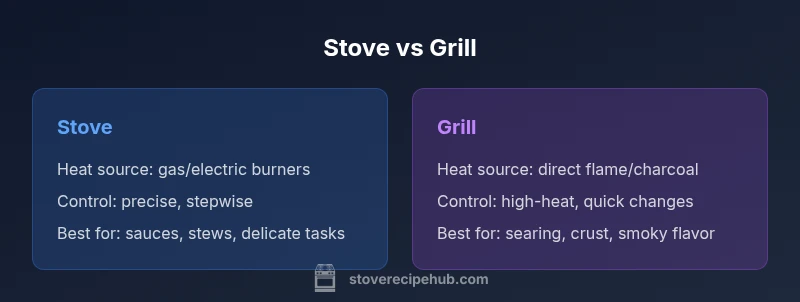
Stove vs Grill: An Analytical Comparison for Home Cooks
Explore stove vs grill in depth: performance, flavor, setup, and when to use each. Learn how to optimize both for everyday cooking and outdoor grilling.


Stove-top cooking offers precise temperature control, even heat distribution, and year-round reliability. Grills excel at high-heat searing, smoky flavor, and outdoor social cooking. For most home cooks, a combination approach works best: use the stove for everyday tasks and the grill for flavor and special occasions. Stoves enable simmering and delicate sauces, while grills elevate proteins and vegetables with caramelization.
Defining Stove vs Grill
In this article we unpack the classic kitchen debate: stove vs grill. A stove refers to the indoor range with burners and an oven, designed for controlled, precise cooking across a wide range of temperatures. A grill, by contrast, is an outdoor or countertop device that relies on direct radiant heat from flames or hot coals. The question isn’t which is universally better, but which tool is best for a given task. As you learn the differences, you’ll see why many households benefit from having both options available. According to Stove Recipe Hub, understanding the core strengths and limitations of each can help you plan meals that maximize flavor, texture, and efficiency. When you know what each tool excels at, you can design workflows that let you sear on the grill, simmer on the stove, and finish with a quick broil in the oven if needed.
Heat Sources and Control
The stove relies on controlled heat from gas or electric elements, which can be dialed up or down with precision. This makes it ideal for delicate sauces, braises, and even sautéing. Grills use radiant heat—from gas or charcoal—and sometimes wood chunks. This fuel creates intense, direct heat with high surface temperatures for searing. Temperature control on a grill is less instantaneous than a stove, and external factors like wind and ambient temperature can influence heat consistency. Both tools benefit from good technique: preheating, managing air flow, and using appropriate cookware.
Flavor, Texture, and Smoke
Flavor is a central differentiator. Grilling naturally imparts smoky, charred notes that are difficult to reproduce indoors without accessories like smokers or smoke boxes. A hot grill surface fosters rapid Maillard reactions, giving crusts and caramelization. A stove offers cleaner, more predictable flavor development, which is essential for sauces, stews, and delicate proteins where overpowering smoke would be undesirable. You can replicate some smokiness on a stove with smoking chips, liquid smoke, or a sous-vide finish with a brief sear, but the flavor footprint will differ from a traditional grill.
Weather, Space, and Practicality
Indoor cooking with a stove is not weather-dependent, which makes it indispensable for weekday meals and apartment living. Grilling outdoors is weather-dependent and requires space, safety considerations, and sometimes storage for charcoal, propane, or wood. If you live in a small apartment, a compact indoor grill or a grill pan can approximate outdoor searing, but you’ll trade some flavor and markings for convenience. For many families, a hybrid approach—stove for weeknights and grill for weekend cooks—offers the best balance of reliability and flavor.
Versatility, Cookware, and Maintenance
Stoves support a broad range of cookware: straight-sided pans, skillets, woks, and Dutch ovens. They also enable multi-step techniques like deglazing, reduction, and simmering with precise temperature control. Grills favor rugged cookware designed to tolerate high heat, such as cast-iron grates and sturdy grill pans. Cleaning differs as well: stovetop residue is typically wiped away, and ovens are cleaned via self-clean cycles or manual scrubbing. Grills require grate cleaning and ash or grease management, with charcoal grills needing ash disposal and proper ventilation.
Speed, Efficiency, and Resource Use
Grills win on speed when searing large cuts or producing a strong crust quickly, but the overall cooking time may extend if indirect heat or resting periods are involved. Stovetops generally offer quicker turnarounds for everyday meals, with straightforward timing and predictable heat curves. Efficiency hinges on preheating, pan choice, and heat management. Gas stoves tend to be economical for many households, while charcoal grills add fuel costs but deliver flavor that many home cooks prize.
Safety, Ventilation, and Setup
Safety considerations differ. Indoor cooking requires good ventilation and awareness of gas leaks or flare-ups, with hood fans helping to manage humidity and smoke. Outdoor grilling reduces indoor smoke but introduces flare-ups and outdoor safety risks. A well-organized setup—clear pathways, flame management, and appropriate safety gear—reduces risk for both tools. Maintenance is also different: cast-iron on stoves benefits from seasoning and periodic reseasoning, while grill grates require thorough cleaning to prevent grease fires and ensure even heating.
Cost, Value, and Long-Term Planning
Cost considerations split by use-case. A sturdy stove may represent a larger upfront investment but serves daily cooking reliably with long-term usability. Grills vary widely in price, fuel type, and maintenance needs; charcoal grills are affordable but ongoing fuel costs add up, while gas grills offer convenient control with ongoing fuel expenses. The decision hinges on how often you grill, your climate, and how much outdoor space you have. Budgeting for both can be strategic: a solid stove plus a compact grill could cover most cooking scenarios without overcommitting to one method.
Recipe Adaptation: Moving Between Stove and Grill
Translating a stovetop recipe to grill-friendly execution requires shifting heat placement, timing, and cookware. For sauces and braises, finish on the stove or use indirect heat on the grill. For proteins, set up direct high heat for searing and then move to indirect heat to finish cooking. Vegetables benefit from quick grilling for color and texture while maintaining moisture on the inside. Conversely, flipping a grill recipe to the stove often means using a heavy skillet for high-heat searing and then simmering or roasting as needed. Practically, plan ahead: know your finicky steps that require steady heat and those that benefit from high-heat marks or smoke.
Practical Decision Framework: When to Use Each
A practical framework helps you decide quickly: if you need precision, repeatability, or delicate handling (sauces, eggs, emulsions), pick the stove. If you crave crust, sear, or smoky flavor, choose the grill. Consider space, weather, and time: for busy weekdays indoors, the stove is your friend; for weekend feasts or entertaining, the grill shines. In many kitchens a hybrid workflow—starting on the grill for searing and finishing on the stove or in the oven—provides the best of both worlds. The key is recognizing the strengths and aligning tasks with the right tool.
Getting the Most from Both: Workflows and Checklists
Create a simple, repeatable workflow to maximize both tools. Start with a preheat routine: preheat your grill to high heat and your stove to the target simmer. Use grill marks for flavor, then finish with a quick rest for juices. Maintain clean, well-seasoned cookware to preserve nonstick performance and flavor. Keep a log of what works best for certain proteins, vegetables, and sauces so you can replicate successful outcomes. Finally, tailor your kitchen layout to minimize transitions: store essential grill tools near the cooking area, but ensure safe storage for grills and fuels away from heat sources.
Comparison
| Feature | Stove | Grill |
|---|---|---|
| Heat source | Gas or electric burners with precise knob control | Direct radiant heat from flames or charcoal/wood; variable heat depending on fuel and setup |
| Temperature range | Wide, with precise simmer to high boil | Very high peak temps; more variable depending on wind and fuel |
| Flavor profile | Neutral to sauce-friendly base; smoke possible with accessories | Distinct smoky, charred flavors from fuel and grate interaction |
| Indoor vs outdoor use | Indoor, year-round; integrated with oven and ventilation | Outdoor or countertop; weather and space dependent |
| Versatility with cookware | Broad range of pots, pans, and specialty cookware | Grill-safe cookware; grill grates and cast iron work best |
| Cleanup and maintenance | Standard kitchen cleanup; oven cleaning separate | Grates, ash (charcoal), and grease management; periodic deep clean |
| Best for | Everyday cooking, sauces, and delicate techniques | Searing, crusts, outdoor cooking, and social meals |
Upsides
- Precise temperature control and consistent results on the stove
- Year-round use irrespective of weather
- Wide cookware compatibility and multi-step techniques
- Faster implementation for everyday weeknight cooking
Downsides
- Grill flavor can be inconsistent if wind or fuel supply fluctuates
- Outdoor setup requires space and safety planning
- Stovetop flavor is typically milder unless smoky methods are used
- Grills need regular cleaning and ash/fuel management
Both tools have distinct, valuable roles; neither is universally superior.
Use the stove for precision, control, and year-round cooking. Use the grill for high-heat searing and smoky flavor. A hybrid approach typically delivers the best overall results for most homes.
Common Questions
Can I use a grill indoors safely?
Charcoal grills should never be used indoors due to carbon monoxide risk; gas grills can also pose safety concerns indoors and typically require proper ventilation. If you need grill-like results indoors, use a grill pan or a countertop electric grill and follow manufacturer safety guidelines.
Charcoal grills should never be used indoors. If you need grill-like results indoors, opt for a grill pan or electric grill and follow safety guidelines.
Is a grill really necessary for searing steak?
Not strictly. A very hot skillet, especially cast iron, can achieve excellent sear marks and caramelization comparable to a grill. The key is reaching high surface temperatures and controlling moisture.
A hot cast-iron skillet can give you a great sear without a grill. The secret is high heat and dry surface.
How do I adapt stovetop recipes for grilling?
Identify steps that require direct heat or simmering and translate them to the grill. Use indirect heat to finish cooking thicker cuts, and move sauces to the stove if needed. Preheat, oil grates, and monitor temperatures closely.
Use direct heat for searing, indirect heat to finish cooking, and move sauces to the stove if needed.
Which is cheaper to operate long-term?
Operational costs depend on fuel type, usage, and local prices. A gas stove generally has predictable costs, while charcoal or wood grilling adds variable fuel expenses. Plan according to your climate, cooking frequency, and energy mix.
Gas stoves usually cost predictably; charcoal or wood grills add fuel costs that vary with use.
Can I get smoky flavor on a stove?
Yes, to an extent. You can introduce smoke with chips, wood planks, or a smoking gun, but the depth of flavor will differ from direct charcoal grilling. Use these methods for finishing touches rather than full smoke sessions.
You can add smoke with chips or a smoking gun, but it won’t be as deep as charcoal grilling.
What safety tips matter most for grilling?
Keep a safe distance from flammable materials, manage grease buildup, and use long-handled tools. For gas grills, check hoses for leaks and ensure proper ventilation when used outdoors. Always have a fire extinguisher or baking soda on hand in case of flare-ups.
Keep kids and pets away, clean grease, and watch for flare-ups. Have a extinguisher handy just in case.
Top Takeaways
- Think of stove and grill as complementary tools, not rivals
- Reserve stove for delicate, precise tasks and sauces
- Use the grill for crust, sear, and outdoor flavor
- Plan recipes to leverage the strengths of both
- Maintain good ventilation and proper safety practices