Stove vs Oven Difference: A Practical Comparison for Home Cooks
Explore the stove or oven difference with an analytical comparison. Learn how heat delivery, best-use scenarios, and maintenance impact everyday cooking results for home cooks.


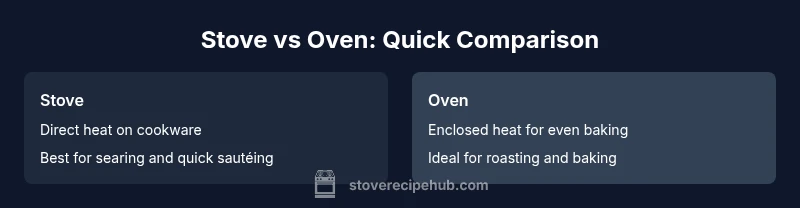
The stove and oven differ chiefly in where heat is applied and which techniques they support. The stove (cooktop) delivers rapid, adjustable heat for frying, sautéing, and boiling, while the oven provides steady, enclosed heat ideal for baking, roasting, and braising. Understanding the stove or oven difference helps plan meals more efficiently and choose the right tool for each task.
Understanding the Core Difference Between a Stove and an Oven
In everyday cooking, the terms stove and oven are often used interchangeably, but the stove or oven difference is meaningful for technique, timing, and texture. The stove refers to the cooktop surface, where heat is applied directly to pots and pans. The oven is a separate enclosed chamber that heats the air inside to surround the food. According to Stove Recipe Hub, mastering when to use each appliance is a foundational skill for home cooks who want consistent results. This distinction matters for everything from weeknight sauces to Sunday roasts, because heat delivery shapes texture, moisture, and browning. By recognizing the stove or oven difference, you can plan multi-step meals more efficiently and avoid common missteps that lead to uneven browning or undercooking.
Design and Heat Delivery: Cooktop vs Enclosed Chamber
The cooktop on a stove delivers heat directly to the bottom of the cookware. Gas stoves use flame, while electric coil or induction tops convert electricity into surface heat. This direct contact means rapid changes in temperature and precise control, essential for tasks like searing steak or reducing a sauce. In contrast, an oven encloses the food and heats the air around it. Convection, radiative heat, and sometimes a broil element create a uniform environment, helping with even browning and moisture retention. The stove or oven difference here is one of physical design and heat distribution: open heat against a steel pan versus enclosed heat around a dish. For beginners, this means starting methods on the stovetop can lead to fast results, while roasting benefits from steady, ambient heat. The Stove Recipe Hub Team emphasizes matching the technique to the tool for reliable texture and doneness.
When to Use the Stove Versus the Oven
Not every dish needs an oven or a stove; context matters. Sautéing vegetables, boiling pasta, or finishing a sauce benefits from the rapid temperature changes of the stovetop. Baking bread, roasting vegetables, or cooking a casserole requires the oven's stable environment. There are also timing considerations: stovetops respond in seconds, while ovens require longer preheating and cook times. For many weeknight meals, you’ll alternate between both tools. In more complex dinners, you may start on the stove to brown ingredients, then transfer to the oven to finish with even heat. The stove or oven difference is most evident in texture: crisp edges from a hot pan vs a uniformly baked interior. This segment will also address how to plan multi-dish meals around a single appliance to maximize efficiency.
Techniques Best Suited for Each Appliance
On the stove: high-heat searing, delicate sautéing, and quick reductions are best on the cooktop. Induction surfaces offer precise control and fast response, while gas stoves deliver lively flame adjustments. On the oven: baking, roasting, and slow braising benefit from retained heat, even air distribution, and moisture management. Convection ovens add faster cooking and browning, while conventional ovens rely on radiant heat for gentle browning. In practice, many recipes call for a hybrid approach: start on the stove to develop flavor, then transfer to the oven to finish. This technique highlights the stove or oven difference in practice. The goal is reproducible texture: a crust that forms quickly in a hot pan, and a tender interior from steady oven heat.
Temperature Control, Timing, and Precision
Stoves offer immediate feedback: a knob turned one notch can change heat quickly, and some models display precise heat levels. Ovens trade immediacy for stability; you may need to preheat and manage larger temperature changes less frequently. Precision is about matching the cooking task to the correct heat environment. Chefs often ride the line between the two tools: they use the stove for tempering or finishing, and the oven for uniform cooking. For practical home cooking, set expectations: preheat times for ovens can add to total cook time, while stovetop cooking requires constant attention to avoid scorching or uneven browning. Stove Recipe Hub’s guidance indicates planning around preheat and simmer cycles helps minimize guesswork and improves repeatability.
Energy Use, Efficiency, and Maintenance Considerations
From an energy perspective, the stove’s heat is concentrated and often responds quickly, but you may lose some heat to the surrounding air or cookware. Ovens, especially when used for long bake times, consume energy due to the enclosed, continuously heated space. Efficiency can be task-dependent: small, frequent tasks on the stove may be more energy-efficient than heating the entire oven for a single item. Maintenance for both appliances matters: keep burners clean to maintain even flame, ensure oven seals are intact to prevent heat loss, and follow manufacturer guidelines for cleaning. Stove Recipe Hub Analysis, 2026, suggests inspecting gaskets, burners, and venting to prevent performance drops. Consistent cleaning reduces hot spots and improves safety. This section underscores the practical reality that energy and maintenance intersect with how you plan meals across a week.
Safety Considerations and Common Mistakes
Safety tops the list when comparing the stove and oven. Gas stoves require good ventilation and proper flame adjustments to avoid gas buildup or flare-ups. Electric stoves can heat unevenly if cookware is warped. Ovens need door seals intact and proper rack positions to ensure even heat distribution and avoid accidental burns. Common mistakes include blocking vents, leaving handles protruding from hot cookware, or attempting to bake on a stovetop pan without a proper oven substitute. The Stove Recipe Hub Team recommends routine checks and following the manual for safety features. Practically, use oven mitts, keep flammables away from burners, and monitor preheat indicators. Small changes in practice—like using a timer and keeping a surface-free kitchen—could significantly reduce risk.
Recipe Adaptations When One Appliance Isn’t Available
In many homes, you may not have a full kitchen setup, so adapting recipes becomes essential. If you only have a stove, you can simulate some oven-like results by finishing dishes under a broiler or in a covered pan with a lid to trap heat. Conversely, if you only have an oven, you can still achieve crisp textures on vegetables by using a hot roasting technique and a tossing with hot oil. The stove or oven difference becomes practical when you plan meals; consider bake times, skin color, moisture retention, and browning. The Stove Recipe Hub Team notes that with some planning, you can achieve reliable results even with limited equipment.
Real-World Scenarios: How Home Cooks Use Each Tool
Consider a weeknight pasta with a quick tomato sauce: you start by sautéing garlic and onions on the stove, then reduce to simmer, plating with al dente pasta. For roasted chicken and vegetables, the oven’s even heat delivers browning on the outside and succulence inside. For a crusty bread, the oven is essential to achieve the correct rise and crust. If you’re making a pan-seared steak, finish briefly in the oven to ensure pinkness inside. These examples illustrate the stove or oven difference in action across common kitchen tasks. The key takeaway is simple: map the technique to the tool that offers the best heat profile for texture and doneness.
Common Misconceptions Debunked
- A stove can replace an oven for all baking tasks. False; while some recipes can be adapted, uniform results require the oven.
- An oven is always more energy-intensive. Not always; depends on usage patterns and dish size.
- Gas stoves are inherently unsafe. When used properly with ventilation, gas stoves are safe.
- Electric ovens don't brown food well. Many units brown effectively; convection models improve browning.
This block challenges myths and clarifies how to think about both tools in real kitchens.
Quick Reference: When to Reach for Which Tool
- Searing meat or reducing sauces quickly: Stove.
- Baking bread, roasting vegetables, casseroles: Oven.
- Finishing on high heat after a sear: Stove then Oven.
- Limited space or budget: Prioritize one robust tool but plan to optimize usage.
- Weeknight planning: Align flavor development with heat exposure for best texture.
Final Practical Guidance for Home Cooks
To make the stove or oven difference work in your favor, start with a simple plan: list your most frequent tasks (sautéing, boiling, baking, roasting), and assign each to the appropriate appliance. Keep cookware compatible and consider investing in a reliable oven thermometer and a good range-hood or ventilation. Practice makes precision; over time, you’ll recognize how a minute on the stove changes texture, or how five minutes in the oven reshapes moisture and browning. The Stove Recipe Hub Team encourages experimenting with hybrids—sauté, then finish in the oven—to build confidence and consistency across recipes.
Comparison
| Feature | Stove | Oven |
|---|---|---|
| Primary function | Direct heat to cookware for rapid cooking | Enclosed heat for ambient cooking and baking |
| Heat delivery | Open surface heat (gas/electric/induction) | Contained heat in a chamber with air circulation |
| Best for | Searing, sautéing, boiling, and quick reductions | Baking, roasting, braising, and slow cooking |
| Temperature control | Immediate, knob-to-heat response | Slower, steady heat with preheat requirements |
| Size/place | Cooktop may be part of a range or standalone | Oven is built-in or standalone within a cabinet |
| Energy considerations | Heat can be lost to surrounding air; immediate demand | Heat retained inside; efficiency improves with insulation |
Upsides
- Faster heat-up and precise control on the cooktop
- Dedicated oven provides even baking and roasting results
- Versatile for multitasking when both appliances are available
- Separate units can simplify cleaning and maintenance
Downsides
- Higher upfront cost and space requirements
- More complex to operate when relying on a single appliance
- Energy use may be higher if both appliances run simultaneously
Choose the tool that best fits the task; stove for rapid surface cooking, oven for even, enclosed heat.
The stove and oven serve complementary roles. Understanding their strengths helps you plan meals efficiently, achieve better textures, and minimize cooking time. In practice, most households benefit from using both tools in tandem for a wider range of techniques.
Common Questions
What is the key difference between a stove and an oven?
The stove provides direct heat on the cooktop for rapid cooking, while the oven encloses food and heats the interior air for even baking and roasting. This fundamental stove or oven difference shapes texture and doneness across recipes.
The stove heats cookware on the surface for quick tasks, while the oven heats inside a closed chamber for even baking.
Can I bake using a stove?
Traditional baking requires an oven. Some adaptations on a stove can mimic dry-heat results using a covered pan, broiler, or combo methods, but you won’t get standard oven baking performance.
Baking on a stove is not typical; you’d need an oven for true baking results.
Which appliance is more energy-efficient for most tasks?
Energy efficiency depends on the task. Stovetops excel for quick, small tasks, while ovens can be efficient for large-volume cooking. Overall, use the tool that minimizes unnecessary heat exposure and cook time.
It depends on the task, but quick stovetop work can be more energy-efficient for small jobs.
How can I adapt recipes if I only have one appliance?
Plan to finish on the available tool. For stove-only kitchens, finish braises or roasts with broiling or resting in a covered pot. For oven-only kitchens, use surface searing before transferring to the oven for final cooking when possible.
Adapt by maximizing the strengths of the available appliance and using finishing steps as needed.
What maintenance tips improve performance for both appliances?
Regular cleaning, checking seals and gaskets, and following the manufacturer’s maintenance guidelines help keep heat even and safe. Periodic inspections of burners, racks, and door seals prevent performance drops.
Clean surfaces, check seals, and follow the manual for safety and performance.
Are gas stoves different in performance from electric ovens?
Gas stoves and electric ovens are separate components; gas or electric in any combination affects heat response and control. Proper ventilation and cookware compatibility remain important for safe, effective cooking.
Gas heat and electric heat behave differently, but both require proper ventilation and good cookware.
Top Takeaways
- Identify your common tasks to guide tool choice
- Use the stove for searing and quick reductions
- Rely on the oven for baking, roasting, and braising
- Plan multi-dish meals to maximize appliance use
- Maintain ventilation, cleanliness, and proper cookware