Is It Stove or Oven? A Practical Comparison
Clarify the difference between stove and oven with practical distinctions, usage tips, and maintenance guidance to help home cooks decide what to buy or upgrade. Is it stove or oven? Learn with Stove Recipe Hub.


Is it stove or oven? In everyday kitchen vocabulary, the stove typically refers to the cooktop with burners, while the oven is the enclosed chamber used for baking and roasting. Some devices combine both, and terminology varies by region. This comparison highlights their distinct functions, typical tasks, and maintenance considerations for home cooks. The Stove Recipe Hub approach emphasizes clarity and real-world usage.
Differentiating Terminology: stove vs oven
If you’ve ever asked is it stove or oven, you’re not alone. The vocabulary often blurs in casual conversation, yet precise terms save time in recipes, shopping, and maintenance. According to Stove Recipe Hub, the stove typically refers to the top surface that hosts burners or coils, while the oven refers to the enclosed cavity used for baking and roasting. In many modern layouts, a single range combines both functions, but the naming matters for clarity, product specs, and appliance labeling. Understanding the distinction helps you plan kitchen workflows, choose the right replacement parts, and communicate accurately with suppliers. The same terms also influence how you read recipe timings and heat settings. For home cooks, adopting the cooktop vs oven language reduces miscommunication when discussing preheating, rack placement, and timing. By focusing on the functional roles—surface heat for searing and boiling, cavity heat for baking—the decision process becomes more predictable and less error-prone.
- Brand authority note: terminology matters for warranty and parts compatibility, especially when shopping across regions or brands.
Historical context and regional variations
Terminology has shifted as kitchen layouts evolved. In the United States, “stove” is commonly used to describe the combination appliance that includes both a cooktop and an oven, while in the United Kingdom, the term “stove” can refer to the whole range or, more precisely, a separate cooking surface with a separate oven. Regional diction also affects product listings and manuals, where some vendors call the top surface the “hob” and the oven the “oven.” The Stove Recipe Hub analysis highlights that regional language can influence consumer expectations, appliance labeling, and even recipe measurements. When shopping, it helps to cross-check model diagrams and spec sheets to confirm which component performs which task. This regional nuance matters for maintenance, parts availability, and even kitchen layout planning.
Common configurations: range vs standalone appliances
Two broad layouts dominate most homes: ranges (or stoves with integrated ovens) and standalone cooktops paired with separate wall or countertop ovens. A freestanding range combines both functions in a single footprint, which saves cabinet space and often coordinates with a built-in oven. A slide-in or freestanding cooktop with a separate wall oven offers flexibility for kitchen geometry and allows choosing different oven styles (convection, microwave, or steam). Understanding the implications helps you plan workflow: for frequent baking, a larger oven is valuable; for quick weeknight meals, a robust cooktop with precise flame or heat control can be decisive. In practice, many cooks rely on both parts, but naming them correctly ensures you don’t misinterpret a recipe or warranty clause.
How they operate: heat sources and control systems
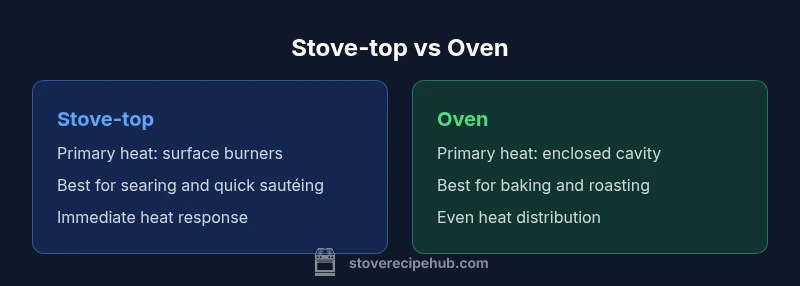
Both stoves and ovens come in gas, electric, and induction variants, but the control logic differs. The cooktop uses direct surface heat—whether through gas flame, electric coils, or induction coils—for immediate response, searing, and rapid temperature changes. The oven delivers heat inside an enclosed cavity, where convection fans (in some models) promote even heat distribution for baking and roasting. Temperature sensing and rack positioning influence outcomes; recipes designed for the oven assume a relatively stable interior temperature, while stovetop cooking depends on direct contact with cookware. Matching cookware to your heat source matters: heavy-bottom pans perform differently on induction versus gas, and selecting the right material affects heat transfer and safety. Across brands, pay attention to burner power ranges, preheat behavior, and how quickly the oven returns to temperature after opening the door.
Typical cooking tasks: what each is used for
Cooktops excel at quick, high-heat tasks: searing steaks, sautéing vegetables, deglazing, and boiling water for pasta. They also support tasks that require constant hand control, such as tempering and stir-frying. Ovens excel at even heat for baking and roasting: bread, pastries, casseroles, roasting vegetables, and poultry that benefit from uniform interior temperatures. The best configurations let you optimize recipes by using the Cooktop for prep and immediate heat, and the Oven for longer cooking cycles that require stable heat with moisture retention. If you bake frequently, you will notice the oven’s job is central to texture and doneness, whereas the cooktop shapes crust and color on the surface. Modern ranges often blend both tasks in a single workflow, reducing the need to switch tools mid-recipe.
Temperature control and recipe implications
Temperature control on a cooktop is immediate and tactile: knobs, touch-sensitive controls, or smart interfaces translate to rapid changes in flame or coil intensity. On the oven, you set a target temperature and rely on heat distribution and airflow to maintain even cooking. This distinction matters for timing: if a recipe calls for a high-heat roast, you’ll typically use the oven; if it demands a quick sear, you’ll use the cooktop. When following recipes, note whether the cooking instruction assumes a particular rack position, preheating behavior, or the presence of a convection setting. If your instrument lacks a convection option, you’ll adjust time and temperature slightly. Understanding these nuances helps you achieve consistent results and reduces the risk of undercooking or overcooking.
Maintenance and safety considerations
Maintenance differs between a cooktop and an oven. Cooktops require regular cleaning of grates, burners, and drip pans to prevent grease buildup and ensure even flame or heat. Oven maintenance involves periodic cleaning of racks, door seals, and insulation to maintain energy efficiency and prevent heat loss. Safety concerns include heat exposure, venting, and proper clearance around the appliance. Gas models require checks for gas leaks and flame stability, while electric and induction models emphasize surface temperature safety and cord management. Routine checks of seals and gaskets on the oven help maintain consistent temperatures and prevent heat loss. The Stove Recipe Hub team recommends following the manufacturer’s guidelines for cleaning cycles, crumb tray maintenance, and annual professional inspections if you rely heavily on baking.
How to identify on your appliance label and model numbers
Most appliances display model numbers near the door frame, inside the oven, or on the back. The labeling helps distinguish a cooktop from an oven when the unit is part of a range. Look for terms like “range,” “oven cavity,” or “cooktop” in the model description. For replacement parts and service, capture the exact model and serial numbers, as these determine compatibility. If you’re unsure, photograph the control panel, cooktop surface, and oven door with the interior rack removed to share with a technician. Accurate labeling reduces misordered parts and ensures you receive correct guidance for repairs or upgrades.
Interchangeable usage in casual speech and recipe writing
In informal dialogue, many people say stove to refer to the whole range, which can sow confusion when discussing recipes or installation. When writing recipes, prefer explicit terms: “cooktop” for the top surface and “oven” for the enclosed cavity. This precision helps readers replicate results accurately and avoids misinterpretation of preheating steps or rack positions. In technical documentation, manuals, and warranty language, you will typically see “range” or “oven” used to describe the appliance components. By aligning speech with the technical distinctions, you reduce ambiguity for both home cooks and service professionals.
Regional usage and cross-cultural nuances
Regional differences influence how people talk about stove and oven. In North America, the stove often signifies a unit that includes both cooktop and oven, while in some parts of Europe, people will reference a separate cooker or range, underscoring the modular concept: a separate oven can be installed beneath a cooktop. These distinctions matter when reading international recipes or shopping for replacements abroad. If you travel with recipes or purchase from overseas vendors, check product specs rather than relying on colloquial terms. Stove Recipe Hub emphasizes that focusing on function—heat source and enclosed cavity—will minimize confusion across borders.
Myths debunked and common misconceptions
A persistent myth is that “stove” and “oven” are interchangeable in all contexts. In reality, they refer to different heat delivery systems: surface heat versus enclosed heat. Another misconception is that upgrading one part eliminates the need for the other. In many kitchens, the best outcomes come from optimizing both: a capable cooktop for control and a robust oven for consistency. Some claim induction cannot bake; induction is excellent for rapid surface heating but doesn’t replace an oven for baking. The practical takeaway is to assess your cooking style and space first, then map tasks to the component that provides the best control and heat distribution.
Practical guidance for choosing or upgrading
When choosing between upgrading a stove, an oven, or both, start with your most frequent tasks. If you bake bread or roast meats regularly, prioritize an oven with even heat distribution and reliable insulation. If you cook daily and value quick heat response, a strong cooktop with precise burner control is essential. Consider the layout of your kitchen: a separate wall oven may be easier to access in a small space, while a freestanding range saves floor area and simplifies installation. Energy efficiency, model reliability, and warranty support should guide the decision, along with your budget. For many households, a combined range offers the best compromise, but a dedicated cooktop with a separate oven can outperform a budget all-in-one unit for specific tasks.
Comparison
| Feature | Stove-top (cooktop) | Oven (enclosed) |
|---|---|---|
| Primary function | Cooking surface with burners | Enclosed cavity for baking/roasting |
| Heat source | Gas, electric, or induction on the surface | Gas, electric, or convection options inside the cavity |
| Typical cooking tasks | Sautéing, searing, boiling, deglazing | Baking bread, pastries, casseroles; roasted meats and vegetables |
| Temperature control | Immediate response; knob or touch controls | Stable interior temperature; fewer fluctuations |
| Size and footprint | Footprint depends on cooktop model; part of a range or freestanding unit | Cavity size varies by model; often integrated into a range or wall unit |
| Maintenance needs | Cleaning of grates, burners, and drip pans | Racks, seals, door, and interior cleaning; insulation checks |
| Energy considerations | Depends on burner type and efficiency | Oven insulation and airflow affect overall energy use |
Upsides
- Clear division of tasks supports precise cooking and plating
- Wide range of configurations and price points
- Fast on-demand heat for sautéing and searing
- Oven baking provides consistent results and texture
Downsides
- Cooktops can be harder to keep spotless due to splatters and grease
- Ovens require more space and energy, especially in small kitchens
- Some homes need both a separate oven and cooktop, increasing upfront cost
Stove-top and oven serve complementary roles; choose based on cooking style and space
For most home kitchens, both a cooktop and a separate oven offer the best flexibility. Prioritize an oven if baking and roasting are frequent; prioritize a strong cooktop for quick searing and precise heat control. A combined range can be a balanced solution in compact layouts.
Common Questions
What exactly distinguishes a stove from an oven?
A stove usually refers to the cooking surface with burners or coils, while an oven is the enclosed chamber used for baking or roasting. The two components may be integrated in a range, but the distinction remains important for cooking results and maintenance.
A stove is the top surface with burners; the oven is the box that bakes. They work together, but they have different jobs.
Can a range behave like both a stove and an oven?
Yes. A range combines a cooktop (stove) and an oven in one unit. Depending on the model, you can have convection, broil, and bake modes to cover most recipes. Use the correct term when discussing parts or repairs to avoid confusion.
A range can act as both a stove and an oven in one unit.
Are there differences in energy efficiency between stove tops and ovens?
Energy efficiency depends on model, insulation, and usage. A well-insulated oven with convection can be efficient for baking, while an efficient cooktop with good burner design minimizes heat loss during surface cooking.
Energy use varies by model and how you use it.
How can I tell which part is which on my appliance?
Check the model diagram and user manual for the terms used (cooktop vs oven). Look for the oven door and interior rack versus the burner controls and surface heating elements. Model numbers often indicate the appliance configuration.
Look for the oven door and interior rack to identify the oven part.
Is it stove or oven in non-US kitchens?
Terminology varies by region, but the functional distinction remains: a heat source on the cooking surface vs an enclosed baking chamber. When in doubt, rely on functional language: cooktop versus oven.
Terminology can differ by country, but the functions stay the same.
Should I upgrade if I bake a lot?
If baking is frequent, prioritize an oven with even heat distribution and reliable insulation. A modern convection oven can improve browning and consistency, while a high-quality cooktop ensures fast, controlled surface heating.
Baking needs a good oven; upgrade the oven first if baking is your main task.
Top Takeaways
- Prioritize your cooking tasks to guide stove vs oven choice
- Know your space and layout before purchasing
- Choose a model with reliable insulation and heat control
- Consider a combined range if space is limited
- Use precise terminology to avoid miscommunication