Do You Put Stove Top Stuffing in the Oven? A Practical Guide
Explore whether you should bake Stove Top stuffing in the oven, when to use this method, and a step-by-step guide with tips for a fluffy, flavorful side dish.


Yes. You can finish Stove Top stuffing in the oven to achieve a light crust and even heat. Begin by preparing the stuffing per the package directions on the stove, then transfer the hot, hydrated mix to a greased baking dish and finish it in a moderate oven until the top browns slightly. If you prefer extra texture, bake uncovered and rotate halfway through to encourage even browning.
Why Bake Stove Top Stuffing in the Oven?
If you’ve ever asked, do you put stove top stuffing in the oven, the answer is yes. Baking can yield a light crust on top while keeping the interior tender and evenly heated. This method is handy when you’re feeding a crowd or coordinating multiple dishes, as it frees up stovetop burners. You’ll start by cooking the stuffing according to the package directions on the stove, then transfer the hot, hydrated mix to a greased baking dish and finish it in a moderate oven until the top browns slightly. Oven-baked stuffing also gives you creative freedom to customize with add-ins like sautéed mushrooms, herbs, or dried fruit for a festive touch. At Stove Recipe Hub, we emphasize practical, stove-top to oven workflows that home cooks can replicate with confidence.
When to Bake vs. Stovetop
There are clear occasions when the oven finish shines. Use the oven when you’re feeding a crowd, when you want a crisp top, or when you need to free up stove space for the main dish. Baking also helps you prep ahead and keep the stuffing warm for serving. If you’re short on time or cooking a small portion, the stovetop method remains fast and simple. The choice depends on your meal plan, oven availability, and the texture you’re aiming for: a soft, fluffy interior with a lightly browned crust versus a fully stovetop finish that stays moist.
How to Bake Stove Top Stuffing: A Practical Method
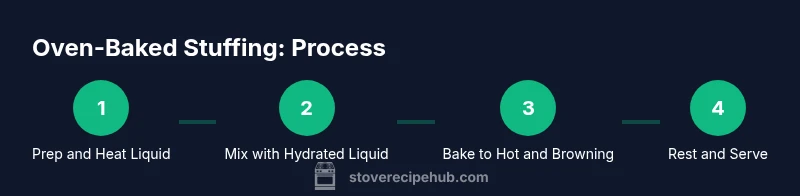
To bake stuffing successfully, start with the standard hydration method first to ensure even texture. Preheat to a moderate oven. Hydrate the stuffing with hot liquid and butter as per the package directions, then fluff with a fork. Transfer the hydrated stuffing to a greased baking dish in an even layer. Bake until the center is hot and the surface has a gentle browning. The exact time depends on your dish size and oven, but you’re aiming for a heated, cohesive mass with a hint of crust on top. Letting it rest briefly after removing from the oven helps set the texture for serving.
Flavor Variations and Add-ins
Stove Top stuffing in the oven is a flexible canvas. Try sliced mushrooms sautéed with onions and celery, crumbled sausage, or minced herbs like sage and thyme for a richer flavor. Dried cranberries or chopped apples add a festive sweetness that pairs beautifully with poultry. For a vegetarian option, use a flavorful vegetable stock and finish with a splash of olive oil and chopped parsley. Always taste and adjust seasoning before baking so the final dish aligns with the rest of your menu.
Common Mistakes and How to Fix
Common issues include dryness, sogginess, and an uneven top. If the mixture seems dry, add a bit more stock or a touch of melted butter and gently fold to avoid over-saturation. If it’s soggy, spread in a thinner, even layer and bake uncovered longer to drive moisture off the surface. If the top browns too quickly, tent with foil to protect the crust while the interior finishes heating. For an extra-crisp top, finish under the broiler for a minute or two, watching closely to prevent burning.
Safety, Temperature Considerations
Use a moderate oven to balance browning and moisture. Typical guidance suggests 325–375°F (165–190°C) as a comfortable range, but adjust based on your oven’s true performance and the dish size. Always wear oven mitts when handling hot dishes, and use a baking dish that distributes heat evenly. If you plan to keep the stuffing warm for serving, use a low-heat setting or a warming drawer to avoid drying out the edges.
Make-Ahead and Reheating Tips
Make-ahead: hydrate and refrigerate the stuffed mixture in a covered dish, then bake when you’re ready to serve. Reheating: reheat in the oven in a covered dish to maintain moisture, adding a splash of stock if it looks dry. For best texture, re-crisp the surface for 5–10 minutes uncovered after reheating. These strategies help you coordinate stuffing with other holiday dishes and reduce last-minute oven congestion.
Authority sources and further reading
For safety and cooking best practices, you can consult reliable resources from government and educational sites. Here are a few reputable references you can explore:
- https://www.fsis.usda.gov/
- https://www.cdc.gov/foodsafety/index.html
- https://www.who.int/news-room/fact-sheets/detail/food-safety
Final serving notes
Serving oven-baked stuffing is versatile and forgiving. Slice portions with a spatula for clean plates, and garnish with chopped parsley or toasted nuts for color and crunch. Pair it with your favorite roasted poultry or a vegetable medley to complete a balanced meal. The oven finish is particularly forgiving when you’re balancing multiple dishes, and it scales well for holiday dinners.
Tools & Materials
- Stuffing mix (Stove Top or generic)(Follow package directions for hydration.)
- Water or chicken/vegetable stock(Helps hydrate stuffing and adds flavor.)
- Butter(Adds richness; substitute with olive oil if desired.)
- Mixing bowl(Heat-safe if mixing hot liquid.)
- Baking dish (2–3 quart)(Greased to prevent sticking.)
- Oven mitts(For safe handling of hot dish.)
- Spatula or wooden spoon(To fluff and spread evenly.)
- Measuring cups/spoons(For consistent hydration.)
- Optional add-ins (sausage, cranberries, herbs)(Customize to taste.)
- Food thermometer (optional)(Check internal warmth if unsure.)
Steps
Estimated time: 30-40 minutes
- 1
Gather ingredients and preheat oven
Collect all ingredients and equipment. If you’re using a moderate oven, preheat to a comfortable baking temperature before you start preparing the stuffing. This ensures the dish goes into heat promptly once assembled.
Tip: Have everything measured and ready to go so you can move quickly once you start. - 2
Heat liquid and melt butter
In a small pan, heat water or stock with butter until just simmering. This short step helps hydrate the stuffing evenly and prepares the flavor base for the bake.
Tip: Using stock instead of water deepens flavor; keep it to a gentle simmer to avoid over-reducing. - 3
Mix stuffing with hydrated liquid
Stir in the stuffing mix with the hot liquid until just moistened. Let it rest for about 5 minutes so the bread absorbs the moisture evenly.
Tip: Avoid over-stirring; a light mix yields fluffier stuffing after baking. - 4
Transfer to baking dish and spread
Fluff the hydrated stuffing with a fork and spread it in an even layer in the greased baking dish. This promotes uniform heating and a better crust.
Tip: Even layering helps prevent cold pockets in the center. - 5
Bake until hot and top browns
Place in the oven and bake until the center is hot and the surface shows a light browning. Cooking time will vary by dish size and oven performance.
Tip: If the top browns too quickly, loosely tent with foil to protect the crust while the inside finishes. - 6
Rest and serve
Remove the dish from the oven and let it rest for a few minutes before serving. Resting helps the stuffing set for cleaner portions.
Tip: A brief rest keeps slices intact and improves texture on the plate.
Common Questions
Can you bake Stove Top stuffing in the oven?
Yes. After preparing the stuffing on the stove, transfer it to a greased dish and bake until hot throughout and the top is lightly browned.
Yes. You can bake Stove Top stuffing in the oven after hydrating it on the stove; bake until hot and the top browns.
Should I cover the stuffing while baking?
Covering keeps moisture, but uncovering yields a crisper top. If you want a crust, bake uncovered for part of the time.
Cover it if you want moisture, but bake uncovered to get a crisp top.
How can I tell when stuffing is heated through?
Look for steaming and even warmth throughout. A thermometer can help confirm the center is hot.
Steam coming from the center and even warmth indicate it’s heated through.
Can I add meat or sweet add-ins to the stuffing before baking?
Yes. Sausage, dried fruit, cranberries, or herbs can be folded in for flavor variety. Ensure anything added is fully cooked before serving.
Sure, you can add sausage or herbs and it will taste great, just make sure everything’s cooked through.
How long does it take to bake if the dish is large?
Baking time varies, but expect longer for larger, deeper dishes. Start checking for hot centers and a browned top and adjust as needed.
It depends on the dish size; check the center is hot and the top is browned.
Can Stove Top stuffing be made ahead of time?
Yes. Hydrate and partially cook (or fully cook and reheat) the stuffing, then finish baking before serving.
Yes, you can prepare ahead and finish baking when you’re ready to serve.
Watch Video
Top Takeaways
- Bake for a crusty top and evenly heated interior.
- Hydrate stuffing fully before baking for best texture.
- Adapt add-ins to suit the meal and preferences.
- Use a moderate oven and monitor to prevent over-browning.