How to Cook Broccoli on the Stove: A Complete Guide
Master broccoli on the stove with steaming, boiling, or sautéing. Learn timing, texture, and flavor-boosting techniques for a weeknight-friendly side dish.


On the stove, broccoli can be ready in about 6–8 minutes using steaming, boiling, or sautéing. This quick guide covers the simplest steamed method and offers optional techniques for more flavor. You’ll need fresh broccoli, water, salt, and a pot with a tight-fitting lid (plus oil or butter if you prefer sauté).
How to think about stovetop broccoli
If you’re wondering how to cook broccoli on the stove, there are three reliable approaches that yield distinct textures: steaming for crisp-tender florets with vibrant color, boiling for a fast, uniform doneness, and sautéing for a nutty, caramelized finish. Each method starts with the same core ingredient—fresh broccoli—but the cooking liquid, heat intensity, and finishing steps determine the final mouthfeel. Understanding these differences helps you choose the best method for your dish, whether you’re building a simple side or integrating broccoli into a more complex weeknight meal. For best results, aim for uniform florets and evenly sized stems so every bite cooks at the same pace.
Why texture and color matter when you cook broccoli on the stove
Texture and color are not just cosmetic. Proper timing preserves the vegetable’s bright green hue, vitamins, and crisp-tender bite. Overcooking dulls color and can lead to mushy florets, while undercooking leaves a fibrous stem and a pale appearance. The stove-top offers precise control: you can stop the cooking process the moment florets reach your preferred tenderness by draining, steaming, or tossing in a hot pan with a finish of oil or butter.
Choosing a method based on your goal
- Steaming: Best for vibrant color and nutrient retention with minimal flavor loss. It keeps florets bright and tender without submerging them in water.
- Boiling: Fast and forgiving, but water-soluble nutrients can leach out if you boil too long. It’s ideal when broccoli is going into soups or purees where texture matters less.
- Sautéing: Excellent for flavor development and a slight caramelization. This works well when you want a more robust taste and a quick finish, often with a quick splash of stock or lemon.
Prep like a pro: uniform pieces and timing
Trim leaves, trim the stem ends, and cut florets into uniform pieces. If stems are thick, peel and slice them so they cook at the same rate as the florets. Uniform pieces ensure a predictable cook time and consistent texture across the dish. If you’re juggling multiple vegetables, prioritize broccoli so it hits the plate at the same time as your other sides.
The science of doneness: color, bite, and aroma
Bright green color signals proper doneness; a dull olive tone means overcooked. A gentle bite—the moment you can pierce a piece with a fork but still feel some resistance—indicates tender-crisp perfection. Aroma matters too: a faint nutty scent emerges when broccoli is heated evenly in a pan with a touch of fat, signaling readiness.
Quick troubleshooting: common issues and fixes
If broccoli turns yellow-green or mushy, reduce heat and shorten cook time in the next batch. If it sticks to the pan, add a splash of water or stock and shake the pan to loosen. For steamed broccoli, keep the lid on to trap steam, then remove promptly to stop cooking. These small adjustments yield consistently delicious results.
Finishing touches that elevate the dish
Finish with a light drizzle of olive oil or a small pat of butter, plus a pinch of salt and a squeeze of lemon for brightness. Fresh herbs, toasted seeds, or grated cheese can add texture and depth. If serving with a sauce or protein, consider pairing the broccoli with the dish’s seasoning rather than salting separately to avoid over-seasoning.
Safety and storage considerations
Always wash broccoli under cold water before cutting. If you plan to store leftovers, cool quickly and refrigerate in an airtight container within two hours. Reheat gently on the stove with a splash of water to preserve texture and flavor.
Tools & Materials
- Stove (gas or electric)(Ensure burners are stable and level)
- Medium saucepan with lid(Lid should fit tightly to trap steam)
- Colander or steamer basket (optional)(Useful for steaming or draining after boiling)
- Chef’s knife and cutting board(For trimming and uniform florets)
- Measuring spoons(Helpful for precise seasoning)
- Salt(Seasoning both during cooking and at finish)
- Oil or butter (optional)(Small amount for sauté finish or flavor)
- Water or vegetable broth(Base for steaming or boiling)
Steps
Estimated time: 8-12 minutes
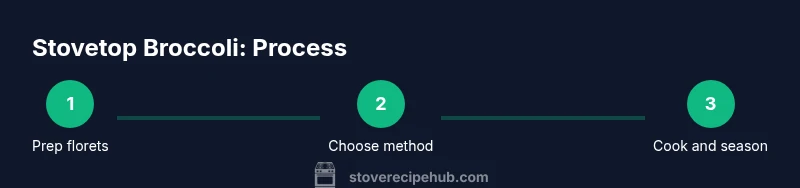
- 1
Prep the broccoli
Rinse the broccoli under cold water and pat dry. Trim the florets from the thick central stem and cut into uniform bite-sized pieces. Peel and slice thick stems so they cook evenly with the florets.
Tip: Uniform pieces ensure even cooking; save trimmed scraps for stock or stir-fries. - 2
Choose your method
Decide whether to steam, boil, or sauté based on your desired texture and available time. Steaming preserves color and nutrients, boiling is fastest, and sautéing adds flavor through browning.
Tip: If you’re short on time, steaming with a lid is the quickest reliable method. - 3
Set up the steaming or boiling setup
Pour 1 inch of water or broth into the pot and bring to a simmer. If steaming, place florets in a basket above the water. If boiling, simply submerge florets in the water once it simmers.
Tip: Use a lid to trap steam for even cooking and faster results. - 4
Cook until tender-crisp
Steam for 4–6 minutes or boil for 3–5 minutes, then check with a fork. For sautéed broccoli, cook 4–6 minutes in a hot pan with a splash of oil, stirring occasionally.
Tip: Do not overcook; you want a little resistance when pierced with a fork. - 5
Test, drain, and season
Test for doneness and drain promptly to stop cooking. Season with salt (and pepper if desired) while hot, then add a drizzle of oil or a small knob of butter if you like.
Tip: A light finish of lemon zest or juice brightens the flavor. - 6
Finish and plate
Toss broccoli with any finishing flavors and plate immediately to preserve color and texture. If using a sauce, add it sparingly to avoid overpowering the vegetable’s natural flavor.
Tip: Reserve a little salt to adjust seasoning at the end based on taste.
Common Questions
Can I steam broccoli without a steamer?
Yes. You can steam broccoli using a heatproof plate inside a pot with a small amount of water, or use a makeshift basket made from a disposable foil or a clean, reusable metal insert. This method still traps steam and cooks the florets evenly.
Yes, you can steam without a dedicated steamer by elevating the broccoli above the water with a plate or improvised basket.
Is boiling broccoli healthier than steaming?
Steaming generally preserves more nutrients and color than boiling because the florets are not fully submerged. Boiling can leach water-soluble vitamins when cooked too long.
Steaming keeps more nutrients and color, while boiling is faster but may wash out some nutrients if overdone.
How long does broccoli take to cook on the stove?
Most stovetop methods take 6–8 minutes total, depending on the method and the florets' size. Start checking at the 4-minute mark to prevent overcooking.
Typically around six to eight minutes, with checks starting around four minutes.
What seasonings go well with broccoli cooked on the stove?
Salt and pepper are baseline seasonings. Add lemon zest, garlic, chili flakes, parmesan, or a dab of butter for extra flavor depending on the dish.
Try a little garlic and lemon to brighten the broccoli, or finish with parmesan for a savory note.
Can I reheat broccoli safely on the stove?
Yes. Reheat gently with a splash of water to re-waken the florets and prevent drying out. Avoid microwaving if you want to preserve texture.
Reheat on the stove with a splash of water to keep moisture and texture.
Watch Video
Top Takeaways
- Choose steaming for color and nutrients.
- Control doneness with precise timing.
- Finish with a light seasoning for best flavor.
- Match method to your texture preference.