How to Cook a Bone-In Steak on the Stove
Learn to cook a bone-in steak on the stove with a hot cast-iron pan, precise sear, and proper rest. This guide covers tools, timing, doneness, and practical variations for restaurant-quality results at home.


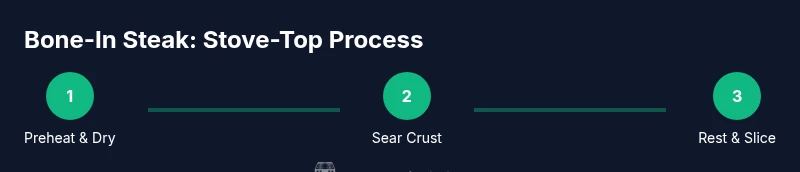
You will cook a bone-in steak on the stove to achieve a rich crust and juicy interior. Start with a well-seasoned, 1.25–1.5 inch-thick bone-in steak, a hot cast-iron skillet, high-smoke oil, salt, and pepper. Sear 2-3 minutes per side, baste with butter if desired, and finish in the oven 4-6 minutes for medium-rare; let rest 5-10 minutes before serving.
Why Bone-In Steak Demands Attention
Bone-in steaks are both flavorful and forgiving, making them a favorite for home cooks who want restaurant-like results at home. The bone acts as a heat conduit and adds subtle marrow richness that you simply don’t get from boneless cuts. As you plan your cook, remember that the bone creates irregular heating along the face of the steak, so a careful sear and attentive resting are essential for even doneness.
According to Stove Recipe Hub, bone-in cuts shine when you start with surface-dry meat and a pan that can retain heat. This combination yields a crust that forms quickly without turning the interior to slow-cook mode. For best results, choose a steak around 1.25–1.5 inches thick; anything thinner will challenge you to balance crust and doneness, while thicker cuts may rely on a short oven finish to finish through the center.
Crowding the pan is a frequent error; give each piece at least 1 inch of space to ensure a crisp exterior rather than a steamed surface. If you’re aiming for medium-rare to medium, anticipate a 2–3 minute sear on each side, followed by a moment of rest and, if needed, a short oven finish. At the end of cooking, rest the steak 5–10 minutes to let juices redistribute and the carryover heat settle into a uniform center.
Tools and Materials: The Right Gear
The stove-top approach requires reliable gear that can withstand high heat and frequent handling. A heavy cast-iron skillet is the backbone of this method; its heat retention helps you form a deep crust without scorching. If a cast-iron isn’t available, a heavy stainless-steel pan with thick walls is the next best option.
Other essential tools include a pair of long tongs, a reliable instant-read thermometer, and a small spoon or baster for basting. You’ll also want a neutral oil with a high smoke point (canola, grapeseed, or avocado oil) and a pat of unsalted butter for finishing. Salt and pepper are non-negotiables for seasoning; use kosher salt for even coverage.
In addition to the pan and utensils, set up a safe workspace: a clean counter for resting the steak, a rack or paper towels to drain any excess fat, and an oven-safe skillet if you plan to finish in the oven. If you prefer, fresh thyme and garlic can be added during basting for aromatic nuance, but these are optional.
Seasoning, Searing, and Finishing Techniques
Seasoning should be simple: a generous sprinkle of kosher salt across every surface and a light crack of black pepper. The goal is to season ahead, not to overpower the meat’s natural flavor. Let the seasoned surface rest while you heat your pan, so the salt draws out a bit of surface moisture that will assist with crust formation.
As the pan heats, test for readiness by watching for faint wisps of smoke and a steady shimmer of oil. A properly heated pan should hiss when the steak lands, and the surface should sizzle instantly. Place the steak in the pan away from you to prevent oil splatter, and resist the urge to move it too soon; a proper crust needs 2–3 minutes of undisturbed contact.
Basting can elevate flavor and moisture. After the first side develops a dark crust, flip the steak and add a tablespoon of butter, a crushed garlic clove, and a sprig of thyme if you like. Tilt the pan and spoon the molten butter over the top of the steak. This finishing step also helps the center approach doneness more evenly.
The interior doneness should be monitored with a thermometer rather than relying on time alone. For medium-rare, target 125–130°F (52–54°C) in the thickest part; for medium, 135–145°F (57–63°C). Remember that carryover cooking will raise the temperature a few more degrees once you remove the pan from heat.
Doneness, Rest, and Carving
Doneness isn’t just about the final temperature; it’s also about how the steak feels when you press it and how long it rests. After searing and optional oven finishing, move the steak to a rack and allow it to rest for 5–10 minutes. Resting is critical; the juices re-distribute and the interior settles into a uniform texture.
When it’s time to carve, slice against the grain in thin, even cuts. For bone-in steaks, the meat nearest the bone will be slightly more done; consider slicing away from the bone first to avoid uneven portions. A well-rested bone-in steak will yield a juicy bite with a pronounced crust.
If you’re serving with sides, a simple pan sauce can be made from the fond left in the pan. Deglaze with a splash of wine or broth, reduce, and whisk in a touch of butter for a glossy finish. You can also complement the finish with a pinch of flaky salt on the plate for bright contrast.
Troubleshooting and Common Mistakes
Common pitfall: crowding the pan. When too many steaks share heat, you’ll get steaming rather than searing. Give each steak space and avoid moving it too frequently; crusts form best when the surface remains in contact with hot metal.
Another mistake is relying only on time to judge doneness. Thicker bone-in cuts will carry more heat, so use an instant-read thermometer for accuracy. Over-relying on a single indicator can push you from perfect crust to dry center.
Moisture management matters. Surface moisture creates steam, which inhibits crust formation. Ensure the meat is dry before it hits the pan, and pat away any extra moisture that forms during the searing process.
Lastly, avoid finishing in the oven at such a high temperature that the exterior burns before the center cooks through. If you finish in the oven, set a moderate oven (375–425°F / 190–220°C) and monitor with a thermometer to avoid overcooking.
Practical Variations: Oven-Finish, Pan-Baste, and Sauces
The stovetop method adapts easily: a brief oven finish can standardize doneness for thicker bone-in steaks; this is a reliable option when you want a precise center. If you prefer, you can also rely entirely on the pan with careful heat management, particularly for thinner bone-in cuts.
For extra aroma and moisture, finish with a quick baste. Replace or supplement the butter with a splash of olive oil near the end of cooking, and add herbs like rosemary if you wish. A simple pan sauce created from the fond (the browned bits left in the pan) can elevate your plate: deglaze with wine or stock, reduce, then whisk in a knob of butter.
Serve with classic sides such as roasted potatoes, a green bean almondine, or a fresh arugula salad. A squeeze of fresh lemon over vegetables or meat helps cut through the richness and brighten the plate.
Tools & Materials
- Cast-iron skillet(At least 12 inches for a good crust and handling)
- Tongs, long(For safe, precise flipping and maneuvering)
- Instant-read thermometer(Accurate internal temp is essential)
- Oven (optional)(Finishing in oven yields even doneness for thicker cuts)
- Neutral oil (high smoke point)(Canola, grapeseed, or avocado oil)
- Unsalted butter(For basting and finishing)
- Kosher salt(For even seasoning)
- Fresh ground black pepper(Flavor and crust enhancement)
- Dish towel or oven mitts(Safety and handling)
Steps
Estimated time: 30-45 minutes
- 1
Pat dry the steak
Use paper towels to remove surface moisture from the steak. A dry surface promotes a better crust rather than steaming in the pan.
Tip: Dry surface = crisper crust. - 2
Season generously
Season all surfaces with kosher salt and a light crack of pepper. This builds flavor as the meat heats and sears.
Tip: Season ahead to draw surface moisture for crust formation. - 3
Preheat the pan
Place your cast-iron skillet on high heat until it’s very hot and a drop of water sizzles immediately.
Tip: A hot pan is essential for a deep crust. - 4
Sear the first side
Carefully lay the steak in the pan away from you and sear for 2–3 minutes without moving it to form a crust.
Tip: Resistance to movement yields better crust formation. - 5
Flip and baste
Turn the steak, add butter, garlic, and thyme if using, and baste while the other side finishes for 1–2 minutes.
Tip: Basting adds moisture and flavor penetration. - 6
Check doneness
Use an instant-read thermometer to approach your target: 125–130°F (52–54°C) for medium-rare; 135–145°F (57–63°C) for medium.
Tip: Target the thickest part, away from bone. - 7
Rest the steak
Remove from heat and rest on a rack or plate for 5–10 minutes to redistribute juices.
Tip: Resting prevents juice loss when slicing. - 8
Slice and serve
Slice against the grain in thin, even portions and serve with your preferred sides or sauce.
Tip: Slice across the grain for tenderness.
Common Questions
Do I need to bring the bone-in steak to room temperature before cooking?
Bringing the steak closer to room temperature helps it cook more evenly, reducing the risk of a cold center. Aim for about 20–40 minutes, depending on thickness.
Yes. Let it sit out for about twenty to forty minutes so it cooks evenly.
What thickness counts as bone-in steak for stove-top cooking?
Bone-in steaks are commonly around 1 inch to 1.5 inches thick. Thicker cuts may benefit from a brief oven finish for even doneness.
Most bone-in steaks you’ll cook on the stove are about 1 to 1.5 inches thick.
Can I cook bone-in steak entirely on the stove without finishing in the oven?
Yes, for thinner bone-in steaks or when you’re aiming for a specific doneness. Heavier cuts usually benefit from a short oven finish to ensure the center cooks through.
You can do stove-only for thinner cuts, but thicker ones often need an oven finish.
What is the best doneness for bone-in steak?
Doneness depends on preference; many home cooks aim for medium-rare to medium to balance crust and juiciness. Use a thermometer for accuracy.
Most people like medium-rare to medium for bone-in steaks.
How long should a bone-in steak rest after cooking?
Rest the steak for 5–10 minutes after cooking to let juices distribute and the temperature settle. This improves tenderness.
Rest it for about five to ten minutes before slicing.
Watch Video
Top Takeaways
- Sear with a hot pan for crust; rest for juiciness.
- Use a thermometer to dial in doneness, not time alone.
- Finish with butter/baste for flavor and moisture.
- Slice against the grain for tender portions.