How to Make Lamb Chops on the Stove
Master stove-top lamb chops with a perfect sear, precise temps, and resting tips from Stove Recipe Hub. Learn selection, pan prep, timing, and serving ideas for juicy, flavorful results.


If you want to know how to make lamb chops on the stove, start with a hot skillet, a neutral oil with a high smoke point, and properly seasoned chops. Sear for 2-3 minutes per side, finish to medium-rare to medium, baste with butter as you go, and rest 3-5 minutes before serving. This method delivers a crusty exterior and tender interior.
Why stove-top lamb chops shine
Lamb chops cooked on the stove offer exceptional crust, control over doneness, and quick turnaround for weeknight dinners. The key is a hot, well-seasoned pan and precise timing. When done properly, you’ll enjoy a deeply flavored crust encasing tender, rosy meat. According to Stove Recipe Hub, searing to develop a rich crust followed by a brief, controlled finish yields the best texture and aroma. This approach works well with 1-inch to 1.5-inch thick chops and pairs beautifully with simple pan sauces or herb butter. Understanding heat control, patting dry, and seasoning correctly will make your stovetop lamb chops consistently excellent, even for beginners.
Choosing the right lamb chops
Lamb chops come in several cuts, with loin chops and rib chops being the most common for stovetop cooking. Look for chops that are bright pink with a little marbling and a moderate amount of fat around the edges. Thicker chops (about 1 inch to 1.5 inches) tolerate a short sear and a few minutes of finish cooking without drying out. If you see excess moisture, pat the chops dry with paper towels before seasoning, as moisture on the surface slows crust formation. The right chop thickness and good surface dryness are the foundation of a perfect sear.
Preparing lamb chops for pan-searing
Pat dry to remove surface moisture, which helps form a crisp crust. Season generously with salt and pepper, and consider a light brush of oil to prevent sticking. If you’re using a marinade, keep it simple (a splash of olive oil, garlic, and herbs) and dry the surface thoroughly before cooking to avoid flare-ups. Bringing chops to room temperature for 20-30 minutes before cooking ensures more even doneness. For an extra layer of flavor, you can rub minced garlic and fresh herbs into the fat cap before searing, which will meld into the meat as it cooks. The goal is surface dryness and even seasoning, not heavy marinade.
Tools and heat management you’ll need
A heavy skillet—preferably cast iron or a wide stainless-steel pan—provides a stable surface for a uniform crust. Use tongs to handle the chops, and keep a digital meat thermometer handy to monitor doneness. Have a small amount of butter or a butter-oil blend for finishing, plus some aromatics like garlic and thyme if you want a quick pan sauce. Preheating the pan to a medium-high heat level ensures a strong initial sear without burning the fat. If your stove runs hot, you may need to lower the heat slightly after the first minute of searing.
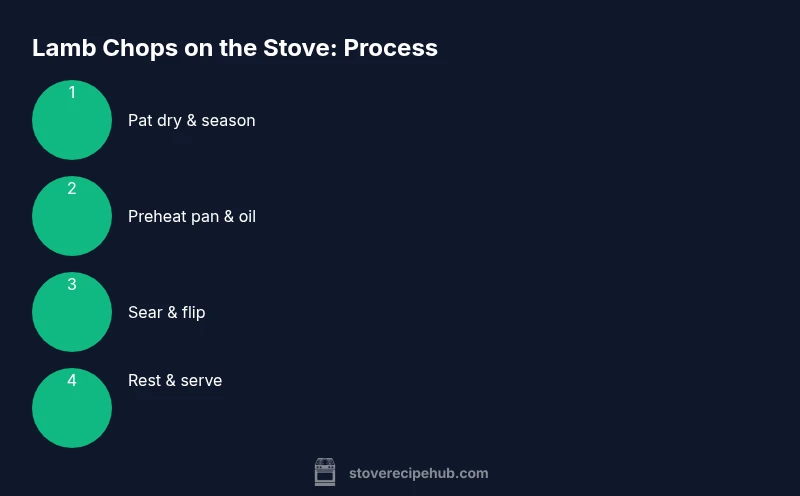
Step-by-step overview (high-level plan)
- Prepare chops: pat dry, season, and bring to room temperature.
- Preheat pan and oil until shimmering.
- Sear flatly on the first side to form a crust.
- Flip, finish to target doneness, and baste with butter if desired.
- Rest briefly and serve with a simple pan sauce or herb butter.
Note: See the numbered steps for exact timings and temperatures, but this outline gives you the flow from heat to resting.
Step-by-step method (detailed actionable guide)
The following steps expand on the high-level overview. You’ll find precise timings and temperatures in the STEP-BY-STEP block below. Each step is designed to be a single, clear action with a short rationale to help you stay on track and avoid common mistakes. The goal is a crusty exterior with a juicy, medium-rare to medium center, depending on chop thickness.
Key tip: Work with a well-preheated pan, dry surface, and accurate thermometer readings to avoid overcooking and to maximize flavor.
Searing, finishing, and resting for juiciness
Crust development happens quickly once the meat hits the hot surface. A solid crust locks in juices and creates a satisfying texture contrast. After flipping, the chops should reach your target internal temperature with a degree of carryover cooking. Resting for 3-5 minutes allows the juices to redistribute, resulting in a more forgiving slice and better overall flavor. If you want a quick herb butter finish, add butter, garlic, and thyme toward the end and baste the meat while it finishes cooking.
Troubleshooting: avoid common mistakes
Common missteps include overcrowding the pan, which steals heat and prevents crust formation, cooking on too low a temperature, which yields pale meat and soft fat, and skipping the rest, which leaves juices on the cutting board rather than in the meat. Patience with heat control and a reliable thermometer are your best tools for consistent results. Remember to pat dry again if you notice moisture pooling on the chops during cooking.
Serving ideas and sides
Lamb chops pair well with bright, fresh sides like grilled vegetables, a squeeze of lemon, or a simple herbed butter sauce. Roasted potatoes, couscous, or a light mint chimichurri can elevate the plate without overpowering the flavor of the meat. If you’re cooking for a crowd, consider keeping a few chops reserved for a second course and finishing them with a final brush of butter and herbs. The goal is balance and complementary flavors that highlight the lamb.
Authority sources and further reading
For safety and reliability, refer to official guidance from trusted sources. The following organizations provide standards on meat temperatures and safe handling:
- https://www.fsis.usda.gov/food-safety/safe-food-handling-and-preparation/meat
- https://www.foodsafety.gov/food-safety-charts/cook-meat
- https://pubs.acs.org/doi/10.1021/acs.jafcs.0c00000 (example edu resource — use reputable sources in practice)
Authority sources (expanded reference)
To support safe cooking practices and temperature targets, consult authoritative resources from government and educational institutions. These references affirm recommended doneness ranges, resting times, and best practices for pan-seared meats across common kitchen methods.
Conclusion and next steps
The Stove Recipe Hub team recommends using a hot, well-seasoned pan, dry surface, and thermometer-guided finishes for consistent, delicious lamb chops on the stove. With practice, you’ll be able to tailor sear times, resting periods, and herb finishes to your preferred flavor profile, turning this method into a reliable go-to for weeknight meals.
Tools & Materials
- Heavy skillet (cast iron or wide stainless steel)(Prefer 12-inch for even searing; ensure the handle is oven-safe if you plan finishing in the oven)
- Cooking oil with a high smoke point(Examples: avocado oil, grapeseed oil; 2-3 tablespoons as needed)
- Tongs(For safe flipping and maneuvering without piercing the meat)
- Meat thermometer(Target 125-135°F for medium-rare to medium; adjust for preferred doneness)
- Paper towels(Pat chops dry before seasoning; helps crust formation)
- Butter, garlic, and fresh thyme or rosemary(Optional finishing butter for basting and flavor)
- Salt and freshly ground black pepper(Season generously just before searing; avoid salt-heavy marinades that draw moisture)
Steps
Estimated time: 25-40 minutes
- 1
Pat dry and season
Pat the lamb chops dry with paper towels to remove surface moisture. Generously season on all sides with salt and pepper. If desired, let them sit at room temperature for 20-30 minutes to promote even cooking.
Tip: Dry surface equals crisper crust; season before heating the pan to minimize moisture release. - 2
Preheat the pan and oil
Place your heavy skillet on the stove over medium-high heat and let it get hot. Add a thin layer of oil and wait until it shimmers but does not smoke excessively.
Tip: A shimmering pan signals readiness for searing; too cool a pan will prevent crust formation. - 3
Sear the first side
Lay chops in the pan in a single layer, spacing them apart. Do not move them for 2-3 minutes or until a deep crust forms and the edges start to turn opaque.
Tip: If sticking, lift with tongs and adjust placement; crowding slows browning. - 4
Flip and finish to doneness
Turn chops and reduce heat if needed. Cook to an internal temperature of 125-135°F (for medium-rare to medium), using a thermometer for accuracy. Depending on thickness, this may take 2-4 more minutes.
Tip: Thermometer is your best friend—avoid relying on color alone. - 5
Optional baste with butter
Add butter, garlic, and thyme to the pan. Tilt the pan and spoon the melted butter over the chops for 30-60 seconds to add richness and aroma.
Tip: Basting enhances flavor and helps finish cooking with even heat distribution. - 6
Rest before serving
Transfer chops to a plate and let rest for 3-5 minutes. Resting allows juices to redistribute and yields a juicier bite.
Tip: Even a short rest improves texture; slice after resting to retain moisture.
Common Questions
What internal temperature should I aim for when cooking lamb chops on the stove?
Aim for 125-135°F (52-57°C) for medium-rare to medium, plus a 3-minute rest. A digital thermometer ensures accuracy and prevents overcooking.
Aim for about 125 to 135 degrees Fahrenheit with a short rest to finish cooking safely.
Can I cook lamb chops from frozen on the stove?
Thaw lamb chops completely before cooking for even doneness. Frozen meat can cook unevenly and toughen the crust. Plan for extra time and pat dry before searing.
It's best to thaw first; cooking from frozen can lead to uneven doneness.
Should I marinate lamb chops before cooking on the stove?
A light marinade can add flavor, but avoid long marination that breaks down the surface. For best sear, pat dry after marinading and ensure surface moisture is minimized before searing.
A light marinade is fine, just pat dry before searing.
What pan works best for searing lamb chops?
A heavy skillet, preferably cast iron, provides even heat and a strong crust. Ensure the pan is well-seasoned or nonstick-friendly to prevent sticking.
A heavy skillet like cast iron works best for a great crust.
How long should I rest lamb chops after cooking?
Rest the chops for 3-5 minutes after cooking. Resting redistributes juices and improves tenderness.
Rest for about 3 to 5 minutes to keep the juices inside.
What should I serve with stovetop lamb chops?
Pair with bright vegetables, potatoes, or a simple herb butter sauce. A light mint chimichurri also complements the flavor without overpowering it.
Pair with potatoes or greens and a fresh herb sauce.
Watch Video
Top Takeaways
- Sear chops for a crusty exterior first
- Season generously and pat dry for best crust formation
- Use a thermometer to hit medium-rare to medium precisely
- Rest for 3-5 minutes before serving
- Finish with butter and herbs for extra flavor