How Long to Cook Lamb Chops on the Stove: A Practical Guide
Learn how long to cook lamb chops on stove with practical timing, doneness guidance, and a step-by-step method for a perfect sear and juicy center.


You’ll learn how long to cook lamb chops on stove by considering thickness, bone-in versus boneless cuts, and your preferred doneness. With a simple sear-and-finish method, you’ll minimize guesswork and get juicy, evenly cooked chops every time. This expert guide from Stove Recipe Hub helps home cooks master stove-top lamb without overcooking.
Why the stove is a great option for lamb chops
The stovetop offers fast, precise control over temperature, which is ideal for lamb chops that benefit from a crisp crust and a juicy interior. When you sear on a hot pan and then adjust the heat, you can closely manage the Maillard reaction and internal temperature without heating the entire kitchen. According to Stove Recipe Hub, starting with a hot skillet and finishing with a gentler heat yields reliable results that home cooks can repeat. When you consider how long to cook lamb chops on stove, you’re balancing thickness, whether the cut is bone-in or boneless, and your preferred level of doneness. This section sets the stage for understanding timing in real kitchens and avoiding common pitfalls.
A well-managed stovetop cook keeps moisture inside and crust on the surface. Lamb chops that start cold will steam instead of sear, producing a pale crust and a drier interior. On the other hand, a properly heated pan creates a caramelized exterior in minutes while preserving the tender center. The goal is to achieve a crisp outer crust within the first minute or two and then let the center come to the target temperature with controlled heat. The stovetop method gives you tactile feedback: hear the sizzle, see the browning, and feel when the meat offers slight resistance. These cues help you arrive at the right texture and doneness without relying solely on guesswork.
Key variables that influence cook time
Several variables shift the clock for stovetop lamb chops: chop thickness, whether the cut is bone-in or boneless, pan material, and heat level. A typical 1-inch boneless chop sears quickly, while a 1.5-inch bone-in chop needs more time and can benefit from a brief finish in the oven or a longer sear at a slightly lower temperature. The pan you choose—cast iron for heat retention or stainless steel for quick response—affects heat distribution and crust formation. Doneness preference (rare, medium-rare, medium) also changes suggested times. Taking note of these variables helps you answer the perennial question: how long to cook lamb chops on stove for different situations. With practice, you’ll map your own stove, pan, and chop thickness to a repeatable timing window.
Understanding carryover cooking matters too. Lamb chops will continue to rise a few degrees after you remove them from heat. If you pull them when they’re barely at the target temp, they’ll finish coming up as they rest. Conversely, removing them too early risks undercooking. The balance of heat, thickness, and resting time is the practical core of mastering stove-top lamb chops.
The distinction between bone-in and boneless chops is not just about flavor; it changes heat transfer. Bone acts as a heat sink, slowing interior warming and sometimes requiring a longer sear. Boneless cuts heat through more evenly and can respond more quickly to heat changes. Your timing strategy should reflect this difference so you don’t overcook boneless chops while waiting for bone-in to finish. This is a core part of the timing calculation for how long to cook lamb chops on stove in real-world kitchens.
Tools & Materials
- Cast-iron skillet(12-inch is ideal for even searing; preheat before adding chops.)
- Tongs(Long-handled, non-metal to avoid puncturing meat.)
- Instant-read food thermometer(Target temperatures: ~125-130°F for rare, ~130-135°F for medium-rare.)
- Oil with high smoke point(Avocado or refined safflower oil; neutral flavor.)
- Butter (optional for finishing)(Adds richness during the last minute of cooking.)
- Paper towels(Pat chops dry for a proper crust.)
- Salt and pepper(Season generously before searing and adjust at finish.)
- Plate or resting rack(Rest chops 5-10 minutes, tented if possible.)
Steps
Estimated time: Total time: 25-40 minutes
- 1
Prepare and season
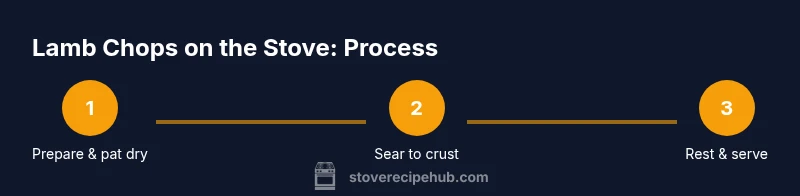
Pat chops dry with paper towels. Generously season with salt and pepper on all sides, and let them rest at room temperature for about 15-30 minutes. This helps promote an even sear and predictable interior doneness.
Tip: Dry surface is essential for a crust; don’t rush the resting period. - 2
Preheat the pan and add oil
Place a heavy skillet on medium-high heat and allow it to become hot. Add a thin coat of oil and heat until it shimmers. You want the oil to be ready to sizzle when the meat touches the surface.
Tip: Oil should shimmer; if it’s smoking heavily, reduce heat slightly. - 3
Sear the first side
Place chops in the pan without crowding. Sear without moving for about 2-3 minutes for 1-inch cuts (more for thicker chops) until a deep crust forms. Flip carefully with tongs and resist the urge to press down on the meat.
Tip: Avoid crowding to preserve surface temperature and crust formation. - 4
Sear the second side and finish
Flip the chops again if needed, then sear the other side for 2-4 minutes. If chops are thick, reduce heat to medium and finish with a brief, gentle rise in temperature to reach the target doneness. Optional: baste with a small amount of butter in the final minute.
Tip: Use a thermometer to confirm doneness rather than relying solely on time. - 5
Rest the chops
Transfer chops to a plate and tent loosely with foil. Rest for 5-10 minutes to allow juices to redistribute. This step is crucial for juiciness and even texture.
Tip: Do not slice immediately; resting prevents all the juices from running out. - 6
Verify and serve
Check internal temperature one last time and adjust if needed. Slice near the center to confirm doneness. Serve promptly with your chosen sides.
Tip: Remember carryover cooking will raise temps a few more degrees during resting.
Common Questions
What is the best pan for stove-cooked lamb chops?
A heavy skillet like cast iron or high-quality stainless steel is ideal for a good crust and even heat. Preheat the pan well and use a small amount of oil to prevent sticking.
Use a cast-iron or stainless skillet for best sear and even cooking, preheated well before adding the chops.
Should I use butter or oil for searing lamb chops on the stove?
Oil with a high smoke point is best for the initial sear. You can finish with a small amount of butter for flavor in the last minute if you like.
Use a high-heat oil to sear, then finish with a little butter for aroma if desired.
How can I tell when lamb chops are done without a thermometer?
Firmness and slight resistance indicate doneness; pinkness near the center helps for medium-rare. Remember carryover cooking will continue after removal from heat.
Feel for a firm but not rock-hard texture; use color as a rough guide, but a thermometer is best for accuracy.
Is bone-in or boneless better for stove cooking?
Bone-in chops stay juicier and have more flavor due to the bone and marrow. Boneless chops cook faster but can dry out if overcooked.
Bone-in cuts stay juicy and flavorful; boneless cook quicker but need careful timing.
How long should lamb chops rest after cooking on the stove?
Rest for 5-10 minutes to let juices redistribute. Tent lightly with foil if desired to keep warm.
Rest for about 5 to 10 minutes so the juices reabsorb and the meat finishes cooking evenly.
Can I reheat leftover lamb chops without drying them out?
Reheat gently on low heat or in a quick skillet with a splash of broth; avoid high heat that dries the meat.
Gently rewarm over low heat so the meat stays juicy and doesn’t seize up.
Watch Video
Top Takeaways
- Measure thickness to tailor cook time.
- Pat dry to achieve a proper sear.
- Use high-smoke-point oil for a crisp crust.
- Rest 5-10 minutes before serving.
- Internal temp guides doneness; adjust heat accordingly.