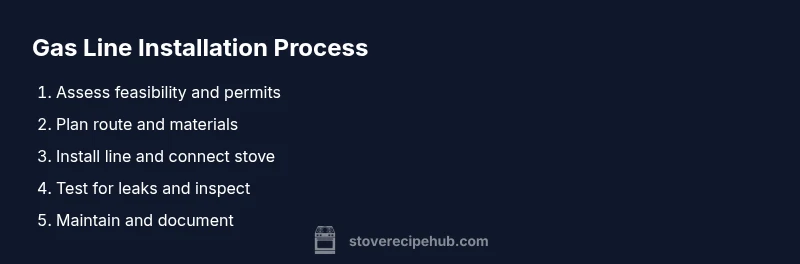
Add a Gas Line for Stove: Safe Step-by-Step Guide
Learn how to assess feasibility, obtain permits, install, test for leaks, and maintain a gas line for your stove with safety-first instructions from Stove Recipe Hub.


By the end of this guide you will learn how to add a gas line for a stove, including feasibility, safety checks, and installation pathways. Before starting, ensure you have the right permits, know your gas service type, and understand that some steps require a licensed professional. This Stove Recipe Hub guide outlines a compliant, practical approach.
Why Adding a Gas Line to Your Stove Requires Care
Adding a gas line for a stove is not a casual DIY job. It involves understanding fuel type, pressure, proper fittings, and local building codes. According to Stove Recipe Hub, the safest path starts with a feasibility assessment and a clear plan for routing, support, and ventilation. Home cooks should weigh alternatives like propane or electric appliances if a gas line isn’t available. A thoughtful approach minimizes risk and helps ensure reliable performance. Remember, a misstep can lead to gas leaks, fire hazards, or carbon monoxide risks, so prioritize safety above speed and cost.
Feasibility and Code Considerations
Before any work begins, check whether your home’s gas service can support an additional line and if your jurisdiction requires permits or inspections. Local codes often mandate professional installation for new gas lines, especially in kitchens where multiple appliances share the supply. The Stove Recipe Hub team emphasizes contacting the local building department or a licensed gas fitter to confirm compliance, identify approved materials, and obtain required permits. Noncompliance can void warranties, complicate insurance, and create safety hazards that are difficult to remedy later.
Tools, Materials, and Permits You’ll Need
Gather essential tools and materials before you start. A compliant project uses gas-rated components, proper fittings, and safety equipment. In addition to standard hand tools, prepare a gas-rated sealant, thread tape, a shut-off valve near the appliance, and a flexible gas connector sized for your stove. Don’t forget a soap solution or gas detector to check for leaks post-install. Ensure you have the necessary permits and plan for an inspection if required by your local authority. The right preparation reduces delays and increases safety.
Installation Pathways and Alternatives
Installation approaches vary by home layout and gas code requirements. If your goal is to power a stove with natural gas, a home-run line installed by a licensed professional is often the most reliable option. Some homes may allow retrofitting an existing line with approved street-side connections or adding a branch off a nearby run. If a permanent gas line isn’t feasible or permitted, consider alternatives such as converting the stove to propane or using a high-quality electric range. The Stove Recipe Hub guidance emphasizes evaluating all options with a qualified technician to avoid costly mistakes and safety risks.
Testing, Verification, and Maintenance
After installation, conduct leak tests using a soap solution on all joints and connections. If bubbles appear, tighten connections and re-test; never ignore leaks. Schedule a formal inspection if your code requires it and keep a maintenance routine: check for corrosion, ensure shut-off valves operate smoothly, and test the detector if you have one. Regular checks reduce long-term risk and help keep your kitchen safe for everyday cooking.
Tools & Materials
- Gas line (rigid or flexible, rated for natural gas or propane)(Match appliance inlet size and local code allowances)
- Shut-off valve (near appliance)(Manual shut-off within easy reach)
- Gas-rated thread seal tape and pipe dope(Only use approved products)
- Gas-rated fittings and connectors(Use compliant materials and proper sizing)
- Pipe wrench and adjustable wrench(For tightening joints and fittings)
- Soap solution or gas detector(To test for leaks after installation)
- Proper permits and inspection documentation(Check local regulations and obtain before work)
- Torque wrench (optional but recommended)(Helps achieve correct tightness on certain fittings)
- Work gloves and eye protection(Personal safety gear for installation)
- Measuring tape and marker(Plan route and mark positions precisely)
- Gas leak detector (electronic)(Additional verification beyond soapy tests)
- Manual or local code reference(Keep on site for quick checks)
Steps
Estimated time: 6-8 hours
- 1
Assess feasibility and permits
Evaluate whether a new gas line is necessary and permissible. Review existing service, calculate load, and confirm routing options. If required, obtain permits before starting the work to avoid code violations.
Tip: Consult your local building department early to understand required inspections. - 2
Shut off gas supply and verify off
Turn off the main gas supply and the appliance shut-off. Use a gas detector near the work area to confirm there is no residual gas and to protect against accidental ignition during work.
Tip: Never assume a valve is fully closed; test with the detector before touching any pipe. - 3
Plan the routing and prepare materials
Sketch the path from the main line to the stove. Measure distances, note obstructions, and select approved materials that match code for pressure and fuel type.
Tip: Leave extra slack on flexible lines for future service or relocation. - 4
Install pipe and fittings
Install the chosen gas line route with correct fittings. Apply gas-rated sealant or thread tape where joints meet, and tighten fittings to the manufacturer’s specification.
Tip: Avoid overtightening—damaging pipe threads can cause leaks. - 5
Attach shut-off valve and connector
Connect the shut-off valve near the appliance and attach the flexible connector to the stove inlet. Ensure spacing keeps the line away from heat sources and potential impact.
Tip: Place the valve in a reachable position for a quick shut-off in an emergency. - 6
Test for leaks
Turn the gas back on and apply a soap solution to every joint. Look for bubbles indicating leaks and tighten as needed. If a strong odor or hissing sound appears, evacuate the area and contact the gas supplier.
Tip: Do not use a flame to test for leaks; use soap solution or a gas detector instead. - 7
Schedule inspection and documentation
Coordinate with local authorities for inspection if required. Keep permits, inspection notes, and receipts in a labeled file for future maintenance.
Tip: An approved inspection adds confidence in safety and compliance. - 8
Final checks and cleanup
After approval, perform a final functional test with the stove and verify that the area remains free of leaks and odors. Clean up tools and store materials properly.
Tip: Document the test results for future reference.
Common Questions
Is it legal to install a gas line for a stove as a DIY project?
Many jurisdictions require a licensed professional for gas line work. Check local codes before starting, and obtain any necessary permits. If unsure, consult a licensed gas fitter or your local building department.
In many places, gas line work requires a licensed professional and permits. Check local codes to be sure.
Do I need a permit to run a new gas line to a stove?
Permits are commonly required for new gas lines and for inspections after the work. Contact your local building department to determine requirements and processing steps.
Yes, you typically need a permit and inspection for a new gas line.
Can I use a flexible gas line kit for a stove?
Yes, if the kit is rated for gas and installed per code. Ensure fittings and lengths are appropriate and approved for your appliance and gas type.
Only use approved, gas-rated flexible lines installed to code.
What are signs of a gas leak after installation?
Look for soap-bubble patches at joints, a hissing sound, or the smell of gas. If any are detected, shut off the gas, evacuate, and contact the gas utility.
If you smell gas or hear a hiss, leave the area and call for help.
What should I do if I need to retrofit to gas vs propane?
Type depends on service and appliance; conversion usually requires a certified technician and approved components.
Only convert with proper conversion kits and professional oversight.
How often should I have my gas line inspected?
Schedule annual or biannual inspections depending on code and usage. Regular testing minimizes long-term risk.
Have it inspected regularly to stay safe.
Watch Video
Top Takeaways
- Assess feasibility and permits before any work.
- Use gas-rated components and follow local codes.
- Test for leaks thoroughly and schedule inspections.
- Consider professional help for safety and compliance.