Gas Stove Use During Power Outages: A Practical Safety Guide
A practical, safety-focused guide for using a gas stove during a power outage. Learn lighting methods, ventilation, gas-leak precautions, backup options, and maintenance to cook confidently and safely.


Yes, you can light a gas stove during a power outage if the stove uses a manual ignition or has a standing pilot light. Always ventilate, check for gas odors, and have a CO detector. Never rely on an oven or grill indoors for heating, and turn the gas off when you’re done.
Understanding Gas Stoves and Power Outages
Power outages create a unique cooking challenge for home cooks who rely on gas stoves. A gas burner can operate without electricity, but this depends on the stove’s ignition system and ventilation availability. Older models with a standing pilot light or a manual ignition can be lit with a long match or a long-reach lighter, even when the power grid is down. In contrast, many newer stoves rely on electric ignition, which requires power to create a spark. Clear knowledge of your specific model, along with safe handling practices, is essential before an outage occurs. According to Stove Recipe Hub, knowing your ignition type in advance helps you plan and execute safe lighting without panic. The broader safety context—carbon monoxide exposure, gas leaks, and proper ventilation—remains central to any outage scenario. By understanding your stove’s design and readiness, you set a foundation for practical, low-risk meals when the lights go out.
Quick tip from Stove Recipe Hub
- Pre-check your stove’s ignition type in advance and keep a simple lighting kit accessible (long lighter, matches, flashlight) to reduce last-minute scrambling.
Why this matters for home cooks
- Safe outage cooking preserves nutrition and reduces waste. A prepared cooking area with clearly labeled knobs and a clear evacuation path minimizes risks and keeps you in control during emergencies.
Tools & Materials
- Long-reach lighter or donors set of long matches(Keep in a dedicated, cool drawer away from heat; not near the stove while lit)
- Battery-powered CO detector(Install and test before outages; place near sleeping areas)
- Flashlight or headlamp(Avoids fumbling in the dark; keeps hands free)
- Ventilated area or window open(Ensure airflow to dilute any gas byproducts)
- Fire extinguisher (Class B or ABC)(Accessible and in working order; know how to use it)
- Backup cooking method (camp stove or outdoor grill)(Only use outdoors and with proper ventilation)
- Dish towels and dry cloths(For immediate cleanup and to prevent flare-ups)
- Portable regulator and gas canisters (for outdoor stove)(Only if you already own and know how to operate safely)
Steps
Estimated time: 30-60 minutes
- 1
Identify ignition type
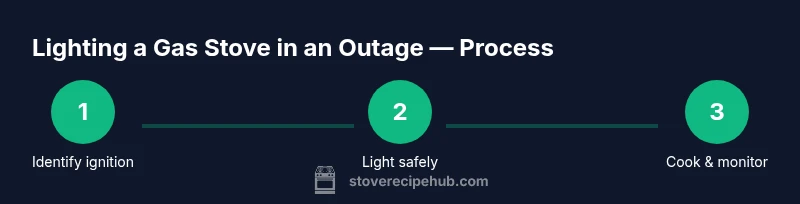
Inspect your stove to determine whether it uses a standing pilot, manual ignition, or electric spark. If there is a pilot light, you can light it with a long lighter. If there’s only an electric ignition, you will need an alternative method or avoid lighting until power is restored.
Tip: Refer to your owner’s manual or the stove’s label on the back of the unit to confirm ignition type. - 2
Ensure area is safe
Open a window or door for ventilation and check for any gas smell. If you detect gas or hear hissing, leave the area immediately and call the gas company from a safe location.
Tip: Do not start or touch electrical devices if you suspect a gas leak. - 3
Light the burner (manual ignition)
If you have a standing pilot or manual ignition, hold the flame source away from your hand and light the burner. Keep your face and body at a safe distance while lighting.
Tip: Keep a steady hand and do not lean over the burner while lighting. - 4
Adjust flame height
Once lit, adjust the burner flame to a low-to-medium height suitable for your pan. A high flame wastes energy and can scorch pots; use a moderate flame for most simmering and frying tasks.
Tip: If the flame goes out, turn the knob off and relight using the same process, unless a persistent flame-out occurs; consult a technician. - 5
Cook with caution
Use flat-bottomed pots and lids to conserve heat. Keep pot handles turned inward to prevent accidental knocks. Avoid leaving food unattended for long periods while power is out.
Tip: Cover pots to speed up cooking and minimize heat loss. - 6
Turn off when finished
After cooking, turn the burner knob to the off position and leave the room for a few minutes to ensure any residual gas is cleared. Check that all knobs are off and there’s no lingering odor.
Tip: Double-check the flame is out before going to bed or leaving the kitchen. - 7
Clean up and store safely
Wipe away spills and store ignition tools in a dry, safe place. Keep flammable items away from the stove and ensure the area remains well-ventilated after cooking.
Tip: Do a quick safety check before the next outage event.
Common Questions
Can I light a gas stove without power?
Yes, if your stove has a manual ignition or standing pilot light. If not, don’t attempt to light it and use alternative methods like a camping stove outdoors.
Yes, you can light it if there’s a manual ignition. If your stove relies on electric ignition, use alternatives and avoid attempting to light it.
Is it safe to use the oven during a power outage?
No. Ovens are not recommended during outages; they often require ventilation and can present higher risk for carbon monoxide buildup.
No; ovens should not be used during a power outage due to gas and CO risks.
How can I tell if there’s a gas leak?
Smell a strong sulfur-like odor, hear a hissing sound, or detect a gas smell. If you suspect a leak, leave the area and call the gas company from a safe location.
If you smell gas or hear hissing, leave the building and contact the gas company.
What should I have ready for outages?
Keep a long lighter, a CO detector, a flashlight, and a small backup cooking option ready. Store flammables away from the stove and ensure proper ventilation.
Have lighting, a CO detector, and a backup stove ready so you can cook safely if power goes out.
Does a gas stove cause CO risk indoors?
Any fuel-burning appliance can produce CO if not ventilated properly. Always use the stove in a well-ventilated area and monitor CO levels with a detector.
Yes, so ventilate and use a CO detector when cooking during outages.
What should I do when power returns?
Turn off any outdoor or backup stoves and reset cooking routines. Wait a moment to re-check for any gas odor or leaks before resuming regular use.
When power comes back, stop and re-check the area for gas or leaks before resuming normal cooking.
Watch Video
Top Takeaways
- Know your stove’s ignition type before outages.
- Ventilate, check for gas smells, and use a CO detector.
- Use manual lighting only if your model supports it; avoid electric ignition without power.
- Always turn off gas after cooking and store ignition tools safely.