Does Stove Need a Dedicated Circuit? Practical Guidance for Home Cooks
Discover whether a stove needs a dedicated circuit, what wiring is typically required, how to verify your panel, and essential safety tips for electric and gas stoves.


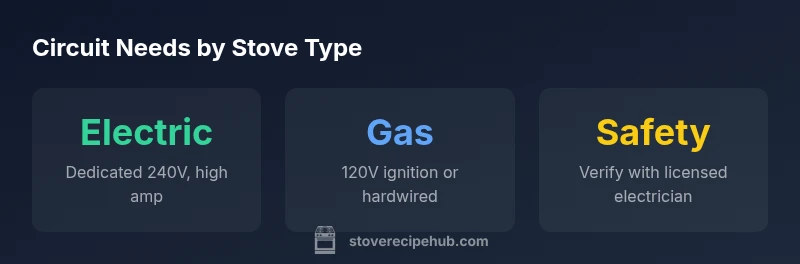
Electric stoves almost always require a dedicated 240-volt circuit, with a matching double-pole breaker and appropriately sized wiring. Gas stoves often rely on a standard 120-volt circuit for ignition and controls, or may be hardwired. Always verify with your appliance manual and local electrical codes.
Does the question does stove need dedicated circuit apply to electric vs gas stoves?
In everyday kitchens, the answer hinges on the stove type and its electrical load. The phrase does stove need dedicated circuit is most relevant for electric ranges, which draw significant current and must be isolated from lighter loads to prevent nuisance tripping. Gas stoves, by contrast, mainly require electrical power for ignition and electronics and may operate on a smaller circuit or be hardwired, depending on model and local code. From a maintenance perspective, ensuring the right circuit size helps prevent overheating and protects home wiring. Stove Recipe Hub emphasizes checking the appliance manual and your local electrical code because requirements vary by jurisdiction. In practice, most electric stoves will require a dedicated circuit designed for high-load appliances; gas stoves may not, but still benefit from correct circuit planning to handle ignition surges and electronic controls.
Electric stoves: wiring, circuit requirements, and code basics
Electric stoves typically demand a dedicated 240-volt circuit with a double-pole breaker sized to the appliance’s load. This setup minimizes the risk of overloading other outlets and reduces nuisance trips during high-heat operation. Wiring should use appropriately gauged conductors and a receptacle or hardwired connection per the stove’s installation manual and NEC-like guidelines. If you’re remodeling a kitchen or upgrading to a larger range, your electrician will verify load calculations, wire gauge, and panel space. Always label the circuit clearly at the panel so future work or resale documentation is accurate. For DIY enthusiasts, avoid modifying a kitchen circuit on your own; consult a licensed electrician to ensure code compliance and safety.
Gas stoves: ignition power, controls, and circuit considerations
Gas stoves rely on gas burners for cooking but still require electricity for ignition, control panels, and lights. Many models use a standard 120-volt circuit or are hardwired to a dedicated 120V supply. Even when ignition loads seem modest, manufacturers may configure electronic components that demand a reliable circuit with proper grounding. If your gas stove is older, verify whether it uses a plug-in cord or needs permanent wiring. In either case, a licensed electrician can confirm that the circuit is adequate and that wiring methods meet local safety standards. Remember: gas appliances must be vented and installed following manufacturer instructions and local codes.
How to verify and plan safely
Begin by locating the stove’s installation manual and identifying the required circuit type and amperage. If you’re unsure, inspect the current breaker and panel labeling to confirm whether a dedicated circuit exists and whether there is headroom for future upgrades. When evaluating a kitchen remodel or new appliance, request a load calculation from a professional. They’ll compare the stove’s wattage or amperage with the panel’s capacity and existing loads. Don’t guess; use a licensed electrician who can size conductors, install a suitable breaker, and ensure the panel has no overheating risk. The goal is reliable power delivery with minimal thermal stress on wiring.
Common installation myths and mistakes
Myth: Any 120V outlet can power a stove. Reality: Electric ranges require substantial current and should be on a dedicated circuit. Myth: If a breaker trips, you can reset and continue cooking. Reality: Repeated trips indicate an undersized circuit or overload; diagnosing and correcting the underlying load is essential. Mistake: Skipping permits or approvals. Reality: Electrical work on kitchen appliances often requires permits, inspections, and code-compliant installations. Always read the manual and work with professionals to avoid hazards.
Remodeling considerations: when to upgrade or reconfigure
During kitchen remodels, plan around appliance placement and panel access. Upgrading to a larger electric stove or moving the range may necessitate running new 240V feeders, upgrading the panel, and possibly coordinating with a licensed electrician to ensure compliance with local codes and safe clearances. If you’re integrating smart controls or high-powered ovens, budget for potential panel upgrades or dedicated circuits. Keeping the circuit design aligned with the stove’s spec sheets helps prevent future electrical issues and supports long-term kitchen reliability.
Practical maintenance and safety tips
Routine checks include confirming the stove’s circuit remains on a dedicated path, inspecting breakers for signs of overheating, and ensuring wiring insulation is intact. If you notice dimming lights, tripped breakers, or warm outlets near the stove, stop using the appliance and consult a professional. Keep the area around the panel clear and accessible, and document any changes or upgrades for future service visits. Regular audits by a qualified electrician are a prudent investment for stove safety and kitchen reliability.
Comparison of circuit needs by stove type
| Stove Type | Typical Circuit | Voltage | Notes |
|---|---|---|---|
| Electric stove | Dedicated 240V circuit | 240V | Double-pole breaker; higher amperage |
| Gas stove | 120V circuit or hardwired ignition | 120V | Ignition/electronics powered by 120V; may vary by model |
Common Questions
Does every electric stove require a dedicated circuit?
In most cases, yes. Electric stoves typically require a dedicated 240V circuit with a suitable breaker. Always consult the installation manual and local codes to confirm the exact requirements for your model.
In most cases, electric stoves need a dedicated 240-volt circuit. Check your manual and local codes to be sure.
Can a gas stove share a circuit with other appliances?
Gas stoves often use a 120V circuit for ignition and electronics, which may share a circuit with other low-load devices. Confirm load calculations with a professional to avoid overloading.
Gas stoves usually use 120V for ignition and can share a circuit if the load is low, but have a pro verify.
What happens if a stove is wired to the wrong circuit?
Incorrect circuit sizing can cause frequent breaker trips, overheating, or fire hazards. Do not modify wiring yourself; hire a licensed electrician to correct circuit size and connections.
The wrong circuit can trip breakers or create a fire risk—get a pro to fix it.
Is a dedicated circuit always required for gas stoves?
Not always; many gas stoves use a dedicated 120V supply for ignition, but requirements vary. Always follow the manufacturer’s instructions and local codes.
Gas stoves often use 120V for ignition; check the manual and codes.
How can I tell if my breaker is sized correctly?
Have a licensed electrician perform a load calculation and verify the breaker size matches the stove’s requirement. Do not rely on guesswork.
Get a pro to confirm the breaker size matches the stove.
“Electrical code compliance and appliance guidelines are the baseline for safety. Align circuit capacity with the stove's load and have a professional verify.”
Top Takeaways
- Know your stove type before wiring decisions
- Electric stoves usually need a dedicated 240V circuit
- Gas stoves rely on 120V power for ignition and controls
- Always verify with the manual and local codes
- Hire a licensed electrician for major changes