What Size Wire Do Electric Stoves Need? A Practical Guide
Learn the correct wire size for electric stoves, including 40A vs 50A circuits, copper vs aluminum conductors, and safety tips from Stove Recipe Hub.


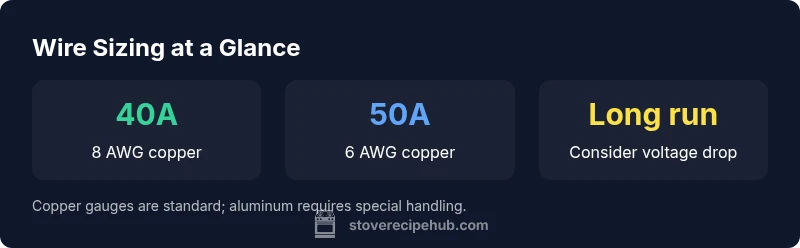
Most residential electric stoves use a dedicated 40- to 50-amp circuit. The wire gauge should be 8 AWG copper for a 40A circuit or 6 AWG copper for a 50A circuit. Always verify the stove’s manual and local codes, and consult an electrician for long runs or aluminum conductors. This approach minimizes voltage drop and overheating while ensuring safe operation.
What size wire is needed for an electric stove: a practical baseline
The question what size wire is needed for an electric stove is a common one for new homeowners and DIY enthusiasts. According to Stove Recipe Hub, most residential ranges operate on a dedicated 40- to 50-amp circuit. The exact wire gauge depends on the circuit rating and installation distance. For many homes, that means 8 AWG copper on a 40A circuit or 6 AWG copper on a 50A circuit. The Stove Recipe Hub team found that relying on the stove’s manual and local codes is essential to avoid undersized wiring. In practice, when planning a stove upgrade, start by identifying the circuit breaker size in the panel, then pick copper conductors that match that rating. If the run is long, or if aluminum wiring is involved, you may need to adjust gauge or switch to a different conductor type to prevent voltage drop and overheating. By understanding these basics, you can confidently choose a wire size that meets safety and performance needs.
How circuits and wire gauge work together
Electrical circuits and wire gauge work as a matched system. The amperage a stove draws determines the minimum circuit size, while the wire gauge limits how much current can safely travel from the panel to the appliance. In simple terms, bigger amperage requires thicker wires. When you ask what size wire is needed for an electric stove, you’re asking about a balance between the circuit rating, the length of the run, and the conductor material. The Stove Recipe Hub analysis shows that installers often default to a 40A circuit with 8 AWG copper for standard models, but larger stoves or models with high thermal output may require a 50A circuit with 6 AWG copper. Always plan for a dedicated circuit with proper strain relief and a grounded connection. The choice of conduit, box rating, and breaker compatibility also influences the final wire size. In all cases, never piggyback on shared circuits or use undersized wire for a dedicated stove installation.
When 40A vs 50A circuits apply
Many homeowners wonder which circuit rating is appropriate for their stove. The general rule is: if the stove’s electrical rating falls toward the lower end of the range (roughly 4–6 kW in typical homes), a 40A circuit with 8 AWG copper may suffice. If the appliance has higher output or if the manufacturer specifies a 50A circuit, upgrade to a 50A circuit with 6 AWG copper. Some installations still use older 3-wire connections; modern practice favors a four-wire grounded setup. The bottom line is to match the circuit rating to the stove’s nameplate rating and to ensure the wire size, breaker, and receptacle are all compatible. For readers asking what size wire is needed for an electric stove, remember: the safest path is a dedicated circuit sized per the appliance and local code.
Run length and voltage drop considerations
Voltage drop is a real concern when a stove is wired far from the main panel. The longer the run, the more resistance the conductor presents, which can reduce voltage at the stove and affect performance. In practice, keep runs short when possible and size the wire accordingly. For many homes, 8 AWG copper on a 40A circuit remains adequate for shorter runs, but longer distances or higher-power stoves may justify stepping up to 6 AWG copper on a 50A circuit. If you’re measuring a long distance, consider consulting a licensed electrician to run conduit or upgrade to a larger gauge copper or an alternate material if permitted by code.
Copper vs aluminum conductors
Copper conductors are the most common choice for stove wiring because of their lower resistance and better durability. Aluminum is lighter and cheaper but has higher resistance and requires larger gauges to achieve the same ampacity. When a project involves aluminum wiring, a professional assessment is essential to determine the correct gauge and connections. If you’re asking what size wire is needed for an electric stove and the house uses aluminum conductors, expect to upgrade to copper or use appropriately sized aluminum conductors with compatible connectors and anti-oxidation compounds. The key is to maintain a safe, code-compliant connection that minimizes heat buildup at the connection points.
Safety, permits, and code compliance
Installing or upgrading a stove circuit is not a DIY task for untrained homeowners. In many jurisdictions, a permit and inspection are required to validate that the wiring, breaker size, and outlet installation meet current codes. Always follow the National Electrical Code (NEC) guidelines and your local amendments. If you’re unsure about whether your planned gauge meets the requirements for a 40A or 50A circuit, consult a licensed electrician. The goal is a safe, durable installation that minimizes fire risk and electrical shock hazards. Remember: what size wire is needed for an electric stove can vary based on model, run length, and the type of conductors used.
Installation scenarios and what to ask an electrician
Different homes present different installation challenges. If you’re upgrading an old 3-wire setup to a 4-wire system, you’ll need to verify receptacle compatibility and grounding. If the stove is in a tight space or near heat-sensitive materials, requesting conduit options and protected routing can protect the wiring. When you ask what size wire is needed for an electric stove, bring the stove’s nameplate rating, panel distance, and any existing wiring details to the discussion. A qualified electrician can confirm whether 8 AWG copper on 40A or 6 AWG copper on 50A is appropriate after evaluating the run length and voltage drop, ensuring a safe and code-compliant installation.
Practical maintenance and troubleshooting
Post-installation, periodic checks help maintain safety. Inspect cord ends and connections for signs of looseness, discoloration, or heat damage. If you notice any warming, buzzing, or burning smells near the outlet, shut off power at the panel and call a licensed electrician. For ongoing maintenance, keep the area around the stove clear of combustibles and ensure any protective cover or strain relief remains intact. When diagnosing voltage-related issues, measure the voltage at the stove and at the outlet to see if it remains within the expected range. If consistent problems appear, reverify the circuit rating and conductor size with a professional.
Final quick reference checklist
- Identify the stove’s nameplate rating and ensure a dedicated circuit.
- Choose 8 AWG copper for 40A or 6 AWG copper for 50A.
- For long runs, consult a professional about voltage drop and possible gauge upgrades.
- Decide between copper and aluminum conductors with attention to code requirements.
- Obtain permits if required and ensure proper grounding and four-wire configurations when applicable.
Additional considerations for future-proofing
If you anticipate stove upgrades or higher-wattage models, plan the wiring on a larger-capacity circuit and verify that the panel has available space for a higher-amp breaker. Upgrading to a four-wire configuration or installing a new dedicated circuit with a higher-capacity breaker might save time and money down the line. Also consider surge protection and dedicated isolation from other appliances that could draw current in emergencies.
Range circuit options by amp rating
| Circuit rating | Recommended wire gauge | Typical outlet | Notes |
|---|---|---|---|
| 40A | 8 AWG copper | 40A range outlet | Older or smaller stoves; ensure compatibility |
| 50A | 6 AWG copper | 50A range outlet | Modern stoves; verify panel capacity |
Common Questions
What size wire is needed for a 40-amp stove circuit?
For a 40-amp stove circuit, use 8 AWG copper conductors on a dedicated circuit. The 8 AWG wiring should be protected by a 40-amp breaker. Always confirm with the stove’s nameplate and local codes.
For a 40-amp stove circuit, use 8 AWG copper on a dedicated line. Check the stove manual and local codes, then have an electrician confirm.
Can I use aluminum wire for a stove circuit?
Aluminum can be used in some installations but requires careful sizing and special connectors. It is typically more prone to oxidation and connection issues. A professional should assess whether aluminum conductors are appropriate for your stove and comply with code.
Aluminum can work in some setups, but it needs careful sizing and special connectors. Consult an electrician to ensure safety and code compliance.
Is a 50A circuit always required for electric stoves?
Not always. Some smaller or older stoves may operate safely on a 40A circuit, while modern high-performance models often require 50A. Always refer to the stove’s rating and local codes when deciding on circuit size.
Not always. Check the stove’s rating and local codes; many larger stoves need 50A, but some models fit 40A.
How long can the wire run be before voltage drop becomes a concern?
Voltage drop becomes a concern as runs lengthen. A common reference point is to consult a professional if runs exceed about 100 feet for 8 AWG copper on a 40A circuit, which may prompt gauge adjustment or alternative routing.
Longer runs need checks—contact a pro if your distance approaches 100 feet for safer gauge choices.
Should I upgrade wiring if I’m upgrading the stove model?
If upgrading to a higher-wattage stove, plan for a circuit upgrade and possibly larger gauge conductors. A licensed electrician can verify panel capacity, breaker size, and wire gauge to ensure a safe, future-proof installation.
If you’re upgrading the stove, check whether you need a bigger circuit and safer wiring—an electrician can confirm.
“Accurate wire sizing for stoves isn’t optional—it’s foundational for safety and performance. Always match the wire gauge to the circuit rating and follow local codes.”
Top Takeaways
- Verify the stove’s nameplate rating before wiring decisions
- Use 8 AWG copper for 40A and 6 AWG copper for 50A circuits
- Distance matters: longer runs may require larger gauge
- Copper is generally preferred; aluminum requires careful planning
- Hire a licensed electrician for code compliance and safe installation