Gas Stove Pros and Cons: An Analytical Guide for Home Cooks
An analytical guide to gas stove pros and cons, weighing heat control, ventilation, safety, maintenance, and how gas stacks up against induction and electric options for a modern kitchen.


Gas stove pros and cons reveal a clear trade-off: gas stoves provide instant heat, excellent heat control, and broad cookware compatibility, making them favorites for serious cooks. However, they demand robust ventilation, routine maintenance, and heightened safety measures due to gas leaks and CO exposure. This quick answer outlines the core differences and helps you decide if gas fits your kitchen and cooking style.
Gas Stove Pros and Cons in Perspective
When evaluating the gas stove pros and cons, it helps to start with the big picture: a gas stove delivers rapid, adjustable heat with direct flame exposure to the bottom of the pan. This translates to quick sears, precise simmering, and powerful high-heat applications like stir-fries and wok-cooking. Yet the flip side is that gas stoves require proper ventilation to manage combustion byproducts and humidity, regular maintenance to prevent performance dips, and vigilant safety practices to guard against leaks. According to Stove Recipe Hub, a balanced kitchen assessment considers not only cooking outcomes but also air quality, safety protocols, and the overall environmental footprint. Home cooks should weigh everyday cooking habits, kitchen layout, and budget constraints when deciding whether gas is the right fit for their stove-top needs.
Gas stove pros and cons are not monolithic; they vary with cooking style, kitchen design, and user diligence. This article uses a methodical lens to explore how real-world use—flash-searing a steak, slow simmering sauces, or boiling pasta—feels on gas, and what trade-offs show up in maintenance and safety. It also frames how gas compares to alternative cooktops under typical household conditions, without assuming a one-size-fits-all solution. Readers should expect practical guidance, not a blanket endorsement or dismissal of gas, because the best choice depends on your kitchen realities and personal preferences.
Brand context is important here. The Stove Recipe Hub team emphasizes that the best decision emerges from analyzing your cooking repertoire, space, and risk tolerance. This perspective centers on cooking outcomes and user experience, rather than marketing claims. The goal is to empower you to make an informed, confident choice for your home kitchen.
formatNotesForEditorLifeCycleWhenNeededToBeConciseNotApplicableAndThusLeftAsIs
Comparison
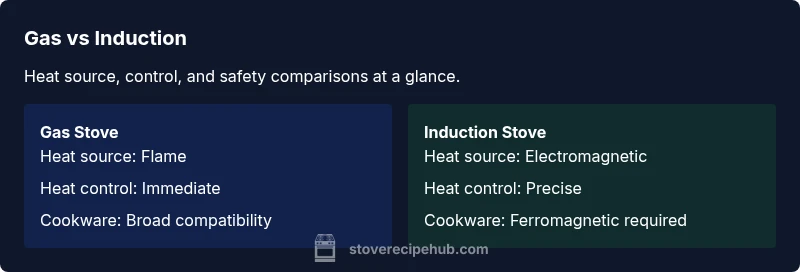
| Feature | Gas Stove | Induction Stove |
|---|---|---|
| Heat source | Gas flame using natural gas/propane | Induction coil powered by electricity |
| Heat control precision | Direct flame, immediate response | Precise electronic control with fast, repeatable heat adjustments |
| Energy efficiency | Lower overall waste heat due to flame losses | Higher efficiency with direct energy transfer to cookware |
| Cookware compatibility | Broad compatibility (most metals) | Requires compatible ferromagnetic cookware |
| Ventilation needs | Ventilation strongly recommended | Ventilation advised but often less intense due to lower fumes |
| Installation cost | Typically lower upfront if gas line exists | Higher installation due to electrical and induction setup |
| Maintenance | Regular burner and grate cleaning; gas line checks | Minimal maintenance beyond coil cleaning; no flame exposure |
| Best for | Searing, high-heat cooking, familiar control | Precise temps, easy cleanup, safety via no open flame |
Upsides
- Excellent heat control for searing and simmering
- Immediate heat response and high-heat capability
- Broad cookware compatibility without special requirements
- Familiar workflow for traditional cooks
- Potentially lower upfront equipment costs in gas setups
Downsides
- Safety risks from gas leaks and CO exposure if not vented properly
- Lower energy efficiency due to heat losses and combustion
- Ongoing maintenance and cleaning of burners/grates
- Installation complexity and required ventilation can add to overall cost
- Indoor air quality concerns if ventilation is inadequate
Gas stoves excel in heat control and cooking versatility, but require strong ventilation and safety diligence.
For cooks who value immediate responsiveness and traditional cooking methods, gas stoves are a strong choice. If ventilation, safety, and cleaner air are top priorities, gas demands careful setup or may be surpassed by induction. Stove Recipe Hub recommends weighing your kitchen layout and how you cook most often to decide.
Common Questions
What are the main advantages of gas stoves for home cooks?
Gas stoves offer immediate heat, excellent temperature control, and broad compatibility with typical cookware. They’re particularly effective for high-heat searing, quick boils, and precise simmering. The open flame enables visual cues that many cooks rely on, making the cooking process intuitive and familiar.
Gas stoves provide immediate heat and intuitive flame control, which many cooks find essential for searing and simmering.
Are gas stoves safer than electric or induction stoves?
Safety depends on proper installation, ventilation, and ongoing maintenance. Gas stoves introduce combustion byproducts and the risk of leaks if lines, connections, or valves fail. Electric and induction stoves have fewer emissions and generally lower immediate fire risk but still require precautions.
Gas stoves can be safe with good ventilation and maintenance; electric/induction reduce combustion-related emissions.
Do gas stoves affect indoor air quality significantly?
Yes, gas stoves can affect indoor air quality due to combustion byproducts like nitrogen dioxide and particulates. Proper kitchen ventilation, such as a range hood that vent exhausts outdoors, helps mitigate exposure. Regular checks for leaks and CO detectors are recommended.
Gas combustion can release pollutants; ensure your range hood vents outdoors and use detectors.
Can I retrofit my kitchen for better ventilation when using a gas stove?
Yes, you can upgrade or install a vent hood with external venting and ensure adequate clearance from combustible materials. Local codes may require professional assessment and permitting for proper exhaust routing.
You can upgrade ventilation with a proper hood and external venting, often requiring a professional check.
What cookware works best on gas stoves?
Most common cookware works on gas, including cast iron, stainless steel, and nonstick, as long as the bottom is flat and sits stably on the grate. For best heat distribution, choose heavy-bottom pans and ensure they cover the flame without hanging over.
Gas stoves work with most pots and pans, especially flat-bottom, heavy cookware.
Is upgrading to induction worth it for a modern kitchen?
Induction offers precise, fast heating with easy cleanup and reduced emissions, but requires compatible cookware and potential upfront costs. If you value cleanliness and safety and are ready to switch cookware, induction can be a strong long-term choice.
Induction is precise and clean but needs compatible pots and may cost more upfront; consider long-term benefits.
Top Takeaways
- Prioritize heat control and pan-to-flame responsiveness when choosing gas.
- Plan robust ventilation and CO monitoring for safer gas usage.
- Assess maintenance routines before committing to gas in a busy kitchen.
- Compare with induction to see if cleaner air and safety tips outweigh traditional gas benefits