Gas Stove vs Electric: An Analytical Guide for Home Cooks
A thorough, evidence-based comparison of gas stove vs electric appliances for stove-top cooking, covering heat control, safety, efficiency, and maintenance to help you decide.


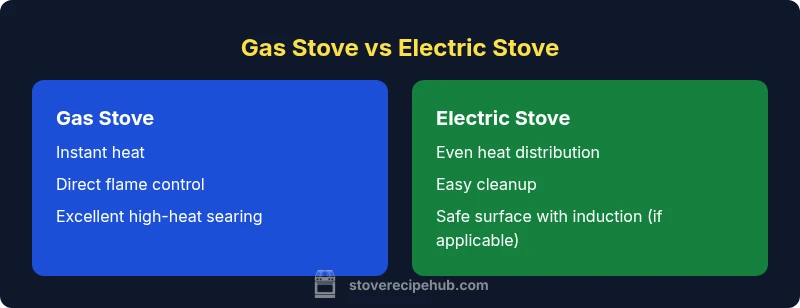
gas stove vs electric is a longstanding debate for home cooks. In short, gas stoves offer instant heat, precise flame control, and better performance with wok use, while electric stoves provide even heating, easy maintenance, and safer operation for some kitchens. This comparison highlights core differences, ideal use cases, and practical trade-offs to help you decide.
Core differences in how gas stove vs electric stoves generate heat
Gas burners produce an open flame that directly heats cookware, allowing rapid temperature changes. Electric stoves use coil or ceramic elements that heat more slowly but provide steadier heat once up to temperature. This fundamental difference influences not only temperature response but also heat distribution, cookware compatibility, and maintenance needs. The Stove Recipe Hub team notes that the choice often hinges on how you cook most often and how much ventilation your kitchen allows. For many households, the contrast is most noticeable in high-heat searing and quick boil tasks versus steady simmering and precise step-down cooking. Understanding these core differences helps home cooks map their typical menus—stir-fries and wok-tlar tasks to gas, simmering sauces and delicate reductions to electric—to guide a smarter, more satisfying kitchen workflow.
How heat is delivered: flame, coil, and induction
In gas stoves, heat travels from the gas flame through the pan base, giving you immediate feedback and fine-grained control via the burner knob. Electric models differ: coil elements heat through resistive metal, while smooth-top ceramic or glass surfaces distribute heat across a larger area, which can reduce hotspots but slow down rapid temperature changes. Induction, a subset of electric stoves, heats the pan directly using magnetic fields while the surface stays cool to the touch. This matters for cookware compatibility (ferrous metals work best with induction), cleaning simplicity, and safety. Stove Recipe Hub analysis shows that many kitchens benefit from understanding cookware compatibility and energy use when weighing induction against traditional electric coils or gas.
Heat control and responsiveness: quick adjustments vs steady heat
Gas offers near-instant heat changes; turning down a flame reduces heat immediately, and turning it up yields quick response. Electric coils take longer to respond, as the element must reheat and distribute heat across the cookware. Ceramic tops improve surface uniformity but can still lag during rapid flame changes. Induction stands out for its speed and precision: you can reach a target temperature quickly, and the heat is mostly transferred through the pan, reducing surface heat and improving control. The trade-off is cookware compatibility and potential upfront costs. For most households, gas shines for stir-fry cooking and bold searing, while electric, particularly induction, excels in steady simmering and consistent results with less post-cooking maintenance. This section emphasizes practical behavior you can expect in daily meals.
Cooking performance by cuisine: searing, simmering, and specialized tools
High-heat methods like quick sears, flame-flashed finishes, and wok tossing benefit from gas’s swift response and high maximum heat. Electric tops are often favored for sauces, eggs, and delicate simmering where even heat reduces scorching risk. Induction can combine the best of both worlds: fast heat with exceptionally controlled simmer and excellent efficiency. When planning weekly menus, highlight dishes that demand fast changes in temperature and those that require long, stable simmering. Stove Recipe Hub suggests keeping a couple of cookware options on standby: carbon-steel or cast-iron pans for gas searing, and heavy-bottom stainless or nonstick for electric simmering. This approach minimizes surprises and makes weekend cooking less stressful.
Safety considerations and ventilation: protecting your kitchen and lungs
Gas stoves inherently involve an open flame, which means adequate ventilation is essential to manage combustion byproducts and humidity. A range hood with proper capture is recommended, and CO detectors improve long-term safety. Electric stoves pose fewer immediate combustion risks but still require caution around hot surfaces and electrical outlets, especially in humid kitchens or older homes. Induction adds another safety benefit: the cooktop stays cool to the touch in most areas, reducing burn risk. Regardless of type, routine maintenance, proper installation, and adherence to appliance manuals are critical. Stove Recipe Hub emphasizes that safety is not a one-size-fits-all feature but a routine practice of ventilation, clean gas lines, safe wiring, and thoughtful kitchen layout.
Cleaning, durability, and long-term maintenance: staying tidy and reliable
Gas tops accumulate grease on burners and grates and require periodic cleaning to maintain even flame performance. Coils and glass-ceramic tops on electric stoves often wipe clean more readily, but glass surfaces can scratch if abrasive cleaners or rough cookware are used. Induction cooktops require careful cleaning to prevent residue buildup that can interfere with heat distribution. Longevity varies by model and usage; regular cleaning, prompt spill management, and using the right cookware prolongs life for both gas and electric options. Stove Recipe Hub notes that maintenance habits strongly influence reliability and total cost of ownership over 5–10 years.
Energy efficiency, costs, and lifecycle value: what stays in your wallet
Operating costs depend on local energy prices, the efficiency of the appliance, and how you cook. Gas tends to be more cost-effective per BTU in regions with inexpensive natural gas, but heat loss and ventilation requirements can add indirect costs. Electric stoves incur electricity costs, with induction often delivering higher efficiency by heating only the pan. In practice, the most economical choice aligns with your cooking patterns, energy prices, and how often you upgrade. Stove Recipe Hub highlights that lifetime value matters: consider not only upfront price but ongoing gas or electricity consumption, maintenance needs, and potential future upgrades.
Decision framework for choosing gas vs electric: a practical checklist
Start by listing your most frequent dishes and their heat needs. If you regularly sear, stir-fry, or wok, gas may serve you better due to quick heat and flame control. If you prefer even heat for sauces, eggs, and long simmers, electric (ideally induction) could be the safer, simpler choice with lower post-cooking cleanup. Consider your kitchen layout, ventilation, and energy infrastructure: do you have a strong electrical circuit or a dedicated gas line and hood? Finally, reflect on your willingness to invest in cookware adaptation and potential upgrades. A small, staged upgrade can help you test each system before a full replacement.
Getting started: how to transition or upgrade successfully
If you’re upgrading, plan a phased approach: assess your current cookware compatibility, assess electrical panels or gas line capacity, and factor in venting requirements. In many homes, professional installation ensures safe gas lines and compliant ventilation, while electricians confirm circuit capacity for electric or induction. Start with a trial month on the new setup if possible, keeping detailed notes on heating behavior, evenness, and your comfort in everyday tasks. Your ultimate goal is to minimize disruption while maximizing the reliability and enjoyment of your cooking routine.
Comparison
| Feature | Gas stove | Electric stove |
|---|---|---|
| Heat response and control | Instant, direct flame changes | Slower, steadier adjustments (coil/ceramic) |
| Simmering performance | Aggressive control with flame; fast to rise and fall | Even, gradual heat; can be slower to adjust low |
| Best for cuisine types | High-heat searing, wok cooking, rapid boils | Even cooking for sauces, eggs, and long simmers |
| Safety considerations | Open flame requires ventilation and CO monitoring | No open flame; relies on electrical safety and proper wiring |
| Maintenance and cleaning | Burners and grates require regular cleaning | Glass/ceramic tops wipe-clean; coils may require attention |
| Power/installation needs | Dedicated gas line; venting typically needed | Reliable electricity; induction requires compatible cookware |
Upsides
- Direct flame offers instant heat and precise control
- Gas excels at high-heat cooking and fast temperature changes
- Smooth electric tops provide easy cleaning and a consistent surface
- Induction (electric) delivers fast heating with high energy efficiency when compatible cookware is used
Downsides
- Gas requires ventilation and raises concerns about combustion byproducts
- Open flame can pose safety risks in small or cluttered kitchens
- Electric coils can be slow to respond and may have hotspots on older units
- Electric outages can render an entire stove unusable
Gas stoves are preferable for performance-focused cooking; electric stoves excel in safety and ease of use
Choose gas if you prioritize heat responsiveness and wok-style cooking. Choose electric if you want easier cleanup and steadier heat, especially where outages are rare and a robust electrical system exists.
Common Questions
Which heats up faster, gas or electric?
Gas heats up faster due to direct flame and immediate flame adjustments. Electric coils take longer to reach target temperatures, though induction can be very quick when compatible cookware is used.
Gas heats fastest; induction can be quickest with the right pots, while standard electric coils lag behind.
Is induction considered part of electric stoves?
Yes. Induction is a type of electric stove that heats cookware via magnetic fields, not by heat passing through a coil or ceramic surface. It requires ferrous cookware but offers high efficiency and rapid response.
Induction is electric, and it heats only the pan, not the stove itself.
Which is cheaper to operate overall?
Costs depend on local energy prices and appliance efficiency. Gas can be cheaper per unit of heat in some regions, while induction often saves energy by targeting only the pan. Compare your utility rates and typical cooking load.
Costs vary by energy price and model; sometimes gas is cheaper, sometimes induction saves energy.
Is gas safer for households with kids?
Gas stoves pose burn and CO risks if not properly ventilated. Use a hood, keep handles away from edges, and install CO detectors. Electric surfaces reduce burn risk but still have hot surfaces.
Gas needs good ventilation and careful use around children; electric stoves are safer in terms of open flames.
Can I switch from gas to electric easily?
Switching involves electrical circuit assessment, potential wiring upgrades, and professional installation. It is not typically a DIY project and should follow local codes and permits.
Switching requires professional install and proper wiring; plan for permits if needed.
Do gas stoves need a ventilation hood?
Yes. Gas stoves typically require an adequate range hood to manage combustion byproducts, moisture, and odors. A properly sized hood improves safety and comfort.
Yes—gas stoves usually need a good ventilation hood.
Top Takeaways
- Identify your most common dishes and map heat needs to gas or electric behavior
- Gas favors fast heating and high-heat searing; electric promotes even, steady heat
- Induction offers the best mix of speed and safety with compatible cookware
- Plan for ventilation, electrical capacity, and cookware compatibility in advance