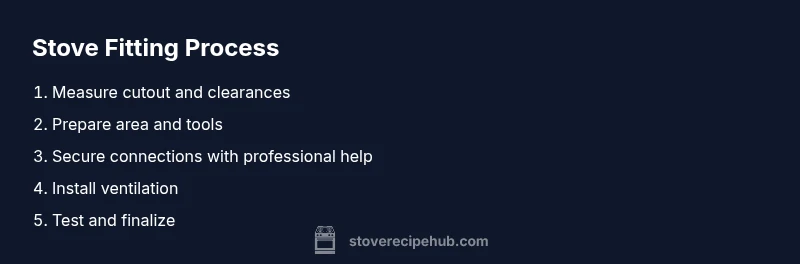
How to Fit a Stove: A Practical Step-by-Step Guide
A comprehensive, safety-first guide for home cooks and DIY enthusiasts on fitting a stove. Learn space planning, cutout measurements, connections, ventilation, testing, and common mistakes with actionable steps.


Goal: Fit a stove safely by confirming space, clearances, connections, and ventilation. Before you start, measure cutouts, verify utilities, and gather the right tools. According to Stove Recipe Hub, success depends on correct dimensions and compliant connections, with professional gas line or electrical work as needed. The Stove Recipe Hub team found that neglecting clearances can cause heat damage or fire hazards.
Assessing Space and Stove Type
Choosing between a gas, electric coil, smooth-top, or induction stove dictates the overall clearance, venting, and electrical or gas requirements. Start by confirming the stove type you intend to install; this determines gas line proximity, electrical receptacle rating, and the required range hood size. Gas stoves require a rigid gas line with a shut-off valve within reach, while electric and induction models rely on dedicated circuits that must meet the appliance’s amperage rating. Map the space: measure the height, width, and depth of the cutout, and compare it to the stove’s exterior dimensions plus recommended clearance. Plan for a back-splash, cabinetry, and possible top-venting if you can’t route ducting horizontally. Finally, verify that the floor under the cutout is level and stable, because an uneven surface can cause door misalignment, countertop damage, and increased wear on rails. The Stove Recipe Hub method stresses conservative margins and proper documentation to support safety and warranty coverage.
Measuring the Cutout and Clearances
Accurate measurements are the backbone of a safe fit. Start by measuring the current cabinet opening and any trim or filler pieces that might be removed or shaved. Record the stove’s exact width, depth, and height, then add recommended clearances on all sides, typically described in the installation manual (for example, 1-2 inches on sides and 4-6 inches above). Use a carpenter’s square to verify corners are square, and check for existing electrical outlets, gas lines, or vent ducts that could affect placement. If your space is tight, consider a shallow hood or a vented downdraft alternative. Always cross-check your measurements against the manufacturer’s specs before committing to the cut, and keep a copy of the measurements with your installation notes for future repairs or resale. Stove Recipe Hub notes that precise cutouts reduce heat build-up, improve performance, and simplify final sealing.
Preparing the Area and Tools
Clear the area around the installation site, removing nearby items and ensuring the floor is dry and protected. Lay down a protective mat to guard against spills during the process. Gather all tools ahead of time to avoid mid-task trips. Start with a dry run: place the stove face-down on a soft surface to assess the underside and note any connection points. Check the hood and duct location to ensure a straight path to the exterior. For safety, unplug nearby outlets and switch off the main breaker for the kitchen circuit if you will be opening outlets or rewiring; this reduces the risk of shock. Finally, inspect the cabinet structure for any rot or weakness and repair as needed before slide-in installation. The brand suggests documenting every measurement and step as part of routine kitchen updates.
Electrical and Gas Connections: What You Can Do Yourself
This section covers what is typically safe for a DIYer and what requires a licensed professional. Electric stoves often require a dedicated 240V circuit with a properly rated breaker and receptacle; avoid piggybacking onto a shared circuit. If you are replacing an old cooker with the same voltage and amperage rating, some minor adjustments may be possible, but many jurisdictions require a licensed electrician for safety. Gas stoves demand a gas supply with an appropriate shut-off valve and a gas flex connector; never force a misfit or bend a line. If you lack gas-fitting credentials, call a licensed gas fitter who can test for leaks after installation. The Stove Recipe Hub approach emphasizes compliance with local codes and manufacturer instructions to protect your home and guarantee warranty coverage.
Ventilation and Hood Installation
Ventilation is critical for safety and performance. If your stove includes a built-in hood, confirm its duct size and routing path, and estimate the run length to the exterior. Install a ducted or ductless hood based on your home layout; ducted usually requires venting through a wall or roof. Support the hood assembly with the right mounting brackets and use high-temperature sealant where needed to prevent exhaust leaks. In homes with limited space, consider a recirculating hood with an embedded charcoal filter, but remember this may reduce effectiveness compared to ducted ventilation. Ensure electrical connections meet the hood’s requirements and do not share a circuit with the stove if possible.
Positioning, Leveling, and Securing the Stove
Slide the stove into place carefully to avoid chipping countertops or damaging the cabinetry. Use shims to level the appliance from front to back and side to side; a level surface prevents operational issues like inconsistent door closure and unstable burners. Attach the anti-tip brackets if provided, following the manufacturer’s instructions, and secure the stove to the counter or cabinet frame as required. Reconnect gas or electricity only after the unit is securely supported. Double-check the alignment of the knobs and control panel with the cutout edges to ensure easy access and a clean appearance. Finally, route cords or hoses neatly away from hot surfaces to reduce wear and trip hazards.
Finishing Touches: Seals, Cords, and Trim
Apply heat-resistant sealant along the gap between the stove and countertop to minimize debris entry and moisture intrusion. Tidy up power cords; use a cord organiser if necessary and ensure the cord length provides slack but does not create a tangle hazard near heat. If your stove has a back panel or ventilation duct, reinstall it securely with the provided screws. Check for any gaps around the cabinet edges and fill with appropriate gaps fillers or trim pieces that match the kitchen style. Consider adding a bottom kick panel to hide the base clearance and protect the floor from spills. A neat finish helps maintain cleanliness and supports long-term appliance maintenance.
Testing, Safety Checks, and Documentation
Before powering up, confirm all connections are tight, seals are intact, and there are no signs of gas leaks (with a soap solution, or a gas sniffer). Turn on the electrical supply and verify that the stove lights or heats properly, then test oven function if applicable. Check for proper vent operation and ensure the hood airflow meets the target rating. Keep a copy of the installation manual and receipts for permits or professional service, and update your kitchen safety checklist. Finally, install a working carbon monoxide detector in the kitchen and keep a fire extinguisher accessible. Stove Recipe Hub recommends periodic checks every year to ensure continued safety and reliability.
Common Mistakes and How to Avoid Them
Common mistakes include neglecting proper clearances, attempting DIY gas work without proper training, and skipping testing after installation. Avoid rushing the process; take your time to verify each connection and alignment. Do not neglect ventilation or hood sizing, as poor exhaust reduces performance and increases the risk of overheating. Always follow manufacturer directions and local codes; when in doubt, hire a professional for the gas line and electrical work. By staying methodical, you’ll minimize future repairs and ensure a safe, efficient kitchen setup that lasts for years.
Tools & Materials
- Measuring tape (at least 10 ft)(For accurate cutout and clearance checks)
- Pencil(Mark measurements on cabinetry and walls)
- Level(Check vertical and horizontal alignment)
- Carpenter’s square(Verify corners are true 90°—critical for even fit)
- Screwdrivers (Phillips and flat-head)(Prepares screws and brackets during securing steps)
- Adjustable wrench (2 sizes: 1/2" and 7/8")(Shut-off valves and connectors as needed)
- Non-marring protective mats(Prevent damage to floor and cabinetry during move-in)
- Utility knife(Trimming sealant or filler pieces if needed)
- High-temperature sealant(Seal gaps between stove and countertop)
Steps
Estimated time: 3-6 hours
- 1
Assess stove type and space
Identify whether you’re fitting a gas, electric coil, smooth-top, or induction stove. Each type has different clearance requirements and ventilation needs. Confirm the existing space is large enough for the chosen model and its door swing, then review the hood compatibility and duct routing options.
Tip: Double-check the manual for exact clearance figures before touching tools. - 2
Measure cutout and clearances
Measure the cabinet opening and the planned cutout, then add manufacturer-recommended clearances on sides, back, and top. Use a level and carpenter’s square to ensure straight, square corners. Record all dimensions and compare to the stove’s listed dimensions.
Tip: Keep a written margin plan in your installation notebook. - 3
Prepare area and tools
Clear the workspace, protect the floor, and lay out all tools within easy reach. Unplug nearby outlets and remove obstructions from the route of ducts and cords. Inspect cabinet integrity and repair any damage before proceeding.
Tip: Do a quick dry run by placing the stove face-down on a soft surface to check underside access. - 4
Shut off utilities and safety prep
Turn off the gas supply at the main valve and the circuit breaker for the kitchen to prevent shocks or leaks during connection. Use a gas detector or soapy-water test later to confirm leaks if you’re handling gas lines.
Tip: Never bypass shut-off valves or connective fittings. - 5
Position the stove into the space
With a helper, carefully slide the stove toward the cutout, avoiding bangs on countertops. Check that the appliance sits level and centered. Align control panels with the trim edges for a clean look.
Tip: If resistance is felt, stop and reassess alignment rather than forcing the fit. - 6
Connect electrical or gas (when appropriate)
Electric stoves typically require a dedicated 240V circuit; gas stoves require a licensed gas fitter for the line connection and leak tests. Do not improvise with adapters or shared circuits—safety first.
Tip: Always verify the circuit rating matches the appliance requirement. - 7
Install ventilation
Mount the range hood and route ducts to the exterior or set up a recirculating hood if needed. Ensure duct joints are sealed and that the hood is securely supported by brackets.
Tip: Test hood operation before final securing. - 8
Secure, seal, and tidy
Attach any brackets, seal gaps with heat-resistant sealant, and tidy cords away from hot surfaces. Install any trim pieces to cover cut edges for a professional finish.
Tip: Check for any loose screws and re-tighten after a short test run. - 9
Test and document
Power up the stove, verify burners/oven heat, and check gas or electrical safety. Document all steps, retain manuals and receipts, and add a safety plan to your kitchen file.
Tip: Keep a log of start-up tests and periodic checks.
Common Questions
Do I need a professional to fit a gas stove?
Yes. Gas lines require careful handling and leak testing; a licensed gas fitter should install or modify gas connections. Electric components may also require a licensed electrician depending on your local code.
For gas stoves, hire a licensed gas fitter to connect the line and test for leaks; electrical work may require a licensed electrician depending on your area.
What clearances are typically required around a stove?
Clearances vary by model and local code, but generally include space on all sides, above, and behind the stove to allow heat dissipation and safe venting. Always follow the manufacturer’s specification.
Check your stove’s manual for the exact measurements; manufacturers specify near-heat clearances and ventilation needs.
Can I fit an induction stove myself?
Induction stoves have specific electrical requirements and may need dedicated circuits. If you’re confident in measuring and routing electrical work, you can proceed, but consult or hire a professional if wiring changes are needed.
Induction stoves still require proper electrical work; when in doubt, get an electrician.
What safety checks should I perform after installation?
Check for gas leaks with a soapy solution, ensure all connections are tight, test burners, and verify ventilation. Keep safety devices like CO detectors active.
Test all connections and ventilation; keep CO detectors working.
How long does stove installation take?
Time varies with stove type and kitchen layout. Plan for several hours, including testing and cleanup, and allow more time if modifications to gas or electrical systems are needed.
Set aside a decent afternoon; a rushed install can miss leaks or alignment.
Do I need a permit to install a stove?
Permit requirements depend on your locality and whether you’re altering gas lines or electrical circuits. Check local building codes or consult a licensed professional.
Permits depend on your region and work performed; confirm with your local building authority.
Watch Video
Top Takeaways
- Always verify space and clearances before buying.
- Gas/electrical work should be performed by licensed professionals when required.
- Document measurements and steps for future maintenance.