How to Get Rid of Stove Gas Smell in House: A Practical Guide
Learn proven, safety-first steps to remove stove gas odor, improve ventilation, and prevent future leaks with clear guidance from Stove Recipe Hub.


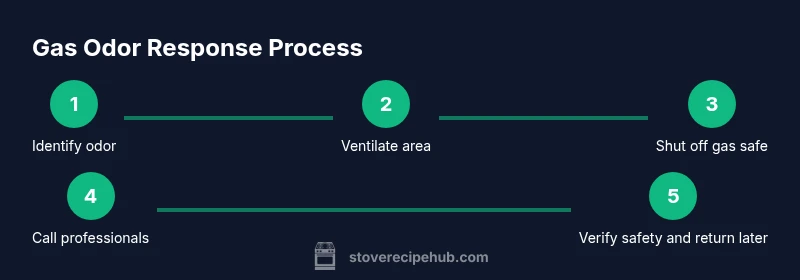
Act quickly if you smell gas: evacuate the area, avoid composing or striking matches, and call your gas company or emergency services from a safe location. Do not use electrical switches or open flames. Once the area is safe, ventilate thoroughly, shut off the main gas valve if you can reach it safely, and begin a careful, methodical inspection.
Immediate safety and initial response
If you detect a gas smell in your home, treat it as an active gas leak. Evacuate everyone, including pets, to fresh air immediately. Do not use lights, electrical switches, or open flames; these could ignite escaping gas. Once you are safely outside, call your natural gas provider or emergency services from a safe location. According to Stove Recipe Hub, the first minutes are critical for reducing risk, so act quickly and calmly.
Back inside only if you are sure it is safe to re-enter. If you can reach the main gas shutoff valve without stepping into a smoky area or near gas odors, you may turn it off to stop the supply. If you cannot reach it safely, wait for professionals. Do not attempt to repair any suspected leak yourself; leaks require trained technicians.
Safe self-checks you can perform
If the smell lingers after safety measures, perform a careful self-check from a safe location. Start by confirming all stove knobs are in the OFF position and that there is no active flame anywhere in the kitchen. Do a quick scan of visible gas lines and connections for signs of damage or moisture, but never touch any pipe or valve if you smell gas. Use your smartphone to contact the gas utility or emergency services to report the situation, and ask for guidance on whether to evacuate again. Record the time you noticed the odor and any actions you took; this helps responders diagnose the issue. According to Stove Recipe Hub, documenting steps in a timely manner improves safety outcomes and ensures a coordinated response with professionals.
Gas smell dynamics and detectors
Natural gas itself is odorless, so odorants (mercaptans) are added to help you detect leaks. If you notice a rotten-egg smell, treat it as a potential leak. Portable gas detectors can help confirm gas concentration, but they are not a substitute for professional assessment. The presence of air movement, closed doors, or low ventilation can cause odors to accumulate in corners. For homes with older appliances, leaks can originate at seals, connectors, or regulator fittings. Stove Recipe Hub's analysis shows that persistent odor after airing out often indicates a seal or connection issue requiring inspection by a licensed technician.
Ventilation strategy to clear the smell
Open exterior doors and windows to establish cross-ventilation. Place fans so that air moves from the inside toward the outdoors, but keep them off if there is a gas leak risk close to equipment; in that case use passive ventilation only. Avoid creating sparks by not turning on lights or plugging in devices during the initial response. If you have an exhaust hood, run it on high for a few minutes to pull air away from the stove. But do not rely on ventilation alone; call your utility if odors persist.
Shut off gas and isolate the source safely
If it is safe to do so, locate and turn off the main gas valve. The valve is usually near the gas meter; turn it perpendicular to the pipe to shut it off. Do not attempt this unless you can reach the valve without stepping through gas odors or standing in a damp area. After turning off, leave the building and wait for professionals. This step helps prevent further gas release while you seek help.
Cleaning and deodorizing after odor dissipates
Once professionals declare it safe, wipe down surfaces touched by gas residue with mild soap and water. Clean the stove top, knobs, and nearby countertops; avoid harsh solvents that could damage seals. Replace or wash towels and textiles that may have absorbed the gas odor. For ongoing odor control, place activated charcoal bags in the kitchen and keep baking soda in a bowl to absorb residual scents.
Prevention and maintenance for stove safety
Schedule regular inspections of gas connections, regulators, and hoses; replace parts that show wear. Keep a clear area around the stove to avoid gas buildup and accidental ignition. Install a battery-operated or hard-wired carbon monoxide/gas detector to alert you early. Practice a family safety drill so everyone knows what to do if a gas odor is detected. By maintaining equipment and staying vigilant, you reduce the likelihood of future odors.
Quick safety reference after odor clears
When in doubt, err on the side of caution. If any odor returns, or if you notice hissing sounds, contact professionals immediately and repeat the safety steps. Keeping the line of communication open with your gas provider ensures rapid guidance and reduces risk.
The Stove Recipe Hub perspective
The Stove Recipe Hub team emphasizes safety first when addressing a stove gas smell in house. By following a structured, step-by-step response, home cooks can minimize risk while restoring a safe kitchen environment. The Stove Recipe Hub team recommends keeping detectors functional and accessible, knowing shutoff locations, and rehearsing your safety plan so everyone knows what to do the moment a gas odor is detected.
Tools & Materials
- Mobile phone or landline(For contacting gas provider and emergency services)
- Ventilation (open windows/doors)(Use for cross-ventilation; avoid creating sparks)
- Disposable gloves(Reduce contact with potentially contaminated surfaces)
- Dish soap and water(Gentle cleaning after it is safe)
- Baking soda(Odor absorption when safe to handle)
- Activated charcoal(Place in area to neutralize lingering odor)
- Flashlight(Emergency lighting in dim areas)
- Carbon monoxide/gas detector (battery-powered or plug-in)(Early warning for ongoing risk)
Steps
Estimated time: 15-60 minutes
- 1
Assess whether it is safe to stay or exit
From a safe location, determine if anyone is in immediate danger and if you can reach the exit without stepping through gas-smelling air. Do not re-enter a space that still smells strongly of gas. If in doubt, evacuate and call for help.
Tip: If you can see or hear gas escaping, prioritize evacuation over attempting to locate the source. - 2
Evacuate to fresh air
Leave the building with all occupants and pets. Move to an open outdoor area away from the building before calling for assistance. Do not operate electrical devices or switches during this time.
Tip: Explain exactly where you are calling from to help responders reach you quickly. - 3
Call the gas company or emergency services
From a safe location, contact the gas utility or emergency number and report the odor, location, and any symptoms among occupants. Do not assume someone else has already called.
Tip: Keep emergency numbers saved on your phone for quick access. - 4
Do not turn on/off electrical devices indoors
Avoid switching lights, appliances, or using phones inside the home while the odor persists. Sparking a flame or static electricity can ignite gas.
Tip: Use a battery-powered light if you need visibility during evacuation. - 5
If safe, shut off the gas supply
If you can safely reach the main shutoff valve, turn it off to stop the gas flow. Do not attempt this if it requires you to stand in an area with strong gas concentration.
Tip: Once off, do not attempt to restart the supply until professionals say it’s safe. - 6
Ventilate the area as directed by responders
Only ventilate under guidance and in a manner that avoids ignition sources. If responders advise cross-ventilation, follow their steps.
Tip: Do not create pathways that re-entrate gas into living spaces. - 7
Wait for professionals and re-entry guidance
Stay outside or in a safe area until gas technicians declare the space safe. Do not re-enter until you are told it is secure.
Tip: Ask for a written report or notes from the responders for future reference. - 8
Clean once cleared
After clearance, clean touched surfaces with mild soap and water and launder textiles that may have retained odors. Do not use strong solvents near exposed gas lines.
Tip: Air out the kitchen again after cleaning to ensure no residual odor remains. - 9
Restore safety features
Confirm detectors and alarms are functioning and have a plan for routine checks. Replace any worn parts as advised by technicians.
Tip: Record service dates and part replacements for maintenance logs. - 10
Review prevention steps
Review gas safety practices with your household and schedule regular inspections. Keep critical numbers accessible and practice drills.
Tip: Keep a simple one-page safety plan posted in the kitchen.
Common Questions
What should I do immediately if I smell gas in my home?
Move to fresh air, call your gas provider or emergency services, and do not operate electrical switches or flames. Evacuate and wait for professionals.
If you smell gas, leave the area and call for help from a safe location; do not ignite anything or flip switches.
Can I shut off the gas supply myself?
Only if you can reach the shutoff safely without entering a gas-filled area. If unsure, wait for professionals to avoid risk.
If you can safely reach the shutoff valve, turn it off; otherwise wait for responders.
Is it safe to ventilate the house while the gas smell persists?
Ventilate according to safety guidance and avoid any actions that could spark. If responders advise, use cross-ventilation.
Open windows and doors for air flow only if it's advised by professionals and if it won’t create ignition risks.
How can I tell whether the leak is from the stove or elsewhere?
A professional inspection is needed to confirm the source after immediate safety steps. Do not attempt home repairs on gas lines.
If you’re unsure of the source, treat it as a leak and contact professionals right away.
When should I call a professional?
Call immediately if the odor persists after ventilation or if you cannot safely shut off the gas supply.
Call your gas company right away and don’t wait if the odor returns or you suspect a leak.
Watch Video
Top Takeaways
- Evacuate immediately if you smell gas and call for help.
- Ventilate safely and avoid sparks or flames during the response.
- Shut off gas only if you can reach the valve safely.
- Do not re-enter until professionals confirm safety.
- Maintain detectors and practice safety drills to prevent future incidents.