Stove Smells Like Gas When Preheating: Quick Fix Guide
Urgent troubleshooting guide for gas odors during stove preheating. Learn immediate safety steps, diagnose common causes, and follow a clear, step-by-step plan to fix leaks safely or know when to call a professional.


If your stove smells like gas when preheating, act quickly: turn off the burner, open windows for ventilation, and avoid creating any ignition sources. This quick guide provides an immediate safety check and a practical diagnostic flow to identify common causes and safe fixes before calling a professional.
Immediate Safety Steps
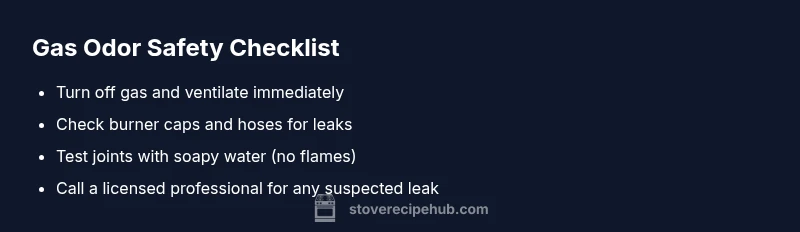
A gas odor during stove preheating is a safety emergency. If you detect a strong rotten-egg smell or hear a hiss, do not light anything or operate electrical switches. Turn off the burner at the control knob, close the gas valve if you can access it safely, and move away from the appliance to a well-ventilated area. Open windows and doors to ventilate; avoid sparks or flames. If the odor persists or you cannot locate the source, evacuate immediately and call your local gas utility or emergency services. Do not attempt to inspect gas lines or repair components while the appliance is on or nearby a spark. According to Stove Recipe Hub, quick, calm action minimizes risk and buys you time to diagnose safely. After you’ve ventilated, stay outside until professionals confirm it is safe. This article provides a practical diagnostic flow to identify common causes and safe fixes without compromising safety. Remember that gas systems are pressurized and leaks can worsen quickly, so safety must come first. By following the steps outlined below, you’ll reduce risk while you determine the right solution.
Quick Non-Destructive Checks
Start with simple checks: ensure the stove is off, the knob is in the off position, and the main supply valve is closed if you can reach it safely. Don’t sniff directly at the flame or the burner when the odor is strong; rely on indicators like hissing sounds, visible vapors, or bubbling soap at joints. If you detect any sign of a leak, do not use electrical devices, do not create sparks, and contact your gas utility immediately. If you can access the area safely, inspect obvious signs of leakage: a faint sulfur-like odor that intensifies near joints, a white residue from bubble testing, or scorched metal around connections. These non-destructive checks help you decide whether to proceed carefully or call a professional right away. This is a safety-first approach emphasized by Stove Recipe Hub to minimize risk while diagnosing.
Typical Causes You Should Know
Gas odors during preheating can stem from several common issues. A loose burner cap or improper seating is a frequent culprit that creates an audible hiss and odor near the burner. A damaged or loose gas connection at the supply hose, valve, or regulator can produce leaks that worsen with preheating. A faulty regulator or damaged gas line upstream can also cause abnormal smell and flame behavior. In some cases, odors arise from a mismatch in odorant distribution or stale gas in the line, though this is less common. Understanding these causes helps you target the right fixes without guessing.
Step-by-Step Diagnostic Outline
Diagnosing a gas odor requires a structured approach. Start with confirming the immediate safety of you and others, then distinguish whether the smell is localized to a single burner or the entire appliance area. If the odor is localized, focus on the burner components (cap, head, and ports). If the odor seems to come from the supply line, do not tamper with fittings and contact a licensed technician immediately. Use a soap solution on joints to test for leaks, watching for bubbles that indicate escaping gas. Keep a log of when the odor occurs (during preheat, after ignition, or only during high heat) to help a professional diagnose more quickly. This diagnostic mindset mirrors best practices from Stove Recipe Hub.
When to Ventilate and When to Call a Pro
Ventilation is essential during any investigation, especially if odors are strong. Open doors and windows and use exhaust fans to dilute any accumulating gas. If you cannot identify a leak quickly or the odor persists after turning the burner off, evacuate and call emergency services or your gas utility immediately. Do not attempt to re-light the burner or bypass safety devices. A licensed professional will perform pressure tests and verify integrity of the supply line, regulator, and appliance connections to prevent future leaks.
How to Inspect Connections and Burners (Non-Destructive)
Non-destructive inspection focuses on external, visible components. Make sure the main gas valve lever is fully closed before touching anything. Remove burner caps and re-seat them correctly so the air-gas mixture vents properly. Check that burner ports are clean and free of debris; a clogged port can cause incomplete combustion and odor. Inspect the hose and nearby fittings for signs of wear, cracks, or corrosion. If you detect any gas spray or hissing at the fittings or hoses, stop and call a professional. This approach helps you rule out simple misalignment before scheduling a service.
Prevention, Maintenance, and Safety Habits
Regular maintenance reduces the likelihood of gas odors. Clean burners after use to prevent clogging, inspect hoses and fittings every 6–12 months, and replace worn components only with manufacturer-approved parts. Install a gas detector near the stove and test it monthly. Finally, develop a routine: turn off the stove after use, ensure proper ventilation during cooking, and keep emergency numbers readily accessible. Stove Recipe Hub emphasizes preventive checks as the best defense against leaks and unsafe conditions.
Steps
Estimated time: 60-90 minutes
- 1
Isolate and secure
Immediately turn the burner knob to the off position and, if safe, close the main gas valve. Move to fresh air and avoid turning on lights or electronics. This step minimizes ignition risk while you assess the scene.
Tip: If you’re unsure about the valve location, prioritize safety and seek help. - 2
Ventilate the area
Open all doors and windows and use any exhaust fans. Do not re-enter the area until the air quality is clear and professionals approve it.
Tip: Keep doors open for at least 10–15 minutes or longer if the odor remains. - 3
Inspect visible parts
Remove and reseat burner caps; confirm proper alignment. Check for cracks or scorch marks on the burner head and surrounding metal.
Tip: Only touch components that are easily accessible and no risk of gas exposure. - 4
Test for leaks safely
If you can do so without risk, apply a soapy water solution to joints and hoses. Bubbles indicate a leak; do not attempt a repair—call a professional immediately.
Tip: Never use a flame to test for leaks. - 5
Decide on next steps
If the odor stops after these checks and the area is aired, you may schedule a professional inspection to confirm safety. If it returns or worsens, evacuate and call emergency services.
Tip: Document the odor timing and any actions taken for the tech visit. - 6
Maintenance plan
Create a simple maintenance plan: inspect hoses and fittings annually, clean burners after use, and install a near-stove gas detector for ongoing safety.
Tip: Set calendar reminders to keep maintenance regular.
Diagnosis: Stove smells like gas when preheating
Possible Causes
- highLoose burner cap or improper burner seating
- highGas supply line leak at connection
- mediumFaulty regulator or pressure valve
- lowCracked hose or damaged manifold
- lowOdorant distribution issue or stale gas
Fixes
- easyTurn off the stove, evacuate if odor is strong, and call the gas utility if smell persists
- easyTighten or reseat the burner cap and ensure correct burner alignment
- mediumShut off the main gas supply and contact a licensed technician for leak checks
- hardReplace damaged hoses or regulators only by a qualified professional
Common Questions
What should I do immediately if I smell gas while preheating?
Turn off the stove, evacuate the area, and call your gas utility or emergency services. Do not light anything or operate switches.
If you smell gas, turn off the stove and leave the area, then call your gas company or emergency services.
Can a loose burner cap cause a gas smell?
Yes. A loose cap can disrupt the gas-air mix and create a leak-like odor near the burner. Re-seat and test cautiously.
A loose burner cap can cause an odor near the burner; re-seat it and test carefully.
Is it safe to use a soap solution to check for leaks?
Use a mild soap solution on joints only if you can do so without risking a gas release. Bubbles indicate a leak and require professional repair.
A soap test can help detect leaks when done safely, but if you see bubbles, call a pro.
When should I call emergency services?
If the odor is strong, you can’t locate the source quickly, or the odor persists after turning off the stove, evacuate and call emergency services.
Call emergency services if the gas odor persists or you can't identify the source.
Can a faulty regulator cause an odor?
Yes, a failing regulator can cause improper pressure and odor. A professional should inspect and replace if needed.
A bad regulator can cause odor; a professional should check it.
Will simply opening windows fix a leak?
Ventilation helps with air quality but does not fix a leak. A leak requires shutoff and professional evaluation.
Ventilation helps temporarily, but a real leak needs professional repair.
Is a gas detector near the stove worth it?
Yes. A dedicated gas detector provides early warning and can alert you before a hazardous situation develops.
Yes, install a gas detector near the stove for early warnings.
What should maintenance include to prevent future odors?
Regular burner cleaning, inspection of hoses and fittings, and scheduled professional checks help prevent odors.
Maintain burners and hoses regularly to prevent odors.
Watch Video
Top Takeaways
- Act immediately on any gas odor.
- Isolate, ventilate, and call professionals when in doubt.
- Check burner caps, hoses, and connectors first.
- Prevent leaks with regular maintenance and safety devices.