Stove Smells Like Gas? Urgent Troubleshooting for Home Cooks
Urgent troubleshooting for a stove that smells like gas. Learn immediate safety steps, diagnostics, and maintenance tips to prevent leaks and keep your kitchen safe.


Immediate safety: If the stove smells like gas, evacuate immediately and call your gas provider or emergency services. The most likely causes are a gas leak at a hose, fitting, or regulator, or a burner that fails to ignite fully, allowing gas to escape. Do not operate electrical switches or flames. If safe, turn the knob to off and move to a well-ventilated area.
Understanding the risk when the stove smells like gas
The distinct odor often points to a real gas release rather than simply a stale kitchen smell. In many regions, mercaptan is added to natural gas so people can detect leaks, and that familiar odor should never be ignored. A stove that smells like gas can arise from a loose connection, a faulty regulator, a misaligned burner cap, or a defective igniter. Each of these issues carries different levels of danger, but all require a careful, safety-first approach. Even if the odor seems faint, treat it as an emergency and prioritize ventilation and evacuation if you cannot confirm safety on the spot. Regular maintenance helps prevent recurrence, but when in doubt, contact your gas utility or a licensed technician immediately.
Immediate safety steps you should take
Act quickly but calmly to protect yourself and others:
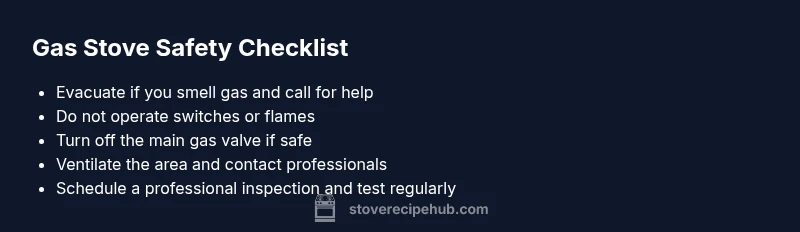
- Evacuate everyone and pets to fresh air if you smell gas or hear a hissing sound.
- Do not use lights, switches, or flames; avoid creating any sparks.
- If you can reach it safely, turn off the main gas valve to stop the supply.
- Call your gas provider or emergency services from outside the home or apartment building, and follow their instructions.
- Do not re-enter the space until professionals declare it safe. Ventilate the area if possible by opening doors and windows after you are clear of the odor.
Safe, quick checks you can perform safely
If you are outside the danger zone and it is clearly safe to do so, perform these checks:
- Inspect visible hoses and fittings for signs of loosening or damage.
- Ensure burner caps and grates are seated properly; a misaligned cap can affect ignition and gas flow.
- For accessible joints, apply a soap-and-water solution to look for bubbles that indicate a leak. If you see bubbles, do not attempt repairs—evacuate and call a professional.
- Do not try to tighten gas fittings or disassemble regulators unless you are a trained technician. Safety first; when in doubt, back away and call for help.
Diagnostic flow: symptom → diagnosis → solutions
- Symptom: Distinct gas odor near the stove, with or without ignition, or a hissing sound.
- Possible diagnoses: A loose hose or connector; a faulty regulator; an unignited burner; a damaged burner cap; or a broader gas-leak in the line.
- Likely fixes: Shut off gas supply if safe, ventilate, and contact a licensed technician. Do not attempt permanent repairs yourself.
- When to escalate: If the odor persists after basic checks or if you do not know whether the main gas valve can be reached safely, call the gas utility immediately.
Most common causes and safe fixes
- Loose or damaged hose/connector: Do not tighten or replace DIY; shut off gas and contact a professional.
- Faulty regulator: This requires professional inspection and replacement if needed.
- Unignited burner or dirty igniter: A cleaning or reassembly by a technician may fix ignition issues, but do not operate the stove until inspected.
- Damaged burner cap or misalignment: Ensure proper seating, but if odor persists, treat as potential leak and call for service.
- Ventilation issue or odor lingering after use: Improve airflow and have a professional assess the system to rule out leaks.
Step-by-step safety-first repair approach (when a professional is on the way)
- Stop using the stove immediately and evacuate if the gas odor remains.
- If safe, turn off the gas supply at the main valve and open exterior doors/windows for cross-ventilation.
- Do not attempt to repair hoses, regulators, or fittings; leave it to licensed technicians.
- Prepare information for the technician: model of the stove, when the odor started, any sounds or signs noticed, and whether you recently moved or changed gas lines.
- When the technician arrives, do not linger in the space; follow their guidance and stay clear of the work area until they declare it safe.
- After a safe repair, schedule a follow-up safety check and consider installing a gas detector as an extra precaution.
Prevention tips and maintenance for a gas stove
- Schedule regular professional inspections of hoses, regulators, and connections.
- Replace any damaged hoses or regulators per manufacturer recommendations or after a leak is detected.
- Keep the area around the stove clear of flammable items and ensure good ventilation during cooking.
- Test for gas leaks periodically with a soap solution on accessible joints, but never use flame or sparks for testing.
- Install a battery-powered gas detector near the kitchen or in the residence for early warning and safety redundancy.
When to call a professional and what to tell them
If you smell gas or suspect a leak, contact your gas company or emergency services immediately. Provide details about when the odor started, whether there was a flame, and what area seems most affected. Tell the technician about any recent work nearby, changes to gas supply, or odors that linger after turning off the stove. A professional assessment is essential for safety and to prevent future leaks.
Steps
Estimated time: 20-60 minutes
- 1
Stop and assess safely
If you smell gas, leave the area and call emergency services or your gas provider. Do not operate switches or flames. Move to fresh air immediately.
Tip: Ensure everyone and pets are accounted for and avoid re-entry until professionals arrive. - 2
Shut off gas if accessible
If you can safely reach the main shutoff valve, turn the gas supply to off. This can stop further leakage while you wait for professionals.
Tip: Only perform this if you can do so without entering a hazardous area or touching hot surfaces. - 3
Ventilate the space
Open exterior doors and windows to improve airflow. Never open or close interior doors if you suspect a building-wide leak.
Tip: Ventilation helps reduce lingering odor and lowers risk of accumulative exposure. - 4
Inspect safely without disassembly
Check visible hoses and connectors for obvious signs of looseness or damage from a safe distance. Do not disassemble gas components yourself.
Tip: Use a flashlight to inspect hard-to-see joints without touching components. - 5
Test for leaks with soap solution
If accessible, apply a soapy water solution to joints to look for bubbles indicating a leak. Do not use flame for testing.
Tip: If bubbles appear, evacuate and call a professional immediately. - 6
Call a licensed technician
Arrange for a certified gas technician to inspect the entire gas line, regulator, valves, and burner components.
Tip: Ask about a safety recap and any recommended maintenance schedule.
Diagnosis: Gas odor around the stove, with or without ignition
Possible Causes
- highGas leak at hose/connector
- mediumFaulty regulator or faulty burner ignition
- lowBurner cap misalignment or debris
Fixes
- easyIf safe, shut off gas supply and ventilate; call a professional
- easyDo not attempt DIY repairs on hoses or regulators
- easyProvide technician with stove model and odor history
Common Questions
What should I do immediately if I smell gas from my stove?
If you smell gas, leave the area and call your gas provider or emergency services. Do not operate electrical switches or flames. Only re-enter after professionals declare it safe.
If you smell gas, evacuate right away and call for help. Do not switch on lights or use any flame until a professional confirms it’s safe.
Can a stove smell gas even if there’s no flame?
Yes. A leak can occur in hoses, fittings, or regulators, causing gas to escape without ignition. A persistent odor should be treated as an emergency.
Gas odors can come from leaks even when the burner isn’t lit, so treat any odor as urgent.
Is it safe to use the stove if the odor is faint?
No. A faint odor can indicate a leak that could worsen. Stop using the stove and call your gas company or a technician.
Even a faint odor should be treated seriously; stop using the stove and contact the pros.
How can I test for a gas leak safely at home?
Use a soap solution on accessible joints to look for bubbles. Do not use flames or lighters. If you see bubbles, evacuate and call for help.
You can test with soap bubbles on safe joints, but never use a flame for testing.
When should I replace hoses or regulators?
Replace hoses or regulators per manufacturer guidance or after any leak suspicion. Have a professional inspect the system first.
Replace parts only as recommended by professionals and manufacturers.
Who should I call if I suspect a gas leak?
Call your gas utility or emergency services. If you’re in a building, inform building management as needed and follow their instructions.
If you suspect a leak, call the gas company or emergency services immediately.
Watch Video
Top Takeaways
- Evacuate and call professionals for any gas odor
- Do not operate switches or flames during suspected leaks
- Only perform safe checks you can access without risk
- Schedule follow-up safety checks and consider detectors for prevention