How to Tell If Your Stove Is Leaking Gas: Urgent Safety Guide
A comprehensive, urgent troubleshooting guide to identify a gas leak from your stove, initiate immediate safety actions, and know when to call professionals.


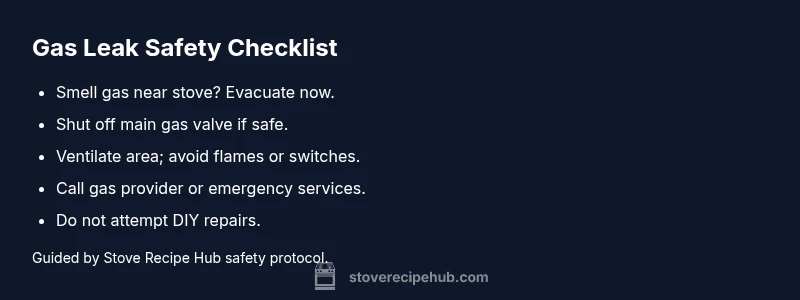
Gas leaks from a stove require immediate action. If you smell gas or hear a hissing, stop using the stove, do not operate switches, and open doors if safe. If you can access the main shut-off valve, turn it off, then leave the area and call your gas provider or emergency services right away.
Understanding the risk and why leaks happen
If you are asking how to tell if stove is leaking gas, you are not alone. Gas leaks can occur from loose connections, damaged hoses, faulty regulators, or damaged copper tubing behind the stove. The risk increases with older appliances, improper maintenance, or recent moves where the gas supply was disturbed. According to Stove Recipe Hub, recognizing signs early and acting fast can prevent catastrophic outcomes. This guide focuses on practical, stove-top safety that home cooks can implement immediately. Remember: gas leaks are emergencies, and time matters when responding. The primary goal is to keep you safe while you secure the area and contact professionals.
Quick signs that gas might be leaking
Gas leaks manifest in several telltale ways. A faint, sulfur-like odor near the stove is the most common warning sign. You might also hear a persistent hissing or whistling sound from connections or behind the appliance. A pilot flame that won’t stay lit, cold spots around the stove, or dead houseplants in the kitchen can indicate a leak. If you notice any of these signs, treat it as urgent and do not ignore it. These indicators align with best practices from Stove Recipe Hub and are backed by safety guidelines common in stove maintenance resources.
Immediate safety actions you should take now
First, cease cooking and avoid using any electrical switches or flames in the area. If it is safe to do so, open doors and windows to ventilate. If you can reach the main gas shut-off valve, turn it off slowly to stop the gas flow. Evacuate anyone in the area and call your gas company or emergency services from a safe location. Do not re-enter the area until authorities declare it safe. These steps are designed to minimize ignition risk and buy time for professionals to assess the situation. Stove Recipe Hub emphasizes quick, decisive action in all leak scenarios.
How leaks are detected in practice and what not to do
Gas leaks are detected through smell, sound, and physical signs, but never rely on a DIY test. Do not light matches, use lighters, or operate electrical devices to check for a leak. While some homeowners try soap-bubble tests on exposed connections, this should only be performed by trained technicians with the right equipment. If you suspect a leak, assume the worst and proceed with the safety sequence: evacuate, ventilate, and contact professionals. This conservative approach is central to effective stove safety protocols.
What to check on your stove and connections safely
Start with a visual inspection from a safe distance: look for loose gas hoses, corroded fittings, damaged regulator components, or scorch marks around burners. Ensure knobs are in the OFF position and that the area around the cooktop is clear of combustibles. If you notice anything unusual, do not attempt to tighten fittings or replace parts yourself unless you are a trained professional. Document observations with photos to share with a technician. This helps ensure a faster, safer repair process when you call for service.
When to call professionals and how evacuation should be handled
If you encounter signs of a gas leak, call your gas provider or emergency services immediately. Do not delay for testing or DIY fixes. Do not re-enter the space until authorities confirm it is safe. When a technician arrives, provide them with details about what you observed and any sounds or smells you noticed. Regular maintenance and professional inspections reduce the likelihood of leaks and protect your home. The Stove Recipe Hub team recommends erring on the side of caution with any suspected gas issue.
Prevention and preparedness for gas-leak safety
Preventive actions save lives. Install a certified gas detector in the kitchen area and keep emergency numbers handy. Schedule periodic professional inspections of gas lines, regulators, and appliances. Practice a simple drill with household members so everyone knows how to respond quickly. Keeping the area clean, clearing gas lines of debris, and replacing worn hoses every few years are practical steps to minimize risk. Stove Recipe Hub highlights that proactive maintenance is the most reliable defense against leaks.
Steps
Estimated time: 15-30 minutes
- 1
Stop and secure the area
Cease cooking immediately and avoid turning lights or electronics on or off. Move to a safe location away from the stove and take a moment to assess signs of a leak without risking ignition.
Tip: Do not re-enter if you still smell gas after you’ve left the area. - 2
Shut off the gas supply if safe
If you can reach the main shut-off valve safely, turn it 90 degrees to close the gas flow. Do not wrench or force valves that are hard to move. Keep hands away from any fuel line or burner while turning.
Tip: If you cannot reach the valve safely, prioritize evacuation and call for help. - 3
Ventilate and evacuate
Open doors and windows to increase airflow, but only if you can do so without approaching the source. Evacuate everyone from the home and stay outside until responders say it’s safe to re-enter.
Tip: If you must go outside through a garage or enclosed space, avoid bringing vehicles through the area. - 4
Call for help and provide details
Contact your gas company or local emergency services. Share observations like smell strength, sounds, and whether you could access the shut-off valve.
Tip: Have your address ready and describe the leak indicators clearly. - 5
Do not attempt DIY repairs
Don’t try to tighten fittings, replace hoses, or test for leaks yourself. Gas work requires licensed technicians with proper tools.
Tip: Document observations to aid the technician’s quick assessment. - 6
Verify safety before re-use
Only after a professional confirms it’s safe, have the technician inspect and repair the system. Follow their guidance before resuming cooking.
Tip: Ask for a written inspection report and maintenance suggestions.
Diagnosis: Gas smell, hissing sound, or flame irregularities near the stove
Possible Causes
- highLoose or damaged gas connections
- mediumFailing regulator or damaged hose
- lowCracked gas line or valve housing
Fixes
- easyShut off the main gas supply if you can access the valve and leave the area.
- easyCall your gas provider or a licensed technician for immediate inspection and repair.
- mediumDo not attempt DIY repairs on gas lines; wait for a professional.
Common Questions
What should I do if I smell gas near the stove?
Evacuate immediately and call emergency services. Do not use any electrical switches or flames. If safe, shut off the main gas valve and wait for professionals to respond.
If you smell gas near the stove, evacuate right away and call emergency services. Do not operate switches or flames.
Can I test my stove for leaks myself?
No. Do not try to pressurize or repair gas lines yourself. Only trained technicians should diagnose and repair leaks. You can observe and report signs to responders.
Don’t try to test or repair gas leaks yourself; call a professional instead.
Is a gas detector enough to keep my family safe?
Gas detectors provide early warning but are not a substitute for professional inspection. Treat any detector alert as a leak and follow safety steps.
A gas detector helps, but it’s not a replacement for professional checks.
What if I can’t reach the shut-off valve safely?
Evacuate immediately and call emergency services. Do not attempt to reach the valve if it requires risky movement near the leak.
If you can’t reach the shut-off valve safely, evacuate and contact emergency services.
When is it safe to return home after a leak?
Only after responders confirm the area is gas-free and the system is inspected and repaired by a licensed professional.
Wait until authorities say it’s safe to return, and then have the system inspected.
Watch Video
Top Takeaways
- Act fast on gas smell or hissing near stove
- Shut off gas only if safe, then evacuate
- Call professionals—don’t DIY gas repairs
- Ventilate and stay clear until advised safe
- Prepare with detectors and known shut-off locations