How to Get Rid of Stove Top Stains: A Practical Guide
Learn proven methods to remove stains from glass, enamel, and stainless stove tops. Safe, step-by-step techniques for grease, sugar, and burnt-on residues.


You will learn how to remove common stove top stains using safe, everyday cleaners. This guide covers grease, sugar, and burnt-on residues, and adapts methods for glass, enamel, and stainless surfaces. Gather simple tools, choose appropriate cleaners, and follow a step-by-step protocol that minimizes scratching, preserves finish, and prevents future staining.
How to get rid of stove top stains: a practical approach
Stove tops endure heat, oil, sugar, and simmering sauces. Over time, these factors create stains that seem stubborn. The first step to effective cleaning is understanding what caused the mark and which surface you're treating. According to Stove Recipe Hub, different surfaces—glass-ceramic, enamel, and brushed stainless—respond differently to cleaners and scrubbing. Before you reach for a bottle of cleaner, inspect the surface for chipping or deep pitting; cleaning can worsen existing damage.
For beginners, the simplest motto is: gentleness first, then stronger methods if needed. Start with a cool surface and a dry cloth to wipe away loose debris. For glass or ceramic tops, avoid abrasive scrubs that can scratch the surface. Enamel is a bit tougher and can take slightly stronger cleaners, but heat marks and metal utensils can leave visible scratches if misused. Stainless steel requires special attention to prevent water spots and streaks. The goal is to remove the stain without altering the finish or causing heat damage. In many homes, a routine cleaning routine— a light wipe with a mild soap solution after cooking—prevents widespread staining. Stove Recipe Hub analysis shows that consistent maintenance reduces the severity and frequency of stains, preserving resale value and ease of future cleaning.
Tools & Materials
- Microfiber cloths or lint-free towels(Soft, nonabrasive; run along the grain on metal surfaces)
- Non-abrasive sponge or soft scrub pad(Avoid green scrub pads on glass and enamel)
- Plastic scraper or a razor blade (careful use)(Only for stubborn, baked-on residues; hold almost flat at 30-45 degrees)
- Baking soda(For paste applications (1 tbsp baking soda to 2-3 tsp water))
- White vinegar (5% acidity)(For mineral spots and as a mild cleaner)
- Dish soap (mild, such as a gentle formula)(Dilute in warm water for initial wipe-down)
- Isopropyl alcohol 70%(Grease-cutting; use on metal surfaces with caution)
- Spray bottle(For dilutions and spray applications)
- Protective gloves(Nitrile or latex; protects skin from cleaners)
- Dry, soft towel for final buff(Dry thoroughly to prevent streaks)
Steps
Estimated time: 20-40 minutes
- 1
Clear and cool surface
Remove cookware and any removable parts; ensure the surface is completely cool before you begin. Wipe away loose debris with a dry microfiber cloth to prevent smearing during cleaning.
Tip: Starting on a warm surface can smear stains and cause cleaner to run. - 2
Test cleaner on a hidden spot
Choose a small, inconspicuous area and test your cleaner/mixture to ensure it won’t discolor or scratch. This protects against accidental damage on delicate finishes.
Tip: A failed test here saves you from larger repairs later. - 3
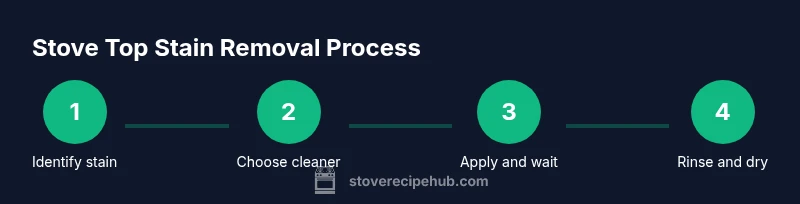
Choose your cleaner based on surface
If glass-ceramic: start with mild dish soap or a baking soda paste. If enamel: you can use baking soda paste or a mild detergent solution. If stainless: a small amount of isopropyl alcohol or vinegar can help with grease and water marks.
Tip: Always start mild and escalate only if needed. - 4
Apply cleaner and wait
Apply the cleaner to a microfiber cloth or directly onto the stain and let sit for 5–10 minutes for baked or stubborn spots. Do not saturate the surface; avoid pooling liquids.
Tip: The waiting time lets the cleaner break down oils and burnt residues. - 5
Gently scrub the stain
Using a non-abrasive pad or soft brush, scrub in light circular motions along the grain (on stainless) or evenly across the surface (on glass/enamel). Rinse the pad frequently to prevent re-depositing loosened grime.
Tip: Avoid aggressive scrubbing that can scratch or dull finishes. - 6
Rinse and dry
Wipe away cleaner with a clean damp cloth, then dry thoroughly with a soft towel to prevent water spots and streaks.
Tip: A quick final buff with a dry microfiber gives a shiny, even finish. - 7
Address burnt-on or tough areas
For burnt-on residues, use a plastic scraper held at a shallow angle (30–45 degrees) with steady, light pressure. Work slowly to lift material without gouging.
Tip: Never use metal utensils or razor blades on glass top—these can scratch seriously. - 8
Evaluate and repeat if necessary
Inspect the surface under good lighting. If stains persist, repeat the chosen method or try a fresh approach, such as a vinegar rinse on mineral deposits.
Tip: Persistent stains may require a second pass or alternate cleaner.
Common Questions
What is the safest cleaner for glass stove tops?
For glass stove tops, start with mild dish soap and warm water or a baking soda paste. Avoid abrasive pads and harsh chemicals that can scratch the surface. Always test a small area first.
Glass tops respond best to mild cleaners; test first, then clean with a non-abrasive pad.
Can vinegar damage stainless steel?
Vinegar is generally safe for stainless steel when diluted and used sparingly. Avoid prolonged soaking and always wipe with the grain to prevent dulling or spotting.
Vinegar is usually fine for stainless if you dilute it and wipe with the grain.
Is baking soda paste safe on enamel surfaces?
Yes, a baking soda paste is typically safe on enamel, but avoid scrubbing too hard. Rinse thoroughly and dry to prevent residue buildup.
Baking soda paste is safe on enamel, just scrub gently and rinse well.
How long should cleaner sit on a tough stain?
Allow the cleaner to sit for 5–10 minutes on stubborn stains to break down oils and burnt residues before scrubbing.
Let the cleaner sit for a few minutes to soften tough stains.
What should I do if the stain persists after cleaning?
If stains persist, repeat the cleaning method or try a different approach (e.g., switch from paste to vinegar-based rinses or from glass-ceramic to enamel-safe cleaners). Consider professional guidance for deep-set damage.
If it sticks around, repeat or switch cleaners and try again, or seek expert help for tough stains.
Watch Video
Top Takeaways
- Identify stain type before choosing cleaner
- Start with mild solutions; escalate gradually
- Use non-abrasive tools to avoid scratches
- Rinse and dry completely to prevent streaks
- Prevent future stains with a quick post-cook wipe