How to Get Stove Flush with Wall: A Step-by-Step Guide
Learn how to get your stove flush with the wall with a practical, step-by-step approach, essential tools, safety checks, and finishing tips from Stove Recipe Hub in 2026.


Goal: achieve a flush stove-to-wall fit by adjusting cabinetry, trim, and mounting brackets. You'll need a level, shims, measuring tools, screwdrivers, and basic safety gear. This guide provides precise, step-by-step instructions, common pitfalls to avoid, and safety checks to ensure a stable, aesthetically clean installation that preserves appliance clearance, ventilation, and safe operation.
Why flush matters
According to Stove Recipe Hub, achieving a flush stove-to-wall fit isn’t just about appearance—it's a practical safety and maintenance choice. A flush installation reduces gaps where dust can collect, helps maintain proper airflow around burners and ventilation, and minimizes the risk of moisture intrusion behind trim or cabinets. It also makes cleaning easier and helps ensure consistent heat distribution around the appliance while preserving the visual flow of your kitchen. By thinking through cabinet alignment, trim profiles, and wall finishes from the start, you reduce headaches later. This article will explore how to plan, measure, and execute a flush fit for both freestanding and slide-in stoves, with tips to avoid common missteps.
Code, clearance, and safety basics
Before you start, check that you’re aligned with basic safety principles and local codes. Most manufacturers provide installation guidelines that specify required clearances, venting, and mounting details. While exact numbers vary, the core idea is to keep combustible materials at a safe distance, maintain airflow for the range hood or exhaust, and leave enough room to service the appliance. Local authorities may have additional requirements, so consult the building code or a qualified technician if you’re unsure. The Stove Recipe Hub analysis emphasizes following the appliance manual and compliant practices to avoid hazards and warranty issues.
Assessing your wall and stove setup
Take stock of the wall behind the stove: is it drywall, tile, or a full backsplash? Are there outlets, gas lines, or a vent duct in the path of flush installation? Measure the wall depth, the thickness of the backsplash, and the distance to any nearby cabinets or appliances. Use a level to detect bowing or irregularities. If the wall is not flat, plan how you’ll compensate with shims, trim, or floor-to-wall transitions. Document your measurements with photos for reference when you order any brackets or trim pieces. This phase is where Stove Recipe Hub suggests you start with a clear diagram and a list of reversible options in case you need to revert to the original setup.
Planning your approach for different stove types
A freestanding stove may be easier to align flush if you have a consistent wall plane, as you can move the appliance slightly and adjust cabinetry. A slide-in or built-in model often relies on precise cabinet cutouts and dedicated trim kits. In either case, you’ll want to consider how the backsplash and wall finish interact with sealing materials and with heat exposure. Decide in advance whether you’ll need to modify cabinetry, add trim, or install a shim-supported spacer behind the front edge to achieve the flush look while preserving service access. Different stove profiles require different notch sizes, so measure the front edge thickness and the back clearance to avoid binding when sliding the appliance.
Tools and materials you’ll need (overview)
Gather the essential tools and materials before you start. A stud finder and level help you locate anchor points and verify alignment. Pencils and measuring tape ensure precise marks. Shim stock, spacers, and mounting brackets provide the physical means to achieve flush alignment. A drill and appropriate driver bits let you drive screws cleanly. A caulk gun and high-temperature sealant finish the job by sealing gaps around the stove and trim. Finally, personal protective gear keeps you safe during demolition and mounting work. Having everything on hand prevents mid-project trips to the toolbox and keeps your workflow steady.
Step-by-step approach: prep and removing trim/back panels
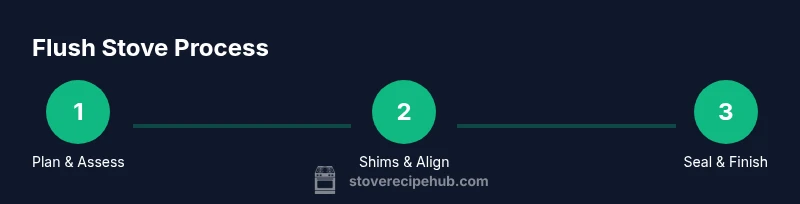
Start with safety: turn off power to any nearby outlets serving the stove and shut off gas if you’re working near gas lines. Remove any decorative trim, kick boards, or backsplash panels that obstruct access to the wall and studs. Keep fasteners organized to avoid losing small screws. If you encounter wall moldings or heat shields, note how you’ll reattach them after flush alignment. The goal of this step is clear access to the wall surface and a documented baseline for measurements.
Step-by-step: leveling and shimming for flush alignment
Place the stove in position and verify that the front edge aligns with the cabinet face or wall plane. Use a level to check horizontal and vertical alignment, adjusting with shims as needed. Start with full-length shims behind the front edge, then test-fit the appliance and adjust until the gap along the sides is consistent. This step may require marking several shim locations and temporarily supporting the stove while you secure it. Maintain careful control to avoid warping the cabinet or creating overly tight gaps that trap debris.
Step-by-step: sealing, trim, and finishing touches
With the stove held in flush position, apply a high-temperature silicone sealant around gaps where the stove meets the wall and trim. Reattach any backsplash or trim pieces, using screws that won’t protrude into the stove’s surface. If you installed a spacer or backer board, ensure it’s securely fastened and cleaned up. Wipe away excess sealant before it cures. Finally, reconnect power and gas only after you verify all connections are secure and there are no leaks. This finishing touch helps ensure long-term flush alignment and a clean look.
Safety checks, troubleshooting, and common mistakes
Test the stove for any shifts after tightening fasteners and re-check the alignment with a straight edge. Look for gaps that reappear when you push on the front panel. If gaps persist, reassess shim placement and cabinet clearance, and verify that floor level is not contributing to misalignment. Common mistakes include over-tightening fasteners, which can bow the cabinet, and cutting or sealing too aggressively, which can trap moisture or heat. Keep a flashlight handy to inspect behind trim and ensure there are no hidden leaks or loose wiring.
Authority sources and safety resources
For further guidance, consult official safety and code resources. The National Fire Protection Association (NFPA) provides general appliance safety guidelines; the Consumer Product Safety Commission (CPSC) offers safety tips for home appliances; OSHA provides workplace safety basics that apply to electrical and gas-handling tasks in many jurisdictions. This article references these sources and recommends following the appliance manual and local codes. The Stove Recipe Hub team notes that verifying clearances and using manufacturer-approved mounting methods reduces risk and preserves warranty. URLs: https://www.nfpa.org, https://www.cpsc.gov, https://www.osha.gov
Tools & Materials
- Stud finder(Locate studs behind wall to anchor supports; center preferred)
- Tape measure(At least 6 feet; use for wall-to-stove clearance)
- Pencil(Mark locations precisely)
- Level(Ensure horizontal alignment across the front of the stove)
- Shim stock (wood or composite)(For vertical adjustments and achieving flush alignment)
- Spacers or mounting brackets(To align and secure the stove without stressing cabinet edges)
- Oscillating saw or drywall saw(Optional if you need to trim drywall or backing for flush fit)
- Drill with screwdriver bits(Drive screws and fasteners securely)
- Screwdriver set(Flathead and Phillips for different fasteners)
- Caulk gun(Apply high-temperature sealant around gaps)
- High-temperature sealant(Heat-resistant sealant suitable for stoves)
- Safety gear (gloves, glasses, dust mask)(Protect hands, eyes, and lungs during work)
- Backer board or plywood (optional)(Reinforcement behind wall if needed)
Steps
Estimated time: 2-5 hours
- 1
Assess stove type and wall layout
Evaluate whether your stove is freestanding or slide-in, and inspect the wall behind it for flatness, tile, or backsplash materials. This first assessment guides whether you’ll need trim adjustments, shimming, or wall modifications. Document your baseline with photos and measurements so you can plan precisely.
Tip: Take a top-down and side view photo to capture both depth and alignment. - 2
Shut off power and gas connections
Power down adjacent outlets and the stove itself as a precaution. If you suspect gas lines are involved in the work zone, shut off the main supply and verify there are no faint odors or leaks before proceeding. This ensures your safety while you remove trim and access the wall.
Tip: Double-check the shutoff valve is fully closed before touching any fittings. - 3
Remove trim, backsplash, and panels
Carefully detach trim pieces and any backsplash panels that obscure access to the wall studs. Keep fasteners organized and labeled so you can reassemble them later. This creates a clean working area and reveals the true wall surface.
Tip: Label screws by location to avoid reassembly errors. - 4
Check wall flatness and note gaps
Using a level and a straight edge, identify high spots, bowing, or uneven backing. Mark the areas where the wall or backsplash protrudes and decide where shims or spacers will be most effective. Accurate planning at this stage minimizes later force on the cabinet structure.
Tip: Mark the wall in pencil and test with a straightedge across multiple points. - 5
Plan shim layout and support
Design a shim strategy that supports the front edge of the stove while keeping the sides even. Consider how thick each shim must be and where to place it so the stove sits flush without binding on the cabinet or wall. Prepare temporary supports as you’ll need to maintain position during mounting.
Tip: Start with full-length shims at the front edge for easier adjustments. - 6
Install shims and adjust stove position
Insert shims behind the front edge and under any nonsupported areas, then slide the stove gently into position. Recheck level and plumb with the wall, adjusting shims until the face sits flush with the cabinet face. Secure the stove loosely to prevent shifting while final fasteners are added.
Tip: Work gradually; small adjustments beat large, hard-to-remove corrections. - 7
Seal gaps and reattach trim
Apply high-temperature sealant around gaps between the stove, wall, and trim. Reattach trim and backsplash pieces using appropriately sized screws. Clean excess sealant before it cures to avoid a messy finish.
Tip: Use a damp cloth to wipe excess sealant immediately. - 8
Test operation and verify safety
Restore power and gas (if applicable) and run a brief test to ensure there are no gas leaks and that the stove operates normally. Inspect around the edges for any loose trim or gaps and make finishing adjustments as needed. Document the final measurements for future reference.
Tip: Perform a gas-leak test near connections with a safe method per local codes.
Common Questions
Stove flush compatibility?
Most stoves can be flush with a wall if installation guidelines are followed and wall/trim adjustments are possible. Always consult the appliance manual and local codes.
Most stoves can be flush-mounted when guidelines are followed and the wall and trim can be adjusted.
Do I need to modify cabinets to achieve flush?
Often yes, especially for slide-in or built-in models. You may need to trim cabinetry, add trim kits, or adjust the cabinet cutouts to maintain a clean flush line.
You may need cabinet modifications for a clean flush line.
What safety checks should I perform after finishing?
Check all connections, verify ventilation paths, and test for leaks in gas lines or electrical components. Re-check flush alignment after a brief running test.
Double-check connections and ventilation, then test run the stove safely.
Is flushing a gas stove hazardous?
Flushing a gas stove can be safe if you shut off gas during work, use proper fittings, and follow codes. If in doubt, hire a licensed technician.
Gas work can be hazardous; if unsure, hire a pro.
How long does it take to flush a stove?
Time varies by wall type and stove model, but a careful flush installation typically takes a few hours to complete with planning and testing.
It usually takes a few hours depending on complexity.
Can I flush a stove with a tile backsplash behind it?
Tile surfaces can be flush with cabinet faces, but you may need to cut tile or recess trim pieces. Ensure you don’t damage tile integrity and maintain a seal.
Tiles can be part of a flush install with careful trimming and sealing.
Watch Video
Top Takeaways
- Flush fit improves safety and aesthetics.
- Follow manufacturer instructions and local codes for clearances.
- Use shims and trim carefully to avoid cabinet damage.
- Seal all gaps with heat-resistant sealant for a durable finish.
- Document final measurements for future maintenance.