How to Move a Stove Out from the Wall: A Practical Guide
Learn a safe method to move a stove away from the wall for cleaning or maintenance. This guide covers prep, tools, steps, and safety tips.


Move a stove away from the wall safely by securing utilities, preparing space, and using a dolly with helpers. Gas stoves require a licensed pro for disconnect; unplug electric models first. See our detailed step-by-step guide.
Why Move a Stove Away from the Wall
Moving a stove away from the wall is more than a cosmetic change. It creates better access for cleaning, allows easier inspection for signs of leaks, and helps you verify ventilation and clearance around the appliance. The Stove Recipe Hub team's practical approach emphasizes making the task doable while preserving safety and structural integrity. When a stove sits tight against a wall, dust and grease accumulate in a hidden seam, which can contribute to odors, fire risk, and nuisance pests. By providing a few inches of space behind the appliance, you can monitor gas lines (if applicable), check electrical connections, and keep important components like burners and control panels free from obstruction. This section outlines the why behind the move, along with real-world considerations home cooks face in kitchens with tight layouts. Understanding this upfront helps you decide whether you can do the move yourself or if you should call a pro for parts of the process. No matter how you proceed, the goal is to create safe, easy access for routine cleaning, maintenance, and annual safety checks.
According to Stove Recipe Hub, well-planned appliance movement improves accessibility and reduces the chances of hidden buildup behind the stove.
Safety Considerations Before You Begin
Before lifting a heavy appliance, review the safety basics. First, verify whether your stove is electric or gas; electric stoves require disconnection only from the outlet, while gas stoves involve gas supply considerations that typically require a licensed professional. Always unplug the stove from any outlet and switch off its circuit breaker if accessible. If a gas line is involved, do not attempt to disconnect it yourself; instead, plan for a qualified gas technician to perform the shutoff, cap the line, and re-install it safely after the move. Clear the surrounding area of children and pets, and wear sturdy footwear and gloves. Finally, make sure you have a clear escape path in case you encounter a gas odor or an unexpected obstacle during the move. This block references general safety standards and aligns with best practices discussed by the Stove Recipe Hub Team.
Planning Your Move: Space, Gas, and Electrical Safety
A successful reposition begins with a careful plan. Measure the clearance behind and around the stove; a typical target is several inches of space to allow movement and air flow, while ensuring stovetop components remain accessible. Map out a path from the current location to the destination, noting floor transitions, rug edges, thresholds, and doorways. If your kitchen has a gas stove, identify the shutoff at the meter or main line and coordinate with a licensed professional for any disconnection. For electric stoves, ensure the circuit breaker is turned off and the plug is free from the outlet. Finally, consider the floor protection you will use—sliders, thick blankets, or a moving dolly—to prevent scratches or dents. Good planning reduces the risk of tipping, drips, and damage to walls or cabinets.
Tools and Materials You'll Need (at a glance)
- Moving dolly or appliance cart (required): Designed to support heavy loads and distribute weight evenly.
- Furniture sliders or thick blankets (required): Protect floors and enable smoother sliding.
- Work gloves and safety goggles (required for hands and eyes): Prevent injuries from sharp edges and splinters.
- Heavy-duty rope or strap (optional): Adds extra control when guiding the move.
- Tape measure and marker (optional): Mark reference points and record clearances.
- Flashlight or headlamp (optional): Improves visibility under cabinet and behind the stove.
- Pry bar (optional): Use only if you encounter stubborn brackets; seek professional help if you feel resistance that could bend components.
- Electrical tester (optional): Used by trained personnel; not for casual use.
Note: If you have a gas stove, a licensed professional should handle any gas-line work. Do not attempt to disconnect or cap gas lines yourself.
Before You Move: Anti-Tip Brackets, Back Panels, and Supports
Anti-tip brackets are a common safety feature on many stoves. If your unit has brackets attached to the wall or floor, identify them and decide whether they should be released or left in place according to manufacturer guidance. Do not force brackets or brackets fasteners; consult the stove manual or a professional if you are unsure. If brackets need to be adjusted, plan for a safe, controlled release with an assistant. The goal is to reduce the risk of tipping during the move and ensure the stove can be slid straight without snagging on hardware. When in doubt, treat bracket work as a task for a qualified technician.
Common Mistakes When Moving a Stove (and How to Avoid Them)
- Trying to move the stove without adequate helpers. A single person cannot control the weight distribution safely; use at least two or three people and a proper dolly.
- Forgetting to protect floors. Skidding edges or dragging can gouge flooring; always use sliders or blankets.
- Ignoring gas and electrical safety. Gas work requires licensing; electric stoves require proper power-off procedures.
- Forcing the move behind cabinets or through tight gaps. Plan a wider path or disassemble surrounding panels if necessary.
- Skipping the post-move safety check. Reconnect or test utilities only after a professional confirms it is safe to do so.
Pro tip: take before-and-after photos for reference, especially for any bracket removal or reattachment.
Repositioning and Reinstallation Tips
Be deliberate when reintroducing the stove into its new position. Leave the appliance a small, even gap from walls and cabinets to prevent heat transfer or moisture buildup at the back. Re-check all clearances, pay attention to gas-supply integrity if applicable, and confirm there are no kinks or bends in hoses behind the appliance. If you still notice a scent of gas or a hiss, evacuate immediately and call emergency services. When reinstalling, reconnect only to manufacturer-approved outlets or gas lines, and consider letting a licensed professional handle it if there was any prior disruption.
Cleaning Before and After the Move
Move cleanliness should be part of your plan. Before moving, wipe down behind and around the stove to reduce grease buildup and make the move easier. After repositioning, perform a quick wipe-down of the floor, bumpers, and surround area. This helps you spot leaks, stains, or loose screws that might have popped loose during the move. A clean back area also makes future inspections simpler and safer for you and your family.
Final Safety Checks and Next Steps
Finish with a final safety check: ensure all electrical cords are intact, gas connections are secure (and professionally reattached if disrupted), the appliance is level and stable, and there is no damage to walls or cabinets. Schedule a quick post-move inspection if you are unsure about the electrical or gas status. Keeping a routine check on the area after a move can prevent future problems and ensure long-term safety in your kitchen.
Tools & Materials
- Moving dolly or appliance cart(Designed to support heavy loads and distribute weight evenly)
- Furniture sliders or thick blankets(Protect floors and enable smoother sliding)
- Work gloves(Protect hands from sharp edges and pinch points)
- Safety goggles(Eye protection is recommended for carpentry-like tasks)
- Heavy-duty rope or strap(Adds extra control when guiding the move)
- Tape measure(Record clearances and space requirements)
- Marker(Label reference points and alignments)
- Flashlight/headlamp(Improve visibility behind the stove)
- Pry bar(Only use if you encounter stubborn brackets; seek professional help if unsure)
- Electrical tester(For trained personnel to verify circuits)
Steps
Estimated time: 40-60 minutes
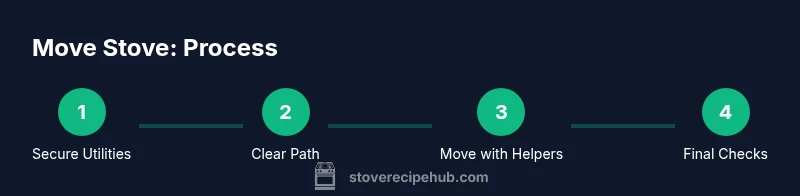
- 1
Secure Utilities
Turn off the electrical supply to the stove at the breaker panel and unplug the appliance if possible. If you have a gas stove, locate the main shutoff and plan for a licensed professional to handle any gas-line work. This prevents sparks, leaks, or accidental ignition during the move.
Tip: If you can’t locate the shutoff, contact your utility provider for guidance before proceeding. - 2
Clear the Area
Remove nearby objects, clear the floor space, and create a straight path for the move. This reduces tripping hazards and gives you a clear line of sight for guiding the appliance.
Tip: Ask a helper to stand ready at the far end to guide the move and watch for obstacles. - 3
Prepare Floor Protection
Lay down sliders or thick blankets under the front and sides of the stove to prevent floor damage and to ease sliding across the surface.
Tip: Check for loose mats or rugs that could catch on the dolly. - 4
Loosen Brackets or Attachments
If your stove has anti-tip brackets or rear panels that could snag, gently release or reposition them only if you know the manufacturer’s guidance allows it. Avoid forcing any fasteners.
Tip: If resistance is felt, stop and consult a professional to prevent damage. - 5
Move with Helpers
With two to three people and a dolly, lift and push the stove a few inches at a time along the planned path. Keep your back straight and use your legs to lift, not your back.
Tip: Communicate clearly and avoid twisting your body while moving. - 6
Return and Reconnect Safely
Move the stove to its new location, then have a pro recheck gas lines or electrical connections before cooking resumes. Do not reconnect gas lines yourself if there was any disruption.
Tip: Document any bracket reattachments or adjustments for future maintenance.
Common Questions
Is it safe to move a stove by myself?
Electric stoves can be moved with proper precautions and sufficient space, but gas stoves should generally involve a licensed professional for any disconnections or line work. Always have at least one extra helper.
Moving a stove alone can be risky, especially with gas stoves; get a helper and follow safety steps, and involve a pro for gas work.
Should I disconnect the gas line myself?
No. Gas-line work should be performed by a licensed professional. You can shut off the gas at the meter, but do not attempt to disconnect or cap the line.
Gas work should be left to a pro; shut off the main line if you know how, but don’t disconnect it yourself.
What if I detect a gas smell after moving?
If you smell gas, evacuate immediately and call your gas utility or emergency services. Do not create flames or sparks.
If you smell gas, leave the area and call emergency services right away.
How much rear clearance is recommended?
Aim for several inches of space behind the stove to allow for movement and inspection; check the manufacturer’s guidelines for your model.
Give the stove several inches of clearance behind it and follow the manual for exact specs.
Can I use towels or blankets for floor protection?
Yes. Thick blankets or furniture sliders protect floors and help slides move smoother. Avoid dragging directly on wood or tile.
Yes—use blankets or sliders to protect the floor and make the move smoother.
What should I do after moving the stove?
Inspect all connections, ensure the appliance is level and secure, and have a pro reconnect gas or electrical lines if needed. Test for leaks before cooking.
Check connections and test safety before resuming cooking; call a pro if you’re unsure.
Watch Video
Top Takeaways
- Secure utilities before moving
- Use proper moving equipment and helpers
- Gas work should be done by professionals
- Maintain clean, clear pathways throughout
- Inspect connections after repositioning