Replace Stove: A Practical Guide for Home Cooks
Learn how to replace a stove safely and efficiently. This guide covers planning, disconnecting utilities, installation basics, testing, and when to hire a professional.


Replacing a stove is a multi-step project that starts with selecting a compatible model, safely disconnecting utilities, and installing per code. Plan for space, ventilation, and proper electrical or gas connections, then arrange a professional inspection if required. This guide covers planning, installation basics, safety checks, and post-install testing and commissioning.
What replacement involves
According to Stove Recipe Hub, replacing a stove is a major project that starts with selecting a compatible model, safely disconnecting utilities, and installing per code. Plan for space, ventilation, and proper electrical or gas connections, then arrange a professional inspection if required. This section introduces the scope of a stove replacement, from choosing the right fuel type to ensuring the new unit aligns with your kitchen layout and ventilation needs. You’ll learn about assessing rough-ins, confirming clearances, and understanding how a replacement fits into your home’s safety and efficiency standards. By the end, you’ll have a solid plan to guide you through the next steps with confidence.
Planning before buying
Preparation is the backbone of a smooth stove replacement. Start by measuring the existing opening to confirm width, depth, and height clearances; verify that cabinet cutouts and surrounding walls can accommodate the new unit. Check electrical supply and outlet type (4-prong vs. 3-prong for older homes) as well as gas line configuration (if applicable). Consider whether your new model requires a vent hood or downdraft system and whether you’ll need to upgrade wiring or gas piping. Create a checklist of your must-haves (fuel type, size, features such as convection or simmer settings) and a wish list for optional enhancements (smart controls, energy efficiency, or additional safety features).
Safety and codes you must know
Safety is non-negotiable in stove replacement. If you’re working with gas, never bypass shut-off valves or test leaks with an open flame. Ensure space ventilation is adequate to handle heat and combustion byproducts. Local codes may require permits, professional installation, and post-installation inspections. For electric stoves, verify that the circuit is capable of handling the load and that outlets and cords meet current electrical codes. Stove Recipe Hub analysis shows that improper gas connections and unsealed installations are common safety risks; always follow manufacturer installation instructions and local code requirements. If you’re unsure, consult a licensed professional.
Tools and materials you'll need
Before you start, gather essential tools and materials to streamline the job and avoid mid-project delays. Having everything on hand reduces risk and time spent on trips to the hardware store. List includes a new stove that fits the rough-in and fuel type, a voltage tester for electrical checks, a screwdriver set, an adjustable wrench, gas line or electrical connectors appropriate to the unit, leak detector soap, and protective equipment like gloves and safety glasses. If you’re replacing a gas stove, you may also need a gas shut-off tool and a regulator compatible with your new appliance. Create a dedicated workspace and keep non-slip mats for handling heavy equipment.
Step-by-step replacement process
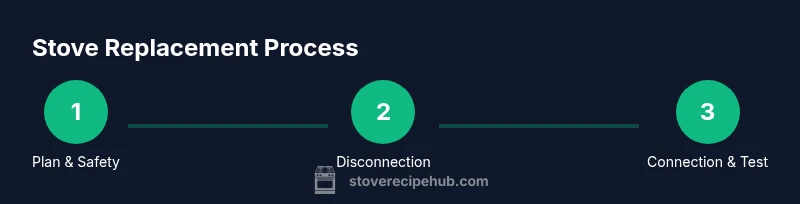
The replacement process combines preparation, disconnect, install, and test phases. In each phase, document actions and verify connections to code. The following steps provide a high-level overview that complements the detailedSTEP-BY-STEP section below, allowing you to visualize the workflow and prepare for potential troubleshooting. Remember to isolate utilities before touching any connections and to plan for post-install adjustments once the unit is in place. This overview emphasizes sequencing and safety.
Testing and post-install checks
After installation, conduct thorough testing to ensure safe operation. For electric stoves, confirm power is correctly supplied and test ignition or heating elements. For gas stoves, perform a soap-bubble test on all gas connections to detect leaks, then light burners at low, medium, and high settings to verify performance. Inspect the oven door seal, verify that the range fits properly in the alcove, and check that the vent hood or range hood aligns with the unit. Finally, document serial numbers and installation details for warranty and future service.
Common mistakes and how to avoid them
Common mistakes include neglecting to turn off utilities, skipping permits, mismatching fuel type, and failing to check venting and clearances. To avoid these pitfalls, double-check connections against the manufacturer’s installation manual, verify power and gas shut-offs before starting, and document any deviations from the original setup. If you encounter unfamiliar codes or complex gas work, consult a professional. This approach reduces risk and helps ensure a safe, compliant installation. The Stove Recipe Hub team notes that when in doubt, safer to hire a pro.
Tools & Materials
- New stove(Ensure model fits space and matches fuel type; verify rough-in dimensions.)
- Voltage tester(Check electrical supply and confirm circuits are de-energized before touching wires.)
- Screwdriver set (Phillips and flathead)(For securing brackets, panels, and terminal blocks.)
- Adjustable wrench(Useful for tightening gas fittings or water lines if needed.)
- Gas line shut-off tool (if applicable)(Only needed for gas stove replacements; skip if electric.)
- Leak detection soap or spray(Used to test gas connections for bubbles after installation.)
- Protective gloves and eyewear(Protect hands and eyes from sharp edges and debris.)
- Electrical cord adapter (if needed)(Only if the new stove requires a different cord configuration.)
Steps
Estimated time: 2-6 hours
- 1
Prepare the space
Clear the area, unplug the old unit if electric, and disconnect any nearby accessories. Confirm the workspace can support moving a heavy appliance safely and that every safety measure is in place.
Tip: Use a helper and protect the floor with a mat to prevent damage. - 2
Shut off utilities
For gas stoves, close the gas shut-off valve securely. For electric stoves, switch off the circuit at the breaker panel and test that the outlet is de-energized.
Tip: Double-check with a voltage tester before touching wires. - 3
Disconnect the old stove
Carefully detach the old appliance from its gas line or electrical supply. Cap or seal any open lines and remove the mounting brackets that secure the stove to the counter.
Tip: Label connections to simplify the install of the new unit. - 4
Prepare the new stove
Unbox the new unit, inspect for shipping damage, and attach any required legs or brackets. Ensure the new model’s rough-in matches your existing opening.
Tip: Check that the new unit’s foot print and height align with cabinets. - 5
Connect utilities
Reconnect gas lines or electrical supply to the new stove per the manufacturer’s instructions. Use approved fittings and avoid overtightening.
Tip: Perform a cautious leak test or electrical continuity check as applicable. - 6
Secure and seal
Secure the stove to the cabinet or undercounter supports. Seal gaps with heat-resistant materials if required by the manufacturer.
Tip: Avoid compressing power cords or gas lines in tight spaces. - 7
Test operation
Power up the stove, ignite burners, and test the oven. Confirm temperatures stabilize and the control panel responds correctly.
Tip: Test all burners and the oven at multiple heat levels. - 8
Final checks & documentation
Record model numbers, serials, and installation date. Verify local codes and secure any required permits or inspections.
Tip: Keep a copy of the installation manual with warranty paperwork.
Common Questions
Do I need a professional to replace a stove?
Gas or complex electrical connections require licensed professionals to ensure safety and code compliance. If the job is simple and safe to perform per instructions, you may DIY with caution.
Gas or complex wiring should be done by a licensed professional. For simple electric replacements, follow the manufacturer's steps and safety rules.
What should I consider before buying a replacement stove?
Check width, depth, height, fuel type, and connection type. Ensure ventilation compatibility and verify that the appliance fits your cabinet space.
Make sure the stove fits your space, matches the fuel type, and works with your vent system.
Can I replace an electric stove myself?
If the new unit uses the same outlet type and you can safely disconnect and reconnect wiring without altering the circuit, you may DIY. Otherwise, hire a pro.
If you can safely disconnect and reconnect to code, you might DIY electric stoves; otherwise, hire a professional.
What safety steps are critical after installation?
Verify power or gas supply, perform leak tests for gas, and confirm ignition and oven functions work correctly. Ventilation should be checked for proper operation.
Power or gas off, test leaks, and confirm all functions work. Ensure ventilation is operating.
How long does a typical replacement take?
Most replacements take several hours, depending on utility connections, space constraints, and whether permits are required.
Expect a few hours, plus any time needed for permits or inspections.
Watch Video
Top Takeaways
- Plan space, fuel type, and venting before buying.
- Shut off utilities and test safety connections before powering up.
- Follow manufacturer instructions and local codes for a compliant install.
- Call a professional for complex gas or electrical work when unsure.