Repair Stove: Safe DIY Guide for Home Cooks and DIYers
Learn to diagnose and fix common stove issues safely at home. This guide covers gas and electric stoves, safety practices, symptom-based checks, and when to call a professional.


You can safely troubleshoot and fix common stove issues at home by following a structured, step-by-step approach: check power and gas supply, inspect knobs and igniters, test burners, and replace faulty parts. Always prioritize safety, disconnect power, and consult a professional for complex problems. This guide helps you decide when DIY is appropriate and when to call a pro.
Why Repairing a Stove at Home Can Be Worth It
Repairing a stove at home offers a practical balance of cost savings, faster turnarounds, and the satisfaction of DIY basics. According to Stove Recipe Hub, many common stove failures stem from approachable issues like loose connections, dirty igniters, or worn knobs. These are typically fixable with basic tools and a careful, methodical approach. For home cooks, the learning curve is manageable: by understanding gas supply, electrical power, ignition, and control electronics, you gain confidence to perform safe repairs, extend appliance life, and avoid unnecessary service calls. The Stove Recipe Hub team emphasizes that safety should always come first, followed by systematic diagnosis. If a problem signs a potential safety risk, pause and seek professional help.
Safety Principles for DIY Stove Repairs
Safety is non-negotiable when working on any stove. Start by unplugging the appliance and turning off the gas supply at the valve if you have a gas model. Keep a clear workspace, remove flammable materials, and work in a well-lit area. Use a non-contact voltage tester to verify no live circuits before touching wires, and wear protective gloves to guard against sharp edges. If you smell gas that persists after turning off the valve, evacuate the area immediately and contact emergency services or your gas provider. Documenting the process with photos can help you reassemble parts correctly and serves as a reference if a professional is needed later.
Common Stove Problems and Quick Checks
Stoves can fail for a handful of predictable reasons. Quick checks help you triage issues without guessing:
- Burner wont light: verify power to the unit, check the ignition electrode for dirt or misalignment, and inspect the burner cap for proper seating.
- Uneven flame or weak burner: clean the burner ports, ensure proper gas pressure, and inspect the flame sensor if applicable.
- Oven not heating: confirm bake/broil settings, test the bake element, and verify the oven fuse or electronic control board if accessible.
- Gas smell or hissing: immediately shut off gas, ventilate, and call your gas provider—do not attempt repairs yourself if a gas leak is suspected.
- Electrical clock or display issues: check the outlet, power cord, and any tripped breakers; reseat connections if you feel safe doing so. These checks protect you from unnecessary parts replacements and guide you toward the right fix.
Diagnosing Electric vs Gas Stoves
Electric stoves and gas stoves present different diagnostic paths. Electric coils or smooth-top surfaces usually involve power delivery, coil resistance, and surface wiring. Gas stoves center on gas supply, igniter function, and flame stability. Start with a simple power check: ensure the unit is plugged in and that the household outlet is powered. For gas stoves, verify the gas valve is open and the igniter is sparking properly. When diagnosing, avoid mixing symptoms from different systems, and consider whether the issue affects just the stove or also the oven.
Note: If your stove is a dual appliance (stove/oven combo), test each function separately to isolate the fault. When in doubt, consult the manufacturer’s service manual to follow model-specific steps.
Maintenance Practices to Extend Stove Lifespan
Preventive maintenance saves time and money. Establish a simple routine:
- Clean burner ports, igniters, and control knobs regularly to prevent grime buildup that blocks ignition and gas flow.
- Inspect power cords and outlets for wear; replace damaged cords immediately to avoid shocks or fires.
- Schedule periodic professional inspections, especially for gas lines and control boards, to catch wear before it fails catastrophically.
- Keep ventilation clear; proper airflow reduces overheating and prolongs electrical components’ life.
- Use proper cookware and avoid placing oversized items on burners, which stresses elements and can warp surfaces. Following these practices helps maintain performance and reduces the likelihood of sudden failures.
When to Call a Pro and What to Expect
Some stove issues require professional expertise. If you detect gas leaks, persistent electrical smells, or if the problem involves gas line work, wiring inside the control housing, or the oven’s heating elements after basic troubleshooting, stop and call a licensed technician. A pro will verify gas pressure, inspect internal valves, test safety switches, and perform component replacements with certified parts. When you arrange service, have your stove model number, serial, and a description of symptoms ready. Expect a diagnostic visit, followed by parts replacement if necessary and a test run to confirm proper operation.
Quick Troubleshooting Checklist (Overview)
Before you begin any repair, keep this quick checklist handy:
- Unplug the stove and, if gas, shut off the gas supply.
- Inspect for visible damage, loose connectors, and obvious wear.
- Clean ignition components and burner ports; reseat all parts.
- Test power with a multimeter and check the outlet for correct voltage.
- Decide if the problem is safe to fix yourself or if professional service is needed.
- Document changes and test all functions after reassembly.
Tools & Materials
- Screwdrivers (flat-head and Phillips)(Have both a small and medium set for appliance panels)
- Digital multimeter(For testing voltage and continuity; use on 600V range or higher)
- Non-contact voltage tester(Quick verification of live circuits without contact)
- Flashlight or headlamp(Bright light for dark panels and tight spaces)
- Replacement parts (as needed)(Only if you have the exact model and confirm the faulty component)
- Gloves and safety glasses(Protect hands and eyes from sharp edges and debris)
- Model number and service manual(Helpful for model-specific diagrams and torque specs)
Steps
Estimated time: 90-120 minutes
- 1
Power down and verify safety
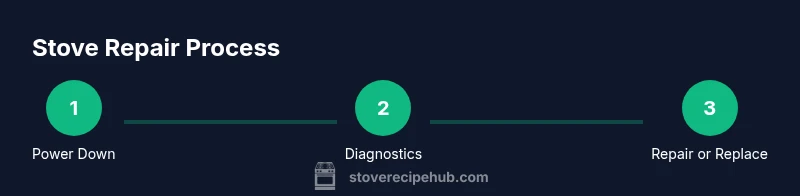
Unplug the stove from the wall outlet and, for gas stoves, close the gas valve if accessible. Use a non-contact tester to confirm no live current before touching wiring or controls. This step prevents electric shock and accidental gas ignition during inspection.
Tip: Keep the area well-ventilated and have a fire extinguisher accessible in case of emergencies. - 2
Identify the symptom and gather information
Note the exact issue (what happens, when it happens, and under what conditions). Locate the stove’s model and serial numbers for accurate parts matching. Take clear photos of wiring, connectors, and the ignition area to reference during reassembly.
Tip: A simple symptom log speeds diagnosis and reduces unnecessary part replacements. - 3
Inspect electrical connections
Remove the back or access panel where safe to do so and reseat suspect connectors. Check for loose terminals, frayed wires, or burnt marks. Use the multimeter to verify continuity and the outlet for proper voltage.
Tip: If a connection is corroded or burnt, replace the affected harness rather than attempting a repair. - 4
Test igniters and burner components
For gas stoves, observe the igniter spark and flame sensor operation. For electric stoves, test coil resistance and ensure the coil sits evenly on the burner. Clean dirty igniters with isopropyl alcohol and a soft brush. Reassemble temporarily to test function.
Tip: Dirt buildup around the igniter is a common failure point; a gentle cleaning often resolves ignition issues. - 5
Replace faulty parts when safe to do so
If tests indicate a faulty part (igniter, sensor, coil, or switch), acquire a correct replacement using the model number. Follow the manufacturer’s orientation and torque specs when installing. Do not force components that resist seating.
Tip: Only replace parts you are confident you can install safely; otherwise seek professional help. - 6
Reassemble, test, and observe
Secure panels, plug in the unit, and run a full test of burners and oven. Listen for unusual sounds, watch for delayed ignition, and inspect for gas odors during operation. If everything functions normally, monitor performance for a few days.
Tip: Ventilate during initial tests to avoid buildup of any residual gases.
Common Questions
What basic fixes can I perform myself on a stove?
You can perform basic checks like power supply, gas valve position, igniter cleanliness, and burner seating. If these steps don’t resolve the issue, avoid further disassembly and seek professional help.
You can handle basic checks like power and igniters, but if it isn’t resolved, it’s safer to call a professional.
When should I replace vs repair a stove?
Consider replacement if the repair involves major components or recurring failures. If the cost of parts and labor approaches a new unit, replacement may be more economical.
If major components fail or failures repeat, replacement might be smarter than continuing repairs.
Is it safe to work on a gas stove myself?
Gas stoves can be serviced for certain issues, but if you detect a gas leak, shut off gas and leave the area. Only attempt repairs if you can safely isolate the problem and have the proper tools and knowledge.
Gas work is risky—tip: shut off gas and call the pros if you smell gas.
Do I need to unplug the stove even if it has gas?
Yes. Always unplug the stove before opening panels or handling electrical components. If the appliance is hard-wired, switch off the corresponding circuit at the breaker.
Always unplug first, even on gas models, to prevent shocks.
What tools are essential for stove repairs?
A basic toolkit with screwdrivers, a digital multimeter, a non-contact voltage tester, a flashlight, and safety gear covers most DIY stove repairs.
Keep a screwdriver set, a multimeter, and a tester handy for common checks.
When should I call a professional?
If you suspect gas leaks, electrical faults beyond basic checks, or if the oven fails after simple fixes, consult a licensed technician to avoid safety hazards.
Call a professional if you smell gas or feel unsure about electrical work.
Watch Video
Top Takeaways
- Prioritize safety before any repair work.
- Differentiate electrical and gas troubleshooting paths.
- Document symptoms and model details for accurate fixes.
- Clean components before replacing parts to avoid unnecessary replacements.
- Know when to call a professional to avoid safety risks.