How to Remove a Gas Stove Safely
Learn how to remove a gas stove safely with a practical, step-by-step guide. From shutting off gas and electricity to relocating the unit, this Stove Recipe Hub guide covers safety, tools, and professional considerations.


Goal: Safely remove a gas stove with no risk of leaks or injury by following a controlled, step-by-step process. You’ll learn how to shut off gas and power, prepare the workspace, move the appliance, and plan for professional gas-line disconnection if needed. Always prioritize safety and consult local codes. This quick guide also highlights common mistakes.
Before You Begin: Understanding the Task and Risks
Removing a gas stove is a task that blends mechanical work with gas safety. The goal is to move the appliance without disturbing the gas line or igniting a leak. In most homes, the gas supply to the stove is either controlled by a local shut-off valve or the main service line. If you smell gas, hear hissing, or notice a damaged line, evacuate immediately and call your gas utility or emergency services. According to Stove Recipe Hub, safe stove-top work begins with a thorough safety plan and a clear understanding of what can and cannot be safely handled by DIY enthusiasts. This section outlines the high-level approach and when to escalate to a pro.
Safety and Preparation Checklist
- Verify power is off at the breaker; unplug the stove if applicable.
- Locate the gas shut-off valve and know its position; if you can't access it easily, plan for professional disconnection.
- Wear eye protection and gloves; ensure adequate ventilation by opening windows.
- Clear the workspace; remove nearby items and secure the area to avoid trips.
- Have contact information for a licensed gas technician ready.
Environment Setup and Protective Gear
- Workspace should be dry, well-ventilated, and free of open flames.
- Use a work light, not a burning candle; keep away from ignition sources.
- If you’re planning to relocate the stove, protect floors with a heavy rug or cardboard sheets.
- Keep a fire extinguisher accessible and nearby in case of accidental ignition.
High-Level Overview of the Removal Process
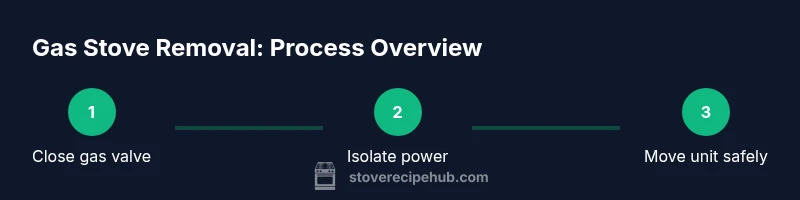
This task involves safely isolating the appliance from its gas and electrical connections, moving it away from the wall, and preparing the area for any future reinstallation. Because gas lines carry real safety risks, many steps should be performed or supervised by a trained professional. The focus is on reducing risk, maintaining clear documentation of connections, and ensuring the space remains ready for proper reinstallation.
Reinstallation Options and Next Steps
If you plan to reinstall a stove later, consider whether you will reconnect gas and electrical services yourself or hire a licensed professional. In many cases, relocation or replacement triggers local code considerations and inspection requirements. Keeping records of the appliance model, gas line terms, and any professional that assisted can simplify future service requests and ensure compliance with safety standards.
Tools & Materials
- Gas shut-off valve (hand or wrench)(Locate valve near stove; turn clockwise to close.)
- Adjustable wrench(For loosening fittings if needed.)
- Screwdrivers (Phillips and flathead)(Access screws on burners and mounting plates.)
- Gas leak detector solution (soap and water)(Test joints for leaks after reassembly by a pro.)
- Flashlight(Ensure good visibility under/behind the unit.)
- Personal protective equipment (safety goggles and gloves)(Protect eyes and hands during handling.)
- Drop cloth or cardboard for floor protection(Prevent floor damage while moving the stove.)
- Camera or notepad for documenting connections(Helpful for reinstallation references.)
Steps
Estimated time: 60-120 minutes
- 1
Locate and close gas shut-off valve
Find the valve on the gas line near the stove or at the main service line. Close it by turning the handle clockwise until it cannot rotate further. This isolates the appliance from the gas supply and reduces the risk of leaks during removal.
Tip: If the valve is stiff or hard to reach, pause and call your gas utility or a licensed technician. - 2
Turn off power and unplug the stove
Switch off the circuit breaker for the stove in the main panel and unplug the unit from its outlet if present. This eliminates electrical ignition sources and protects you while you work around gas lines.
Tip: Confirm no residual power by attempting a gentle press of the control knobs; do not rely on a single switch. - 3
Remove knobs, burners, and grates
Carefully pull off knobs, lift burner caps, and remove grates to access the interior connections and fasteners. This makes it easier to detach panels and plan the move without tripping hazards.
Tip: Place removed parts in labeled containers to simplify reassembly. - 4
Decide on gas-line disconnection with professionals
If you are not a trained gas technician, do not attempt to disconnect or cap the gas line yourself. Contact a licensed professional to perform gas-line disconnection safely.
Tip: Keep documentation from the technician for future reference. - 5
Unclip electrical and vent connections
With gas isolated, disconnect any electrical harnesses and venting components that attach to the stove. This allows you to move the appliance without tugging on wires or ducts.
Tip: Label each connector to ease reinstallation. - 6
Move the stove away from the wall
With assistance if needed, slide the stove forward and away from the wall, taking care not to bang walls or damage flooring. Keep the path clear and watch for cords and gas lines.
Tip: Use a protective mat or scrap cardboard under the feet. - 7
Inspect area and plan for cleanup or reinstallation
Check the work area for stray screws, packaging, and dust. Decide whether you will store the unit temporarily, dispose of it, or proceed to another stove installation with professional help.
Tip: Do not leave exposed gas lines or openings unattended.
Common Questions
Is it safe to remove a gas stove without a professional?
Gas lines pose real risks and disconnection is regulated in many areas. It is generally not safe to remove or disconnect gas lines yourself unless you are a licensed technician. Always prioritize safety and consult local codes.
Gas line work is specialized. For safety, hire a licensed technician and follow local codes.
What should I do if I smell gas during removal?
If you smell gas, evacuate the area immediately and call your gas utility or emergency services. Do not operate electrical switches or use open flames.
If you detect gas, leave the area and call for help right away.
Do I need permits to remove a gas stove?
Permitting requirements vary by locality. Check with your local building department or housing authority before disconnecting gas lines or performing related work.
Check local codes with the city or county before starting.
Can I reinstall the stove myself after removal?
Reinstallation, especially reconnection to gas and ventilation, typically requires a licensed professional. Improper reconnection can lead to leaks or fire hazards.
Most reinstallation jobs should be done by a pro.
What safety checks should follow removal?
Ensure gas is fully shut off, ventilate the area, and have a pro run a leak test before any reinstallation or re-setup.
Have a pro verify everything is leak-free before proceeding.
Watch Video
Top Takeaways
- Shut off gas and power before any handling.
- Gas-line work should be performed by a licensed professional.
- Move the stove slowly to prevent floor or wall damage.
- Document connections and safety checks for future reinstallation.