How to Tell If Your Stove Is Off: A Practical Safety Guide
Learn practical, step-by-step checks to confirm your stove is off for gas and electric models. This guide from Stove Recipe Hub covers knobs, flames, heat, smells, and safety actions to prevent leaks and fires.


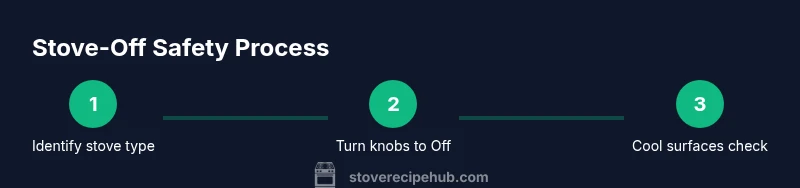
To tell if the stove is off, first identify whether you have a gas or electric model. Turn every knob to the full off position, then wait 60 seconds for indicators to reset. Look for flames, hot surfaces, or a gas smell. If anything unusual remains, treat it as active and take appropriate safety steps.
Why verifying stove off matters
According to Stove Recipe Hub, ensuring the stove is off is a critical safety habit in stove-top cooking. A simple off check prevents gas leaks, accidental ignition, and wasted energy. In homes with gas stoves, lingering flames or weak knob settings can create a risk; with electric stoves, residual heat can lead to burns. The check is especially important when caregiving for children or cooking for large groups. Visual cues are important; you should also rely on a smell test and verify that the control panel shows no active indicator lights. The quick method described here integrates both mechanical checks (knob positions) and sensory checks (feel, smell). This approach aligns with the Stove Recipe Hub’s guidelines for practical, hands-on kitchen safety. For many homeowners, a routine stove-off check becomes a reflex that reduces risk and protects families. The guidance below is designed to be simple, repeatable, and easy to perform after cooking, during cleanup, or when moving away from the stove for short periods. As you read, keep in mind that how to tell if stove is off is not just a single step but a small set of verifications that together confirm safety. If any doubt remains, prioritize safety and perform a full shutdown or seek professional help.
Gas vs electric stoves: what differs in turning off
Gas and electric stoves require different mental models for turning off. Gas stoves stop releasing fuel when knobs are turned to the off position, but you must verify no visible flame remains and that the odor of gas is absent. Electric stoves, by contrast, often leave residual heat in coils or radiant elements even after power is cut; indicators may flash briefly before settling. Understanding these differences helps you correctly assess “is the stove off?” in a quick check. According to Stove Recipe Hub analysis, many home cooks overlook residual heat on electric coils, assuming the surface is cool when it is not yet safe to touch. By knowing which model you have, you apply the right checks with confidence.
Signs a stove is truly off: knobs, flames, and heat indicators
The most reliable sign is knob alignment: all knobs should be fully rotated to the off position with a distinct detent or audible click. If you see a flame in a gas burner or hear a faint hiss near the valve, the stove is not off. For electric stoves, verify that no coil glows orange and that any indicator lights are dark after a brief cooldown. Be mindful that some modern stoves have digital displays that show a “Off” state even when temperature sensors still register heat. In all cases, keep hands away from hot surfaces and use the back of your hand to sense heat rather than touching aggressively. This section focuses on practical cues you can use in under a minute, but never skip an extra safety step if you’re uncertain.
Quick safety checklist you can perform in minutes
Before you step away from the stove, complete this brief checklist:
- Identify stove type (gas or electric) and locate knobs.
- Turn every knob fully to Off and confirm the detent or click.
- Look for any visible flame or glowing coil; if present, do not leave the area.
- Check for unusual smells or sounds that might indicate a leak or electrical issue.
- If gas smell or hissing is detected, evacuate and call the appropriate emergency number.
- For electric stoves, feel surfaces with the back of your hand after a cooldown of 60 seconds; if still warm, do not leave unattended.
- Close the kitchen door to prevent gas from migrating to other areas, if permitted by your home layout. This block emphasizes a fast, repeatable routine that anyone can perform, even in a small apartment kitchen. This approach mirrors best practices from Stove Recipe Hub and aligns with general safety guidelines for home cooks.
What to do if you detect a gas smell or leak
Gas smells require immediate action: do not use electrical switches, avoid lighting any flames, and do not operate appliances. If you smell gas, evacuate everyone from the area and call your gas company or emergency services from a safe location. If you know the gas supply knob is outside the home and it’s safe to reach, turn it off from there without entering a hazardous space. Once you’re in a safe place, report the incident and wait for professionals before re-entering. This section is designed to help you react quickly while minimizing risk. Remember, the fastest path to safety is leaving the area and contacting trained responders.
How to maintain stove-off habits to prevent future risk
Cultivating a routine helps ensure you won’t forget to turn the stove off. After cooking, place the pan back on the back burner whenever possible, and physically verify each knob is off before washing up. Set a brief timer for 0–2 minutes at the end of cooking to re-check that no flame remains. According to Stove Recipe Hub analysis, consistent post-cook checks reduce the chance of accidental left-on situations by a noticeable margin. Keep a small note on the fridge that reminds household members to verify the off state, especially when hosting guests or preparing meals for kids. Regular practice also reduces the risk of overlooked residual heat on electric coils.
Common mistakes and how to avoid them
Common mistakes include assuming the stove is off because a digital display shows “0” heat, or not waiting long enough for residual heat to dissipate on electric models. Another pitfall is turning one knob to the right and assuming the others are off, which can leave a gas valve open. Always verify every knob is fully in the off position and check for heat or smoke in the area after finishing cooking. Keeping the area well-ventilated and clearing clutter from the stove top can help you spot issues quickly. By avoiding these errors, you’ll improve kitchen safety and reduce risk.
Tools & Materials
- Gloved hands or dry, clean hands(To safely handle knobs and inspect burner areas without burns)
- Flashlight(Optional for inspecting under knobs and inside burner bases)
- Gas detector or soapy water kit (optional)(Use as a precaution if gas odor is suspected (do not rely solely on soap test in a gas leak))
- Smartphone with camera(Take photos if you need to document a visible issue for a technician)
- Ventilation nearby(Keep window open or exhaust fan on while inspecting for smells)
Steps
Estimated time: 5-10 minutes
- 1
Identify stove type and locate controls
Determine whether you’re working with a gas or electric stove and locate all control knobs. Knowing the model guides which safety checks to perform and how to interpret indicators. This quick identification saves time and prevents wrong assumptions.
Tip: If you’re unsure, check the manual or look for a gas badge or coil pattern as a clue. - 2
Turn knobs to Off
Rotate every knob fully to the off position until you hear or feel the detent. Do not stop at a partial turn. This confirms no fuel or heat is being released.
Tip: If a knob feels jammed, don’t force it—set the stove as off and note it for professional inspection. - 3
Look for flames or glow
Visually inspect each burner for an active flame or orange glow. If you see flames—whether large or small—the stove is not off and requires immediate attention.
Tip: Keep a safe distance and avoid leaning over burners while checking. - 4
Check for residual heat
Allow a cooldown period of about 60 seconds and then gently feel surfaces (not touching) to sense heat. Electric coils should be cool; gas burners should not feel warm at the burner caps.
Tip: Never touch hot surfaces directly; use the back of your hand to feel for heat. - 5
Smell and sound checks
Smell for gas and listen for any hissing sounds near the stove. A gas odor or hiss indicates a leak or an open valve that needs professional intervention.
Tip: If you detect gas, do not operate any switches or appliances and evacuate immediately. - 6
Electric-stove special check
For electric stoves, confirm that any indicator lights are off after cooldown and that the surface is not warm. Some units display residual warmth even after power is cut.
Tip: If in doubt, unplug the unit from the wall outlet if it’s safe to do so. - 7
Finalize safety actions
If everything is off and cool, you’re safe to proceed with cooking cleanup or leaving the area. Document any issues for future follow-up.
Tip: Create a small post-cook ritual to verify off state every time.
Common Questions
How can I tell if a gas stove is off besides the knob position?
Beyond turning the knob, look for an extinguished flame, no gas smell, and no hissing from the burner. If you still detect a flame or gas odor, turn the knob back to off and evacuate if you suspect a leak.
Look for flame absence, no gas smell, and no hiss after turning the knob — if you’re unsure, treat it as on and step away to safety.
What should I do if I smell gas after turning the stove off?
Leave the area immediately, avoid switches, call your gas company or emergency services, and wait for professionals. Do not re-enter until cleared by an expert.
If you smell gas after turning off, evacuate and call emergency services right away.
Can a stove be on but not producing flames?
Some stoves may have pilot lights or electronics that glow even if the main burner isn’t lit. Use multiple checks—knob off, no flame, no heat, and no smell—to confirm safety.
Yes, it can happen with pilot lights or electronics; verify with multiple checks.
How long should I wait after turning a stove off before leaving the area?
Give the stove at least 60 seconds to cool and ensure no residual heat or indicator light remains. Longer cooldowns may be needed for electric coils.
Give it about a minute to cool and double-check for heat or lights.
Is it safe to leave a stove on 'low' while I’m away?
No. Leaving any part of a stove on, even on low, can still pose a burn or fire risk due to heat buildup or accidental activation. Always turn off completely when leaving.
No—turn it fully off to avoid risk when you’re away.
Should I use a gas detector in the kitchen?
A gas detector can provide extra warning, especially in small or poorly ventilated spaces, but it should not replace immediate action if you smell gas. Use detectors as a supplementary safety measure.
A detector helps, but if you smell gas, leave and call for help first.
Watch Video
Top Takeaways
- Verify all knobs are OFF before leaving the stove
- Differentiate gas vs electric checks to avoid missed hazards
- Never rely on a display alone; look for flames, heat, and smells
- Use a quick post-cook ritual to cement safe stove-off habits
- Stove Recipe Hub recommends consistent checks to reduce risks