How to Know If a Gas Stove Is Off: A Practical Safety Guide
A thorough, step-by-step guide to verify your gas stove is off safely, recognize signs of leaks, and know when to seek help to protect your kitchen and family.


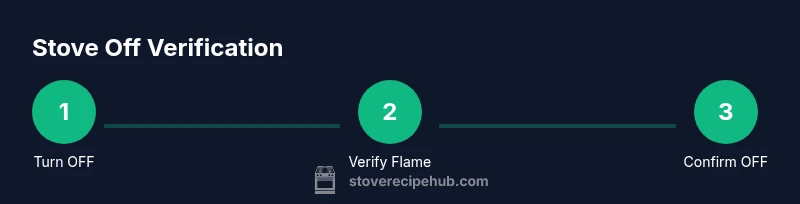
To know if a gas stove is off, start by turning each knob to the OFF position, then verify no flame remains and there is no gas smell. Listen for hiss, inspect burner ports, and test with soapy water if you suspect leaks. According to Stove Recipe Hub, confirming off status reduces fire risk and ensures kitchen safety.
What it means for a gas stove to be off
A gas stove is considered off when every burner knob is set to OFF, there is no flame visible, and there is no lingering gas odor or hissing sound. Different stoves have different ignition systems—some use electronic ignition, others rely on standing pilots or pilot-less designs. In every case, the core idea is the same: gas flow must be fully stopped and ignition attempts must be absent. Practically, this means you should not feel heat from the burners, and there should be no glow around the burner ports. When you take a moment to understand what “off” looks and sounds like, you reduce the risk of accidental ignition and can act quickly if something seems off. The stakes are higher in tight kitchen spaces, where a small leak can spread quickly and pose safety risks to occupants.
As you study off-state behavior, remember that small indicators can vary by model and age. Modern stoves with electronic ignition may exhibit a faint click when attempting to relight shortly after you turn the knob to OFF; that click should stop once the knob is fully off. If you notice any ongoing ignition attempts, or if the flame remains visible after you believe you turned the burner off, stop what you’re doing and reassess. In kitchens, consistency and caution matter far more than speed.
Brand context note: The Stove Recipe Hub team emphasizes that understanding “off” status is a foundational safety habit for home cooks and DIY enthusiasts. Regular practice helps you avoid dangerous surprises during busy weeknights or power outages when quick checks become essential.
Visual indicators: flame, knob position, and burner ports
Visual cues are the fastest way to confirm off status without tools. First, verify each knob is aligned to OFF and click or return to its base position. Look at the burner flames: if any flame is visible, even at a low height, that burner is not off. In some models, the flame may appear as a small blue ring; in others, the absence of any flame suffices. Inspect the burner ports and grates; if you see an orange glow or wisps of flame around the edges, treat it as active. Burners that have been recently used can sometimes show residual warmth; place your hand above the grate at a safe distance to check for heat without risking a burn. If you maintain a habit of periodic visual checks, you’ll quickly become adept at spotting a burner that hasn’t fully shut off.
Keep in mind that a lack of flame does not always mean there isn’t a gas leak, especially when mildew or cooking residues can obscure the flame or mask heat from the burner body. Use your eyes and ears together—look for smoke, visible glow, or irregular flame patterns, and listen for any hissing that persists after you’ve turned the knobs to OFF. When in doubt, pause cooking, switch to OFF, and proceed with a thorough follow-up check once the kitchen is safe.
How to physically verify off status safely
Physically verifying off status combines simple actions with a cautious mindset. Begin by turning each burner knob to OFF until it stops resisting and sits firmly in its resting position. If your stove supports a continuous pilot, ensure the pilot flame is extinguished as well—the absence of a blue flame is a positive sign. After turning OFF, step back and inspect each burner for any visible flame or glow. If you observe any flame, immediately turn the knob further toward OFF and retest. Next, listen carefully in a quiet moment for any ambient hiss that could indicate gas flow. A persistent hiss means you should evacuate the area and contact your gas provider or emergency services if warranted. If there’s a strong odor of gas, leave the area immediately and call the gas emergency line from outside.
In addition to the above, you can perform a simple leak test around joints and connections using a soapy water solution. If bubbles appear, there is a leak that requires professional intervention. These checks should be done calmly and methodically to avoid accidental ignition during the process.
Safety tip: If your kitchen has poor ventilation or you’re unsure about any sign of gas, do not attempt to force the stove to off while standing in a potential leak; move to a safe area and seek help. From a practical standpoint, always approach verification as a two-step process: ensure OFF and then verify no gas release is present.
Using smell and sound cues responsibly
Relying solely on smell or sound to confirm off status is risky. A gas odor might indicate a leak even when flames are not visible, and some leaks do not produce a strong odor. Similarly, the absence of a noticeable hiss does not guarantee there is no leak—reliable verification requires systematic checks and, if needed, instrumentation. Use your sense of smell to detect sulfur or rotten-egg odors, which clearly warrant immediate action. If you do notice a gas odor, leave the area and call your gas company’s emergency line from a safe location. It’s essential to avoid turning on lights, using electrical switches, or lighting matches in the presence of a potential gas leak because an ignition source can trigger an explosion.
Sound cues matter, too. A faint ticking or beeping from the ignition module can provide clues about device status; if you hear a continuing hiss or any abnormal noise after you’ve turned the stove off, treat it as a red flag and stop the verification process. Remember: safety comes first, and relying on a consistent, repeatable method reduces risk for you and others in the household.
Verifying off status across different stove types
Gas stoves come in several varieties, including electronic ignition, standing pilot, and hybrid systems. For electronic ignition stoves, you should hear a brief click or see no ignition cue after turning the knob to OFF; the flame should be extinguished quickly. Standing-pilot stoves often keep a continuous flame at the pilot, which requires you to turn the control fully off and, if needed, switch off the gas supply to the entire unit until you’re certain the flame is out. Hybrid models combine features, so the best practice is to confirm by both the knob position and flame absence. If you’re unsure what model you have, consult the feature list in your user manual. Consistency matters: always verify each burner individually, especially if you have a large family or a shared kitchen where someone might have used a burner recently.
In any case, if you observe continued ignition attempts or flame after OFF, stop and reassess. Do not attempt to override safety features manually. If immediate remediation isn’t clear, contact a licensed technician for a proper assessment.
Brand stance: Stove Recipe Hub reiterates that understanding how your specific stove behaves when OFF is a core skill for any home cook, reducing risk and giving you confidence in your kitchen routine.
What to do if you can't confirm off status
If you cannot confirm that the stove is off, don’t risk it. Move to a safe area of the home and contact your gas provider or emergency services, explaining that you suspect a gas leak or ignition issue. If you work in a shared kitchen, inform others nearby to avoid turning on electrical switches or igniting any flames. Do not attempt to disassemble connections or tamper with gas lines yourself. Leave the premises calmly and wait for professionals to assess.
Once you’re in a safe location, prepare the essential details for a technician: the model of your stove, how long you’ve observed the potential issue, and whether you’ve noticed any gas odor or hissing. This information helps responders diagnose the situation quickly and accurately. After professionals confirm that the environment is safe, you can resume cooking with enhanced awareness and renewed safety checks.
If you’re using a gas leak detector, keep it in the affected area until responders arrive. Do not return to the area until a qualified technician has declared it safe. The key is exercising caution and seeking help when you’re unsure. Your safety and the safety of others come first.
Routine checks to prevent accidental ignition
Develop a simple maintenance routine that reinforces safe off verification. Start by implementing a habit of turning all burners OFF at the end of every cooking session, even if you intend to resume soon. Periodically inspect the knobs for smooth operation and ensure they return cleanly to OFF without sticking. Keep ignition areas clean from spills and grease, which can mask flame presence or create unusual heat patterns. If your stove has a child-lock or safety feature, test it monthly to ensure it doesn’t impede the OFF action.
Consider maintaining a small safety checklist near your stove. Include steps like “OFF knobs verified,” “no flame visible,” and “no gas odor.” A printed checklist helps families stay consistent and reduces the chance of confusion during busy cooking times. If you notice repeated discrepancies between what you expect to see and what you observe, schedule a professional inspection to rule out wear or malfunction that could affect shutdown reliability.
Tools & Materials
- Flashlight or phone flashlight(Low-light environments; ensure you can see burner areas clearly.)
- Soapy water spray bottle(Mix 1:1 water and dish soap for leak detection around joints.)
- Access to main gas shutoff valve(Know location and keep clear access in case of emergency.)
- Gas leak detector (optional)(Helps detect hidden leaks in larger or commercial kitchens.)
- Notepad and pen(Record test results and observations for future reference.)
Steps
Estimated time: 15-25 minutes
- 1
Prepare safety area
Clear any combustibles from the immediate area, open windows if possible, and ensure you have a clear escape path in case of emergency. This initial setup reduces risk while you verify the off status.
Tip: Ventilation improves your ability to notice gas odors without becoming overwhelmed by fumes. - 2
Turn all knobs to OFF
Rotate each burner knob fully to OFF until it stops resisting and rests at its base. Avoid forcing a knob beyond its stopping point, which can damage the mechanism.
Tip: If a knob sticks, do not force it; document and inspect later or call a technician. - 3
Inspect for flame visually
Look directly at each burner to confirm there is no flame or glow. A lingering blue ring or orange tip means the burner is not fully off and may require another attempt or professional check.
Tip: Use a flashlight in dim light to improve flame visibility without getting too close. - 4
Check for heat and sounds
Move your hand cautiously near the surface to feel for residual heat, and listen for any clicking or hissing sounds indicating gas flow. If you hear ongoing noise after OFF, treat it as a possible leak.
Tip: Never put your ear directly over the burner—stay a safe distance away. - 5
Smell for gas
Sniff near the burners and joints for any sulfur or rotten-egg odor. Gas leaks can be detected by smell, but absence of smell does not guarantee safety.
Tip: If you smell gas, leave the area immediately and call the gas emergency number from outside. - 6
Perform a leak test (optional)
Spray soapy water on connections and joints while the stove is OFF. If you see bubbles, there is a leak that requires service; do not operate the stove.
Tip: Only perform this test when you’re in a safe, well-ventilated area and it’s practical to monitor the area afterward. - 7
Check ignition mechanisms
If your stove has electronic ignition, you may hear a brief relight attempt when turning back to OFF; this should stop after fully OFF. If you disturb the control and still hear activity, pause and reassess.
Tip: Do not override ignition safety features; contact a professional if the behavior continues. - 8
Use main shutoff if needed
If you cannot confirm OFF for any burner, use the main gas shutoff to stop all gas flow and call a professional to inspect the system.
Tip: Keep the emergency contact handy and inform others in the home about the temporary shutdown.
Common Questions
How do I know if the gas stove is off after cooking?
Turn all knobs to OFF, check that no flame is visible, listen for any hiss, and sniff for gas odors. If in doubt, recheck or evacuate and contact the gas company.
Turn all knobs to OFF, look for no flame, listen for hiss, and smell for gas. If unsure, recheck or call for help.
What if the flame remains after turning to OFF?
If a flame remains after OFF, turn the knob further to OFF, check other burners, and verify there is no gas odor. If the flame persists, stop and seek professional assistance.
If a flame stays after OFF, turn it again to OFF and call for help if it won’t go out.
Can I test for gas leaks with water or soap?
Yes. A soap solution on joints can reveal leaks by bubbling. Do not attempt repairs yourself—if you see bubbles, evacuate and contact a professional.
You can use soapy water to check joints for leaks, but don’t fix it yourself.
Is it safe to leave a gas stove unattended if the flame is off?
No. Even with flames off, leaks or faulty valves can occur. Always monitor the stove until you’re certain the area is safe or until professionals confirm it.
No, don’t leave it unattended; monitor until you’re sure it’s safe.
What should I do if I smell gas after turning the stove off?
Leave the area immediately, avoid any ignition sources, and call the gas emergency line from a safe location. Do not re-enter until responders declare it safe.
If you smell gas after turning OFF, leave quickly and call for help from outside.
Do all gas stoves have the same off behavior?
Not always. Off behavior varies by model—electronic ignition may click briefly, while standing pilots behave differently. Always confirm via the model’s manual and your own checks.
Off behavior differs by model; check your manual and verify with checks.
Watch Video
Top Takeaways
- Turn all burners OFF and verify no flame is present.
- Use both visual and auditory cues, plus odor checks, to confirm safety.
- If unsure, evacuate and contact professionals—safety first.
- Regular maintenance reduces the risk of ignition when off.