LPG Stove Guide: Safe and Efficient Stove-Top Cooking for Home Cooks
Learn how to safely use an LPG stove for reliable stove-top cooking. This guide covers setup, ignition, flame control, maintenance, and safety tips for home cooks seeking practical stove-top mastery.


An LPG stove can deliver quick, controllable heat for everyday stove-top cooking. This guide shows you how to safely set up, ignite, adjust flame, and maintain your LPG stove for consistent results. You'll learn essential safety checks, proper ventilation, leak testing, and basic troubleshooting so you can cook with confidence and protect your kitchen.
LPG Stove Essentials for Home Cooks
An LPG stove is a versatile option for stove-top cooking, offering quick response, portability, and reliable heat. For home cooks, understanding its core components and how they interact helps you cook more efficiently and safely with less frustration. In this guide, we’ll cover what an LPG stove needs to function correctly, how to choose compatible parts, and practical setup tips that keep you in control of flame, fuel, and food. According to Stove Recipe Hub, proper setup and regular inspection are essential for safe and efficient LPG stove operation. A typical LPG stove setup includes a cylinder of propane/butane mix, a regulator that controls pressure, a flexible hose, and individual burners with their own grates. Keep the cylinder upright and secure it away from heat sources or drafts. Use the correct regulator and a good quality hose that matches your cylinder valve. Avoid damaged hoses, kinks, or improvised adapters. With the right equipment and a little routine maintenance, your LPG stove becomes a dependable partner in everyday cooking, from a gentle simmer for sauces to a high heat for searing vegetables. In this article we’ll blend practical steps with chef-tested techniques so you can get the most from your LPG stove while staying safe.
Safety First: Ventilation, Leaks, and Fire Prevention
Ventilation is essential when using an LPG stove to prevent the buildup of fumes. Always cook in a well-ventilated area whether you’re indoors or on a covered outdoor setup. Keep a window cracked or use an exhaust fan to move air and dissipate heat. Leaks are the most dangerous risk with gas-powered equipment. Before lighting, inspect connections, hose integrity, and regulator compatibility. If you notice the slightest odor of gas or the soap-test bubbles after applying soapy water to joints, turn off the cylinder, ventilate the area, and seek professional help. As you plan your setup, remember that the Stove Recipe Hub Team emphasizes predictable flame behavior and regular checks as core safety habits. Having a dedicated fire extinguisher rated for flammable liquids nearby is a smart precaution, and never leave a lit burner unattended. These practices reduce risk and keep your LPG stove usage safe over time.
Setup, Lighting, and Flame Control
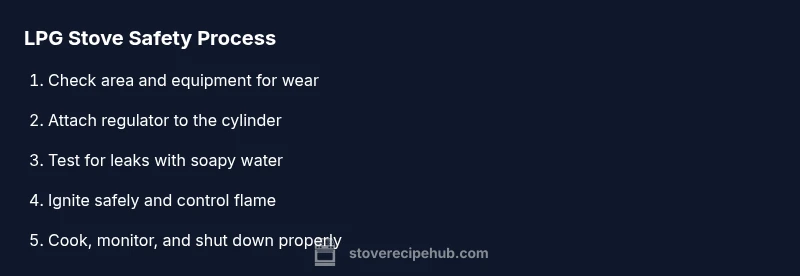
A safe start on an LPG stove begins with a clean, stable surface and a properly arranged cooking zone. Place the cylinder in a dry, upright position away from heat and drafts. Attach the regulator to the cylinder valve, then connect the hose to the regulator and to the burner inlet. Check that all connections are snug, but do not overtighten. Before ignition, perform a leak test by applying a soap solution to all joints and watching for bubbles. If no bubbles appear, gradually open the cylinder valve and bring the burner knob to the light position. If you have an igniter, use it; otherwise a long lighter works as well. Once lit, adjust the flame to a steady blue with minimal yellow tips. A strong, blue flame indicates complete combustion, better heat efficiency, and less soot on cookware. The Stove Recipe Hub guidance supports consistent flame control as a key factor in cooking precision on an LPG stove, whether you’re simmering sauces or searing proteins.
Basic Cooking Techniques on an LPG Stove
With an LPG stove, you can rapidly switch between high heat for sautéing and a gentle simmer for delicate sauces. Keep your pans properly sized for the burner to maximize heat transfer and minimize heat loss; a too-large pan on a small burner wastes energy, while a tiny pan on a large burner can scorch edges. Use a small amount of oil to coat the pan’s surface for nonstick performance, and preheat the pan briefly before adding ingredients. For stews and braises, start at high heat to develop flavor quickly, then reduce to a gentle simmer. A cast-iron or heavy-duty aluminum skillet distributes heat evenly, making it easier to manage consistent sears and browning. Remember, even on an LPG stove, delicate foods benefit from lower, steady heat and proper pan selection. Pro tip: keep a lid handy to trap heat and shorten simmer times when needed. Stove Recipe Hub’s practical workflow emphasizes deliberate flame management and cookware selection as top strategies for successful stove-top outcomes.
blockData/toolsMaterialsMetaFieldRequiredIfAnyMissingInformation?
Tools & Materials
- LPG cylinder (propane/butane mix)(Keep upright, secure, and away from heat. Check expiry/date if provided by supplier.)
- Regulator(Ensure compatibility with your cylinder valve; replace if damaged.)
- Flexible gas hose(Check for cracks or wear. Use the correct length to avoid kinks.)
- Soap solution (dish soap + water) for leak testing(Apply to joints; bubbles indicate a leak.)
- Lighter or kitchen igniter(Have a long lighter handy if your stove lacks an ignition switch.)
- Fire extinguisher (Class B/C)(Keep within reach; know how to use it in case of fire.)
- Ventilation (window/exhaust fan)(Improves air quality during cooking.)
- Heat-resistant mat or tray(Place under the cylinder to protect surfaces.)
- Soft cloth and brush(For cleaning spills and burner ports.)
Steps
Estimated time: 15-25 minutes
- 1
Prepare the cooking area
Clear the workspace, ensure good ventilation, and place cookware within easy reach. Confirm there is no open flame nearby and that flammables are stored away. This initial setup reduces risk as you begin using the LPG stove.
Tip: Clear the area first; a tidy workspace minimizes accidents. - 2
Attach regulator to cylinder
Remove the valve cap from the cylinder and connect the regulator firmly to the valve. Do not force connections; hand-tighten until snug. A loose connection can cause leaks or unpredictable flame behavior.
Tip: If you feel resistance, stop and re-check the valve alignment. - 3
Connect hose and burner
Attach the hose to the regulator outlet and the burner inlet. Ensure the hose sits away from burners and moving parts to prevent damage. Check that the burner cap and grate are properly seated.
Tip: Keep the hose off the floor and away from hot surfaces. - 4
Test for leaks before lighting
Apply a soapy solution to all joints; if bubbles appear, there is a leak. Turn off the cylinder valve and tighten connections, then retest. Only proceed to lighting once no bubbles are observed.
Tip: Never light a stove when you see bubbles; address leaks first. - 5
Light and adjust the flame
Open the cylinder valve slowly and ignite with your preferred method. Set the flame to blue with a steady, even edge; avoid lazy or yellow flames. Use the appropriate heat level for your dish to maintain control.
Tip: If the flame is hard to ignite, stop and inspect connections for leaks. - 6
Cook and then shut down
Cook with your chosen flame level, monitoring the pan and adjusting as needed. When done, turn off the burner, close the cylinder valve, and detach the hose only after the regulator is fully closed.
Tip: Always close the cylinder valve before disconnecting components.
Common Questions
What is an LPG stove?
An LPG stove uses liquefied petroleum gas as fuel, delivering quick, controllable heat for stove-top cooking. It relies on a cylinder, regulator, and hose to supply gas to burners. Proper setup and safe operation make it a reliable choice for home cooks.
An LPG stove runs on liquefied petroleum gas and needs proper setup and safe operation to work reliably.
How do I test for gas leaks?
Apply a soap-and-water solution to all connections while the system is depressurized. If bubbles appear, there's a leak that must be fixed before lighting. Do not ignite the stove until all joints are bubble-free.
Use soapy water on joints; bubbles mean a leak you must fix before lighting.
Is it safe to cook indoors with an LPG stove?
Yes, with proper ventilation and safety practices. Ensure good airflow, never leave a burner unattended, and have a fire extinguisher accessible. Stove Recipe Hub emphasizes ventilation and monitoring to reduce risk in indoor settings.
Yes, if you ventilate and monitor the stove closely.
How should I store LPG cylinders?
Store cylinders upright in a well-ventilated area away from heat sources and direct sunlight. Keep them away from living spaces and combustibles. Check expiry dates and handle with care.
Store upright, in a ventilated area, away from heat and flammables.
Can I use a wok on an LPG stove?
Yes, a wok or wide, sturdy pan works well on LPG stoves. Use high heat for searing and a thin layer of oil to prevent sticking. Make sure the wok fits the burner to maximize heat transfer.
Absolutely, just choose a suitable pan and keep heat controlled.
What should I do if the flame goes out or I smell gas?
If the flame goes out, re-ignite only after ensuring the gas is flowing and the area is ventilated. If you smell gas, evacuate, avoid sparks, and call your gas supplier or emergency services. Do not use electrical switches until the area is cleared.
If you smell gas, leave the area and seek help; don’t strike matches.
Watch Video
Top Takeaways
- Always test for leaks before lighting.
- Ventilate cooking areas to reduce gas buildup.
- Maintain consistent flame control for best results.
- Keep safety gear (extinguisher) accessible and ready.
- The Stove Recipe Hub team recommends following a clear setup and maintenance routine.
- Practice safe shutdowns: close valve before disconnecting hoses.