Stove smells like burning: Quick guide to diagnose and fix safely
Urgent guide to diagnose and fix a stove that smells like burning. Learn common causes, safety steps, and practical maintenance to keep your stove safe and odor-free.


Stove smells like burning most often means overheated grease, food debris, or a faulty component. The quickest fix is to switch off the burner, ventilate with windows and a fan, and carefully inspect the burner area for spills. If odor persists or you sense gas, evacuate and call emergency services. Safety first, then clean and re-check.
What causes a burning odor on the stove
A burning smell from your stove is a signal that something has overheated or isn’t right. Most odors come from grease or food residue that has burned on the burner or pan bottoms. Overheating oil, sugar, or sauces can smoke before you realize it, filling the kitchen with a sharp, acrid scent. In some cases, a mis-seated burner cap, melted plastic near the flame, or debris trapped in the burner channels can create odor and smoke. Electrical components, wiring insulation, or a faulty switch can also emit a plastic-like or ozone-like smell if they heat up. Always treat unfamiliar or chemical-like smells with caution; odors that resemble gas (rotten egg or sulfuric scents) require immediate action and a move toward safety.
According to Stove Recipe Hub, the most common culprits are residues left from cooking and overheating rather than complex mechanical failures. A rapid reduction in heat and thorough cleaning usually resolves the frequent odors. If the odor lingers after cleaning, or you detect a persistent electrical or gas-like smell, don’t ignore it—safety steps become paramount and professional evaluation may be necessary.
Gas vs electric stoves: how odors differ and why
Gas stoves often produce a more noticeable odor when there’s a buildup of grease near the flame or a small gas leak. If you smell gas (rotten-egg scent, sulfur, or a strong, persistent odor) that doesn’t subside after turning off the burner, evacuate the area and call your gas provider or emergency services immediately. Electric stoves usually emit odors when coils overheat or when residue heats up; such smells tend to be stronger near the heating elements and may dissipate once cooled and cleaned. In both cases, fresh air helps—open windows, turn on a vent hood, and avoid re-igniting until the smell is gone and the area is clear.
Safety note: never ignore a gas odor. If you’re unsure, treat it as an emergency and leave the space before investigating further. Regular maintenance reduces the chance of recurring odors and improves overall stove performance.
Immediate safety actions you should take
Your first moves are about safety, not cleaning. If you smell burning or see smoke, switch off the burner and move away any combustibles. If you’re dealing with a gas odor, leave the room and contact the gas company or emergency services—do not use phones or switches inside the area. If the odor is mild and confined, you can ventilate by opening windows and turning on the exhaust fan. Light fluids, aerosols, or other accelerants should stay away from the stove. Always keep a fire extinguisher accessible and know how to use it. If a fire starts, use the extinguisher or call emergency services and evacuate.
How to inspect the burner area safely (step-by-step cleanup)
Inspect the burner caps and head for proper seating. Remove the burner cap, wipe away any grease with a damp cloth, and ensure the burner head sits evenly. Check for melted plastic or food particles near the flame path, and remove them with non-abrasive tools. Make sure the flame is stable and blue (on gas stoves) rather than yellow or irregular. If you notice corrosion, frayed wiring, or heat damage on the electrical components, stop using the stove and arrange professional service. After cleaning, reassemble the parts, run the burner on a low setting for 1–2 minutes to confirm a clean burn. If the odor returns, there may be deeper issues requiring expert inspection.
Cleaning and maintenance to prevent smells going forward
Regular maintenance reduces recurring odors. Clean spills immediately after cooking, especially oils and sauces that splatter onto the burner base or pan. Use a mild degreaser and a soft sponge to avoid scratching surfaces. For gas stoves, remove and clean burner caps and head every few weeks, checking for clogged gas ports. For electric stoves, inspect coils for signs of overheating and look for any melted insulation around wiring. Keep the area around the stove clear of papers, towels, and plastic items. A simple monthly wipe-down and a thorough quarterly check can keep odors at bay.
Diagnostic flow you can follow at home
Start with the simplest checks: is the odor present only when a burner is on? Do you notice debris or spills around the burner? If yes, clean and re-test. If the odor persists, try a different burner to see if it’s localized. If the odor remains with all burners, the issue may involve the electrical supply or internal components; do not continue using the stove until a professional checks it. If you suspect a gas leak, evacuate immediately and call the gas company.
When to call a professional for a stove odor
Call a licensed technician if odor persists after cleaning, you smell electrical burning beyond standard cooking odors, or you notice smoke coming from wiring or insulation. A pro can diagnose issues such as worn burner manifolds, faulty switches, or compromised gas lines. If you live in a rental, inform the landlord promptly and follow local safety codes for inspections. Regular maintenance by a pro is recommended every 1–2 years depending on usage and stove type.
Prevention tips and best practices for ongoing safety
- Clean as you cook: wipe up spills promptly and avoid letting grease accumulate on burner bases.
- Use protective mats or metal trays under pans to catch spills and reduce smoke odors.
- Schedule periodic professional servicing for gas valves, electrical connections, and flame stability.
- Keep combustibles away from the stovetop and ensure proper ventilation during all cooking.
- Label and check warning indicators on your stove—if a burner ever produces unusual sounds, smells, or flames, stop using it immediately and contact a professional.
Conclusion preview (for readers who skim)
Booking a safety-first mindset around odors can prevent potential hazards. Start with simple cleaning, verify consistent flame behavior, and escalate to professional checks when odors persist or gas is suspected. A well-maintained stove should burn cleanly and quietly, with no persistent burning smell.
Steps
Estimated time: 25-40 minutes
- 1
Turn off the burner and ensure safety
If a burner is hot or you smell something burning, switch off the burner and remove cookware. Do not touch hot parts with bare hands. Allow the area to cool briefly before inspection.
Tip: Use oven mitts and keep kids/pets away from the area. - 2
Ventilate the area
Open windows and run the exhaust hood or a portable fan to clear smoke and odors. Avoid using the stove until smells subside.
Tip: Fresh air speeds up dissipation and helps you evaluate the odor more accurately. - 3
Inspect visible debris
Check burner caps, heads, and the immediate burner base for grease, leftover food, or melted plastics. Remove debris with a damp cloth and non-abrasive sponge.
Tip: Never use metal tools to scrape hot surfaces; wait until cool. - 4
Clean and reassemble
Clean thoroughly, dry completely, and re-seat burner caps. Ensure flame path is clear and even before re-igniting.
Tip: A clean surface reduces future odors and improves flame stability. - 5
Test in a controlled way
Light a burner on a low setting after cleaning to confirm a blue, steady flame and no new odor. If odor returns, stop using the burner and seek professional help.
Tip: Test one burner at a time in a well-ventilated area. - 6
Call a professional if needed
If odors persist after cleaning or you suspect wiring or gas line issues, contact a licensed technician or your gas provider. Do not attempt major repairs yourself.
Tip: Document odors and times to assist the technician.
Diagnosis: Strong burning odor when stove is on or after turning on a burner
Possible Causes
- highGrease or food residue overheating on burner or pan
- mediumBurner cap not seated properly causing flame inefficiency
- mediumPlastic, paper, or other debris near flame
- lowElectrical wiring or insulation overheating (electric stove)
- highGas leak or fuel line issue (gas stove)
Fixes
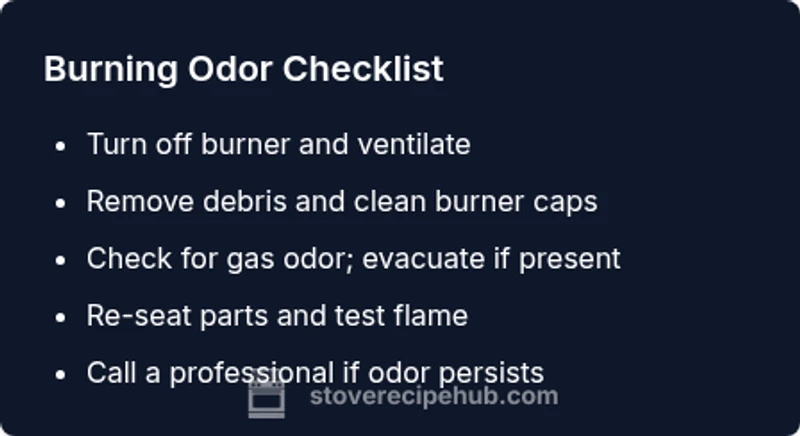
- easyTurn off the burner, evacuate if gas odor is present, ventilate the area with windows and a fan
- easyRemove debris, clean burner caps, and ensure proper seating; test flame
- easyRelocate any heat-sensitive items away from the burner area and replace damaged plastic near stove
- mediumIf electrical smell persists, switch off power at the breaker and arrange a licensed technician
- easyIf gas odor or smell of gas remains, evacuate and contact gas provider/emergency services immediately
- mediumSchedule professional inspection for persistent odors after basic cleaning
Common Questions
What causes a burning odor coming from a stove?
Most odors come from overheated grease or food residue, but electrical or gas issues can also cause burning smells. Cleaning residues and inspecting burner components typically resolves common odors.
Most odors come from grease or residue overheating, but electrical or gas problems can also be the cause. Cleaning and checking the burner usually fixes it.
Is a burning smell always dangerous?
Not every burning smell is dangerous, but gas odors require immediate action. If you’re unsure, err on the side of caution and evacuate, then call the gas supplier or emergency services.
Not all odors are dangerous, but gas smells demand immediate action. If in doubt, leave the area and call for help.
Can cleaning fix the smell?
Yes, removing grease and debris and reseating burner parts often eliminates smells. If odors persist, there may be deeper issues requiring professional service.
Cleaning away grease and debris often fixes it, but if it keeps returning, get a professional check.
When should I call a professional?
Call a professional if the odor persists after cleaning, you notice electrical smells, or you suspect a gas leak. A licensed technician can diagnose and repair safety-critical components.
Call a professional if odors persist or you suspect electrical or gas issues.
How often should I clean my stove to prevent smells?
Wipe spills and splatters after cooking and perform a deeper clean weekly. Periodic burner checks help prevent recurrent odors.
Clean spills after cooking and do a deeper clean weekly to prevent smells.
What if I smell plastic near the stove?
Remove any plastic immediately and turn off the burner. Plastic can melt and produce dangerous fumes. If unsure, ventilate and seek professional advice.
If you smell melted plastic, turn off the burner and get professional help if needed.
Watch Video
Top Takeaways
- Identify odor sources: grease, debris, or electrical/gas issues.
- Prioritize safety: turn off heat, ventilate, and evacuate gas odors.
- Clean and reseat burners to eliminate persistent smells.
- Test flames in a ventilated area; seek pro help if odor persists.
- Maintain stove regularly to prevent future odors.