What Causes Stovepipe Malfunction: A Practical Troubleshooting Guide
Learn what causes stovepipe malfunction and how to diagnose and fix it safely with practical, step-by-step guidance from Stove Recipe Hub. This guide covers drafts, creosote buildup, installation issues, and maintenance tips to keep your stove running cleanly.


Stovepipe malfunction is usually caused by poor draft, creosote buildup, or installation issues. Begin with the easiest checks: confirm the damper works, inspect for obstructions, and verify the pipe diameter matches the stove outlet. If smoke persists, move to deeper diagnostics or consult a professional.
What Causes Stovepipe Malfunction? Key Factors
Stovepipe malfunction can feel urgent when smoke fills the room or heat feels inconsistent. The root causes break down into three broad categories: draft problems, creosote buildup, and installation or configuration issues. According to Stove Recipe Hub, understanding these factors helps you prioritize fixes from the simplest to the most complex. In many homes, the fastest path to relief starts with a clean, well-sealed system and a verified draft path. If your stove is relatively new or recently installed, double-check clearances and components to rule out installation mistakes that create resistance or leaks. The keyword you’re after is air: when the draft is insufficient, the hot gases cling to the pipe and back up into the room; when it’s excessive, you’ll feel heat and smoke streaming upward with little cleaning benefit. Each factor interacts with fuel type, outdoor wind, and indoor ventilation, so expect a holistic approach rather than a single fix. By addressing draft, creosote, and fit, you’ll reduce the risk of dangerous buildup and improve overall stove performance.
Draft and Backdraft: The Primary Mechanism Behind Malfunctions
Draft is the invisible engine that pulls combustion gases up and out. When the chimney is too short, has too many twists, or runs horizontally for long stretches, you create friction that slows airflow. Conversely, wind gusts around the roofline and nearby structures can push air downward, forcing smoke into the room. House ventilation also matters: a tightly sealed living space with exhaust fans running can create a negative pressure that reduces draft. The result is backdraft: smoke, soot, and even carbon monoxide risk. Testing draft with a simple smoke pencil or incense stick can reveal whether air moves smoothly upward. If you observe bidirectional movement or smoke curling back, you’ve identified a draft issue. Solutions include adjusting damper settings, shortening long horizontal runs, adding a proper cap or chimney cap, or resealing joints. In some cases, you may need to increase stack height or install a draft inducer. Always ensure you maintain proper clearances around combustibles and never ignore signs of persistent backdraft.
Creosote Buildup: The Silent Killer in Your Stovepipe
Creosote forms when wood smoke condenses on cooler surfaces inside the stovepipe. Over time, it can build up into a waxy glaze, tar-like deposits, or chunky creosote that restricts airflow. When creosote accumulates, heat transfer drops, flames burn less efficiently, and the risk of a chimney fire increases. Regular cleaning, especially after hot-burning seasons, is essential. If you notice a strong odor of creosote or see black, glassy coatings on the pipe, stop using the stove and inspect or clean the chimney. Scrape loose deposits, vacuum loose ash, and consider a professional sweep if the buildup is heavy or you’re uncomfortable working near hot surfaces. Creosote chemistry also reacts with moisture and ambient humidity, so drier wood and proper seasoning reduce buildup.
Installation and Configuration: Pipe Sizing, Seals, and Connections
A perfect stovepipe system relies on correct sizing, clean joints, and secure connections. Mismatched pipe diameter, long horizontal runs, or multiple elbows create resistance that hampers draft and promotes backflow. Damaged gaskets or loose couplings allow leaks that pull fresh air into the fire, cooling flue gases and provoking smoke spillage. Installations must maintain adequate clearances from combustibles and use approved stove connectors. If you recently changed stoves or added pipes, recheck each connection and confirm the interior of the pipe is smooth and free of obstructions. Finally, inspect roof and wall penetrations for any gaps that could alter pressure differentials and promote leaks.
Fuel Type, Moisture, and Combustion Quality
Fuel quality directly influences stovepipe behavior. Fresh, green or high-moisture wood can produce more smoke and creosote, reducing draft efficiency. Wet wood releases more volatile compounds, which stains the liner and increases tar formation, while seasoned hardwood burns cleaner and hotter. Using the wrong fuel type for your appliance or relying on accelerants can create dangerous byproducts and unpredictable drafts. Ensure wood moisture is below 20% for most hardwoods, and store fuel properly to minimize moisture pickup. In pellet stoves, improper pellet quality or hopper moisture can mimic stovepipe issues. Regularly cleaning the burn pot and ensuring proper air intake helps sustain a strong, stable draft.
Maintenance Essentials: Cleaning, Inspection, and Record-Keeping
Preventing stovepipe malfunction starts with a regular maintenance routine. Schedule a yearly chimney inspection and a mid-season cleanup if you burn consistently. While brushing the interior of the stovepipe, wear protective gear and ventilate the workspace—creosote dust is highly flammable. Maintain a log of cleaning dates, fuel types, and observed draft performance to recognize patterns and schedule professional checks before problems escalate. Use a soft-bristled brush on flexible segments and a creosote remover only if the manufacturer approves it for your system. Remember: safety first—never perform maintenance with the stove hot or when CO detectors alarm. A proactive plan reduces risk and extends the life of your stovepipe.
Safety Precautions and When to Call a Pro
Stovepipe malfunctions can escalate into dangerous conditions, especially when carbon monoxide or chimney fires are involved. If you notice persistent smoke, a strong fuel odor, or symptoms of CO exposure (headache, dizziness, nausea), evacuate and call emergency services. Do not operate the stove until a qualified technician has evaluated the system. For non-emergency signs like intermittent drafts, cracking noises, or frequent cleaning needs, schedule a professional inspection. Regular maintenance, adherence to clearances, and proper installation are your best defenses against safety hazards. Always have working CO detectors and a fire extinguisher accessible in the living area.]
Quick Fixes You Can Try Right Now
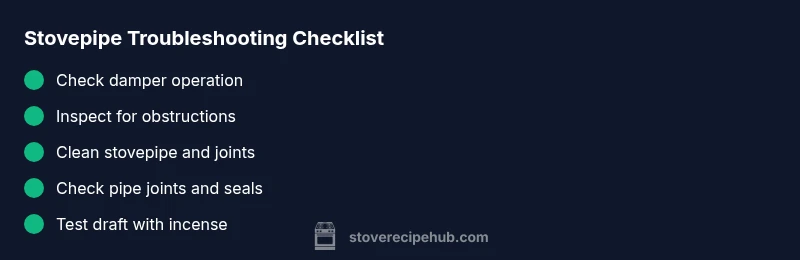
If you’re currently dealing with stovepipe malfunction, start with these immediate steps. First, ensure the damper opens fully and the damper control is functional. Second, inspect the stovepipe for obstructions such as bird nests, creosote, or debris, and carefully remove any blockages using a brush and gloves. Third, verify that pipe joints are tight, seals are intact, and there are no gaps around the roof penetration. Fourth, increase ventilation by slightly opening a window to balance pressure while you diagnose. Fifth, if you have several elbows or a long horizontal run, consider temporarily shortening the run or installing a draft inducer after consulting a pro. If symptoms persist, stop using the stove and contact a licensed chimney sweep or stove technician for a safe assessment.
Steps
Estimated time: 1-2 hours
- 1
Check damper and air controls
Turn off the stove and inspect the damper for smooth operation. Open and close fully to ensure it moves without binding. If it sticks, service or replace the mechanism.
Tip: Lubricate moving parts with a manufacturer-approved lubricant if recommended. - 2
Inspect for obstructions
Look along the stovepipe and the exterior vent for nests, leaves, or debris. Use a brush to remove loose material from accessible sections.
Tip: Wear a mask and gloves; creosote dust is irritating and flammable. - 3
Clean the stovepipe
With the stove cool, brush the interior of the pipe to remove creosote buildup. For long runs, use a compatible chimney brush and extension rods.
Tip: Never use water to clean creosote; it can slick deposits and create a slide risk. - 4
Check pipe joints and seals
Tighten all joints and replace cracked gaskets. Look for gaps around the roof penetration and reseal with high-temperature sealant as needed.
Tip: Ensure seals are rated for your stove and pipe material. - 5
Assess the chimney height and routing
Evaluate whether the stack height and routing meet the manufacturer’s recommendations. If the run is overly complex, consider professional redesign.
Tip: Avoid cutting corners; improper routing can worsen draft problems. - 6
Test with a controlled burn
Light a small fire with seasoned wood and observe draft behavior. If smoke persists downward, reassess with an expert.
Tip: Keep a CO detector near the stove during testing. - 7
Evaluate fuel and moisture
Use properly seasoned wood (below 20% moisture). Poor fuel quality can sustain creosote and reduce draft efficiency.
Tip: Avoid burning treated lumber or trash; it creates dangerous fumes. - 8
Plan professional assessment
If issues persist after these steps, schedule a certified chimney sweep or stove technician visit for a comprehensive evaluation.
Tip: Document symptoms, timing, and steps taken to aid the technician.
Diagnosis: Smoke backing into the living space, strong odor, or poor draft from a stove or pellet stove.
Possible Causes
- highDraft imbalance due to chimney design or building ventilation
- highCreosote buildup restricting flow
- mediumPipe installation issues (diameter mismatch, loose joints)
- lowBlocked or collapsed chimney liner
Fixes
- easyTest draft with incense/smoke and observe airflow; adjust damper and verify updraft.
- mediumClean stovepipe and chimney of creosote; reseal joints and replace damaged sections.
- hardShorten long horizontal runs or install a cap/draft inducer; return to proper configuration.
Common Questions
What are the early signs of stovepipe malfunction?
Common early signs include visible smoke or smell of smoke in indoor spaces, difficulty drawing up the flue, and a cooler flue temperature than expected. Over time, creosote buildup may become noticeable through odor or glazing.
Watch for indoor smoke, a persistent odor, or unusual cold spots along the stovepipe; these indicate draft or buildup issues.
Is creosote buildup the main cause of stovepipe malfunction?
Creosote buildup is a frequent contributor to reduced draft and increased fire risk, but malfunction often results from a combination of draft, installation, and fuel factors. Regular cleaning reduces risk.
Creosote is a major factor, but draft and installation issues also play big roles.
Can I fix stovepipe issues myself?
Many minor issues, like removing blockages and cleaning accessible pipe sections, can be done safely by homeowners. Complex problems—structural damage, liner issues, or extensive creosote—require a licensed professional.
You can handle basic cleaning, but many fixes need a pro.
When should I call a professional?
Call a professional if you detect persistent backdraft, strong odor of gas or creosote, suspected liner damage, or after attempting basic fixes without lasting improvement.
If in doubt or if alarms go off, get a pro to check it out.
How often should stovepipe be cleaned to prevent malfunction?
Most systems benefit from an annual professional chimney sweep and a mid-season inspection during heavy use. Individual usage and fuel type can shift this schedule.
A yearly professional sweep plus seasonal checks keeps things safe.
Watch Video
Top Takeaways
- Identify draft issues and creosote as primary culprits
- Regular cleaning and professional inspections prevent buildup
- Ensure correct pipe size and secure connections
- Maintain safety systems and clear air paths
- Use properly seasoned fuel to sustain a healthy draft