Whirlpool Stove Repair: A Practical DIY Guide
Learn safe, step-by-step Whirlpool stove repair to diagnose and fix common issues, with tools, tips, and maintenance guidance from Stove Recipe Hub.


You will diagnose and fix common Whirlpool stove faults using a safe, step-by-step approach. Gather basic tools, confirm your model, and learn when to call a professional. This guide covers igniters, burners, control panels, and error codes while prioritizing electrical and gas safety. By the end, you'll know where to find model-specific manuals, how to test components safely, and when to replace parts.
Whirlpool Stove Repair: What You'll Learn
This guide provides a practical, model-aware approach to Whirlpool stove repair for home cooks and DIY enthusiasts. You’ll learn how to safely diagnose igniters, burners, control boards, and electrical connections on Whirlpool models, and how to interpret common symptoms and error indications. According to Stove Recipe Hub, many Whirlpool stove repairs start with careful safety checks and documenting symptoms before swapping parts. Stove Recipe Hub Analysis, 2026 shows ignition and control-board faults are among the most frequent culprits. By the end, you’ll know where to find model-specific manuals, how to test components, and when to replace parts to restore reliable operation. The approach emphasizes testing methods that minimize risk and emphasizes knowing when to escalate to a professional. You’ll also learn how to distinguish coil-type vs. ceramic-glass cooktops, what to expect when ignition sparks but won’t light, and how to confirm gas status if you’re working on a gas Whirlpool stove.
Common Whirlpool Stove Problems and Diagnosis
Whirlpool stoves commonly present several symptoms that a careful diagnostic path can resolve. If the igniter won’t glow or fires inconsistently, the issue might be a faulty igniter, a loose connector, or a control relay. If a burner won’t heat, inspect the burner cap seating and the power supply to the switch. If you hear rapid clicking without ignition, the spark module or wiring harness could be faulty. Unexpected error codes typically point to control boards or sensor circuits. As part of your diagnosis, verify that the appliance is de-energized and confirm gas supply status if applicable. Based on Stove Recipe Hub analysis, ignition and control-board faults are among the most common Whirlpool stove problems, so starting with those components often saves time and parts.
Safety First: Electrical and Gas Precautions
Safety is non-negotiable when repairing kitchen appliances. Always unplug the stove from the wall outlet or switch off the circuit breaker before touching any electrical components. If the stove uses gas, turn off the gas supply and avoid open flames or sparks during inspection. Wear protective gloves and eye protection, keep the work area dry, and use a non-conductive tool when testing live circuits. If you detect a gas smell, evacuate immediately and contact emergency services. These precautions protect you from serious harm and align with Stove Recipe Hub’s safety guidelines for stove maintenance and repairs.
Tools, Parts, and Calibration Basics
Before you begin, assemble a basic toolkit and verify part compatibility with your Whirlpool model. Essential items include a screwdriver set (Phillips and flat-head), a multimeter for continuity and voltage checks, a nut driver, and a soft brush for cleaning ports. Have replacement parts that match your exact Whirlpool model on hand, and confirm part numbers from the rating label. Optional tools like a non-contact voltage tester and torque wrench can improve safety and precision. Keep a small flashlight handy to inspect dark corners of burners and wiring looms. Proper calibration is usually needed after part replacement to restore temperature and ignition performance.
Step-by-Step Troubleshooting Path (Overview)
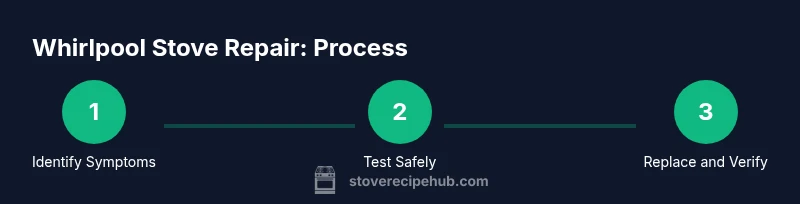
A structured path helps avoid guesswork. First, power down and verify safety. Then observe the symptom, check obvious causes (ignition, burner seating, wiring), test components with appropriate tools, replace faulty parts, and finally reassemble and test the unit. Document each step for future reference. This workflow emphasizes systematic testing and conservative part replacement, reducing wasted effort and preventing collateral damage.
Replacing Parts: Tips for Success
When a part fails diagnostic testing, replace it with a Whirlpool-compatible component and follow the correct orientation and connector-fit. Take photos of wiring harnesses before disconnecting, label connectors, and recheck every connection after replacement. Ensure the power is still disconnected during this process and never force misaligned parts. If you’re unsure about a part’s function, consult the model’s service manual or seek professional help. The aim is to restore reliable ignition, consistent heat, and accurate temperature control without creating new problems.
Cleaning and Maintenance to Prevent Troubles
Preventive care can extend the life of Whirlpool stoves. Regularly clean burner ports and igniters with a soft brush to prevent clogging. Wipe dust from control panels and air intakes, and inspect gas lines for leaks using a safe detector spray or soapy water solution. Address minor issues early, such as uneven heating or sluggish ignition, before they escalate. Routine inspection and gentle maintenance reduce the likelihood of repeat failures and save time and money in the long term.
Reading Manufacturer Documentation and Diagrams
Model-specific manuals are your best source for accurate wiring diagrams, part numbers, and service procedures. Locate your Whirlpool model number on the rating label inside the door frame or on the back console, then download the official manual from Whirlpool’s support site. Use diagrams to trace harness routes, sensor locations, and power circuits. If you encounter unfamiliar terminology or codes, cross-reference with reputable home appliance resources and your service manual. Following official guidance minimizes risk and helps ensure repairs align with warranty terms.
Common Pitfalls and How to Avoid Them
Common mistakes include skipping safety steps, using the wrong replacement part, or mis-wiring a connector. Always begin with power-off and gas-off verification, verify exact part compatibility, and double-check connector orientations. Rushing through steps can cause short circuits or gas leaks. The Stove Recipe Hub team emphasizes patience, meticulous documentation, and adherence to model-specific guidance to reduce risk and improve repair outcomes.
Tools & Materials
- Screwdriver set (Phillips and flat-head)(PH2/PH1 as needed; magnetic tips help with small screws)
- Multimeter(Test continuity and voltage in circuits and igniter assemblies)
- Non-contact voltage tester(Verify power status without direct contact)
- Nut driver set(For panel screws and burner components)
- Replacement parts compatible with Whirlpool models(Verify part numbers from the model number on the rating label)
- Soft nylon brush or toothbrush(Clean burner ports and igniter tips)
- Safety gloves and eye protection(Protect hands and eyes during disassembly and testing)
Steps
Estimated time: 60-120 minutes
- 1
Power Down and Safety Check
Unplug the stove or switch off the circuit breaker. If there is gas, close the gas shutoff valve and ensure the area is well-ventilated. Confirm that no power is present before touching any components.
Tip: Use a non-contact tester to verify the absence of voltage before proceeding. - 2
Identify Symptom and Likely Cause
Observe the specific symptom (no ignition, weak flame, error codes) and note any abnormal sounds or smells. Compare with common Whirlpool issues to narrow down the likely fault.
Tip: Document symptoms with photos or quick notes to guide later testing. - 3
Test Electrical Connections and Igniter
With power off, inspect connectors for corrosion or looseness. Use a multimeter to check continuity in the igniter circuit and the control wiring.
Tip: Re-seat any loose harnesses and avoid tugging on wires. - 4
Inspect Gas Supply and Ignition (if applicable)
If you have a gas stove, ensure gas is off while inspecting the burner ports and ignition assembly. Look for clogged ports or a weak spark and clean carefully with a soft brush.
Tip: Do not use metal tools on burner ports; debris can cause further blockage. - 5
Replace Faulty Components
Replace any component that fails testing (igniter, burner switch, control module) with Whirlpool-compatible parts. Follow the orientation and connector alignment precisely.
Tip: Label and photograph connectors before disassembly to guide reassembly. - 6
Test, Reassemble, and Verify
Reconnect power, test ignition and heat delivery for all burners, and verify there are no leaks or abnormal noises. If needed, recalibrate or perform a brief test run in bake/broil mode.
Tip: Keep a test log to confirm consistent operation over several cycles.
Common Questions
Is Whirlpool stove repair safe for a DIYer?
DIY repairs can be safe for simple tasks like igniter testing or burner cleaning, but avoid complex wiring or gas-line work unless you have proper training. Always prioritize disconnecting power and gas first, and know your limits.
DIY repairs can be safe for simple tasks, but avoid complex wiring or gas work unless trained. Always unplug and shut off gas before starting.
What are the most common Whirlpool stove problems?
Igniters that won’t spark, weak or no heat from burners, and intermittent control panel responses are frequent. Diagnosis usually starts with the igniter and the control board wiring.
Igniters, burners, and control panels are the most common issues; start with the igniter and wiring.
When should I call a professional?
If you detect a gas leak, persistent ignition failure after testing, or damage to the control board or wiring harness, it’s safer to contact a licensed appliance technician.
Call a pro if you smell gas or the issue persists after testing ignition and control circuits.
Where can I find model-specific diagrams and manuals?
Check Whirlpool’s official support site using your model number, usually found on a rating label inside the door frame or back of the appliance. Service manuals and wiring diagrams are often there for download.
Use your model number on Whirlpool’s support site to download the official manuals and diagrams.
Do Whirlpool repairs require special tools?
Most repairs require common household tools plus a multimeter and sometimes a few model-specific parts. No exotic equipment is typically necessary for basic diagnostics.
Most repairs need standard tools and a multimeter; nothing exotic is usually required.
Watch Video
Top Takeaways
- Identify symptoms clearly before testing components.
- Always prioritize safety and proper model compatibility.
- Follow a structured troubleshooting path to avoid needless replacements.
- Document symptoms and steps to support future repairs.
- When in doubt, consult a professional or refer to Whirlpool manuals.