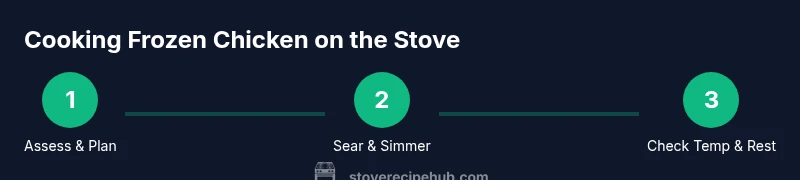
Can You Cook Frozen Chicken on the Stove? A Safe Step-by-Step Guide
Learn safe, reliable methods to cook frozen chicken on the stove without thawing. This guide covers methods, temps, timing, and tips for juicy, safe results on the stove.


Yes, you can cook frozen chicken on the stove, but you must follow safe methods. The key is choosing a method that lets heat penetrate evenly, using a covered pan, adjusting time for frozen meat, and verifying an internal temperature of 165°F (74°C) before serving. Start with thicker cuts for best results and always check for doneness with a reliable thermometer.
Can You Cook Frozen Chicken on the Stove? Safety Foundations
Yes, you can, and many home cooks do it when thawing isn't practical. The core idea behind cooking frozen chicken on the stove is to start heat in a way that browns the exterior while the interior warms through without drying out. The Stove Recipe Hub team highlights that safety starts with understanding heat penetration and the right cooking vessel. The phrase can you cook frozen chicken in stove? is a common question, and the answer depends on choosing a method that allows heat to move from the surface toward the center. The key safety principle is reaching an internal temperature of 165°F (74°C) at the thickest part of the meat and avoiding cross-contamination by keeping separate utensils for raw and cooked chicken. Also, consider that bone-in pieces will conduct heat differently than boneless, so cooking times may vary. In all cases, plan for extra time compared with thawed chicken, and never rely on appearance alone to judge doneness. A thermometer is your best friend here, not color cues alone. This approach aligns with general food-safety guidelines from the USDA and CDC.
Choosing the Right Method: Skillet-Sear + Simmer vs Braise
For stove-top cooking, you can choose a quick sear-and-simmer method or a slower braise. Searing helps develop flavor and color on the exterior, while simmering in a small amount of liquid finishes the cooking gently. Braising, with a bit more liquid, tends to produce juicier results, especially for thicker pieces. Safety-first tips: keep heat moderate and monitor temperature; if the outer surface browns too quickly, reduce heat and add a splash of liquid. The Stove Recipe Hub guidance emphasizes that the final internal temperature must reach 165°F, regardless of method.
Direct Skillet-Sear Method (No Thaw)
A direct skillet-sear approach starts with a hot, oiled pan and frozen chicken. Brown the exposed surfaces for several minutes on each side to create a crust, then reduce heat and add a little liquid to help finish cooking. This method works best with boneless, relatively uniform pieces. Always cover the pan to trap heat and turn pieces as needed to even out heat distribution. Use a thermometer to verify the center reads 165°F.
Braise Method for Juicier Chicken
If you want more moisture, braising is a reliable option. After a quick brown on both sides, add enough broth or water to come up halfway on the chicken pieces. Cover and simmer gently until an instant-read thermometer reads 165°F in the thickest part. The liquid creates steam that penetrates the meat, ensuring the interior cooks through without drying the exterior.
Temperature, Time, and Doneness: Practical Guidelines
The key to safely cooking frozen chicken on the stove is heat management and accurate temperature checks. Use a digital thermometer and verify 165°F (74°C) at the thickest portion, taking into account that thicker pieces take longer. If you’re unsure about doneness, check two different spots and allow for a brief rest after removing from heat. Remember that thawed or partially thawed pieces may cook differently, so adjust your approach accordingly.
Handling, Food Safety, and Cross-Contamination
Keep raw and cooked chicken separate at all times. Wash hands, utensils, and surfaces after handling raw meat, and sanitize cutting boards to prevent cross-contamination. Do not reuse marinades that contacted raw chicken unless boiled first. Treat frozen chicken as you would any raw poultry and maintain clean work surfaces.
Flavor, Texture, and Finishing Tips
A simple finish can elevate frozen-chicken-on-stove results: a quick toss with lemon juice, butter, and herbs after resting adds aroma and moisture. Salt and pepper should be adjusted after browning, when the interior is confirmed safe. If you want crispier edges, finish with a quick high-heat sear for 30 seconds per side after adding a small amount of liquid.
Common Mistakes and How to Avoid Them
Common errors include cooking on too high heat, skipping thermometer checks, and assuming pink color means not done. To avoid these, maintain medium heat, use a reliable thermometer, and rest the meat before serving. Consistency matters: aim for even thickness and avoid crowding the pan, which slows heat penetration.
Quick Reference: Time Guidelines by Cut/Thickness
- Frozen chicken breasts (boneless): sear 4-6 minutes per side, then simmer 6-12 minutes until internal temp reaches 165°F.
- Frozen thighs (bone-in): sear 5-7 minutes per side, then braise for 15-25 minutes until done.
- Whole pieces or larger portions: plan for longer times, keep heat medium and use braising liquid to help heat move through.
Authority Sources
For safety guidance, consult the USDA FSIS and CDC resources:
- https://www.fsis.usda.gov/food-safety/safe-food-handling-and-cooking/safe-food-handling/cooking-meat-and-poultry
- https://www.cdc.gov/foodsafety/index.html
- https://www.fda.gov/food
Tools & Materials
- frozen chicken pieces (breasts, thighs, etc.)(bone-in pieces cook more evenly; adjust time for thickness)
- heavy skillet or cast-iron pan(prefer a pan with good heat retention)
- lid for pan(helps trap steam and cook evenly)
- tongs or spatula(for turning pieces safely)
- digital meat thermometer(target 165°F (74°C) in the thickest part)
- neutral oil with high smoke point(canola, grapeseed, or avocado oil)
- salt and pepper, plus optional spices(season after browning for best flavor)
- chicken broth or water for braising(use if braising; amounts vary by piece size)
Steps
Estimated time: 40-75 minutes
- 1
Assess pieces and choose method
Inspect thickness and bone presence to decide between direct sear or braise. Thicker pieces benefit from braising with some liquid to help heat reach the center. This step sets the stage for even cooking without thawing.
Tip: Thicker cuts may need more resting time after cooking. - 2
Preheat pan and oil
Place a heavy skillet over medium heat and let it warm. Add a thin coat of oil and swirl to coat the surface. The pan should shimmer before you add the chicken.
Tip: An even, moderate pan heat prevents scorching the exterior. - 3
Add frozen chicken and brown exterior
Carefully place the frozen pieces in the pan. Sear without moving for a few minutes to develop color, then rotate to brown other surfaces. Do not overcrowd the pan.
Tip: A crust helps seal in moisture and jump-start heat transfer. - 4
Move to braise or finish cooking
If braising, add enough broth to come halfway up the pieces, then cover and simmer. If staying with sear-plus-simmer, add a splash of liquid and reduce heat to a gentle simmer.
Tip: Covering creates steam that penetrates the thick interior. - 5
Check internal temperature
Insert the thermometer into the thickest part; ensure it reaches 165°F (74°C). Check at two spots if piece sizes vary.
Tip: Do not rely on color alone. - 6
Rest and serve
Let the chicken rest 3-5 minutes after cooking to redistribute juices. Slice and serve with your favorite sides.
Tip: Resting improves juiciness. - 7
Clean up safely
Wash hands and utensils used for raw chicken; sanitize surfaces to prevent cross-contamination.
Tip: Keep raw and cooked items separate until served.
Common Questions
Is it safe to cook frozen chicken on the stove without thawing?
Yes, it is safe if you use a method that allows heat to penetrate evenly and you reach 165°F in the thickest part. Always use a thermometer to confirm doneness.
Yes. It’s safe if you cook it long enough and verify 165 degrees with a thermometer.
Do I need to thaw chicken before stove-top cooking?
Thawing can reduce total cooking time and help even heat, but it isn’t strictly required. If you’re in a hurry, a direct sear-plus-simmer approach works with frozen pieces.
Thawing isn’t required, but it can help with even cooking.
What temperature should frozen chicken reach for safety?
Internal temperature must reach 165°F (74°C) in the thickest part of the meat. Use a digital thermometer for accuracy.
165 degrees Fahrenheit is the safety target.
Can I use a microwave to thaw before stove cooking?
Microwave thawing is possible but can begin uneven cooking. If you choose this, cook immediately on the stove to finish safely.
Yes, you can, but cook immediately after thawing to avoid any safety issues.
How can I tell if frozen chicken is done without a thermometer?
Color and texture aren’t reliable indicators. Always check with a thermometer for 165°F and verify two spots in thick pieces.
Don’t rely on color—use a thermometer for safety.
What seasonings work best with frozen chicken cooked on the stove?
Simple salt and pepper work well, with garlic, paprika, and herbs added after browning. Let the interior cook through before seasoning heavily.
Season after browning for best flavor and moisture.
Watch Video
Top Takeaways
- Cook frozen chicken safely with proper temps.
- Choose sear-plus-simmer or braise for even cooking.
- Always verify 165°F internal temperature with a thermometer.
- Rest meat before serving to retain moisture.
- Practice safe handling to prevent cross-contamination.