Stove Top Stuffing in the Turkey: Safe, Juicy Guide
Learn how to safely cook stove top stuffing in the turkey with step-by-step guidance, moisture tips, and safe handling. This Stove Recipe Hub guide covers prep, timing, and common pitfalls for juicy, evenly cooked stuffing.


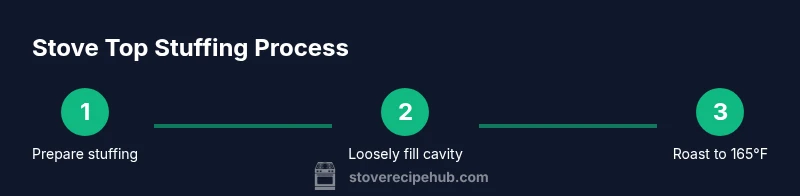
Goal: safely cook stove top stuffing in the turkey for a flavorful result. Thaw the turkey, prepare the stovetop stuffing per package, and stuff loosely into the cavity or in a separate dish; roast until both the turkey and the stuffing reach 165°F in the center. Use a thermometer, baste as needed, and let the roast rest before carving to preserve moisture.
Why stove top stuffing in the turkey remains a kitchen staple
Stove top stuffing in the turkey is a technique many home cooks use to save time and infuse the roast with savory flavors. When done correctly, the stuffing contributes moisture and seasoning, producing a unified, comforting dish at the table. According to Stove Recipe Hub, this approach can be practical and delicious when you respect food safety and heat distribution. The basic idea is simple: prepare the stovetop stuffing according to package directions, lightly fill the cavity or position the stuffing around the turkey in a dish, and roast until everything reaches safe temperature. The result should be a tender turkey with a center filling that carries a hint of the roast itself, rather than a dry confinement of crumbs. The main advantage is that you can blend spices and butter into the mix, letting the flavors mingle with the turkey juices as they cook. However, not every stuffing recipe behaves the same, and some variants perform better when the stuffing sits in a separate dish to ensure thorough heating. In practice, the best outcomes come from a light touch—overfilling leads to uneven cooking, and dense packing slows heat penetration to the center of the stuffing and the breast. If you’re new to this method, start with a small turkey or a partial stuffing to see how the timing aligns with your oven. With careful prep, stove top stuffing in the turkey becomes a reliable, flavorful centerpiece.
Safety first: temperatures, moisture, and safe handling
Food safety is the top priority when cooking stuffing inside a turkey. The critical rule is that both turkey and stuffing must reach a safe internal temperature of 165°F (74°C) in the center to prevent any lingering pathogens. Because the stuffing sits inside the cavity, it can take longer to heat through than the outer meat. Use an instant-read thermometer to verify both the breast and the stuffing's center. Do not rely on approximate cooking times alone. If the stuffing is dense or heavily wet, its center may stay cooler for longer, which means you might need to adjust your roasting arrangement by either separating some stuffing into a side dish or loosely packing the cavity to promote heat circulation. When handling raw turkey, follow standard hygiene practices: wash hands, use clean utensils, and avoid cross-contamination with raw poultry. If the turkey’s cavity is packed, consider floating a portion of the stuffing in a shallow dish placed on a rack below the breast to ensure both are heated evenly. Basting can help maintain moisture, but avoid frequent opening of the oven, which can drop the temperature and extend time. Finally, remember to rest the roast after cooking; resting allows the juices to redistribute and helps maintain a safe serving temperature for the stuffing too. In short, the safety rules for stove top stuffing in the turkey are straightforward: keep heat even, check temps, and don’t rush the process.
Moisture and flavor strategies for stuffing that stays juicy
The moisture balance is critical when cooking stove top stuffing in the turkey. Rather than adding excessive liquid, aim for a moist, fluffy texture that holds together without becoming soggy. Start with the stovetop stuffing as directed, then introduce a measured amount of broth or turkey drippings to reach a light, cohesive consistency. Butter, herbs, and aromatics can be folded into the mix for deeper flavor, but avoid over-saturating the stuffing, which can hinder heat transfer. When the stuffing contains chicken or turkey stock, taste and adjust seasoning at the end of cooking because the roasting environment already contributes salt and savor from the turkey itself. If you notice a dry outer crust on the turkey while the center of the stuffing looks pale, you can tent the breast with foil to preserve moisture while the interior finishes heating. A common pitfall with stove top stuffing in the turkey is overpacking the cavity, which reduces airflow and creates cold pockets. Light packing promotes even cooking and a more uniform texture throughout both the turkey and the stuffing. Remember, the goal is a harmonious blend of roasted turkey flavor with a well-textured, flavorful stuffing that completes the dish, not a separate, crumbly filler.
Variations: cavity stuffing, exterior rounds, or a hybrid approach
There isn’t a single right way to approach stove top stuffing in the turkey. Some cooks prefer stuffing the cavity loosely to let the juices mingle; others bake some of the stuffing in a shallow dish on a rack beside the turkey to guarantee even heating and browning. A hybrid approach—partly stuffing the cavity and partly baking a portion separately—offers balance: you still capture turkey flavor in the stuffing, while the exposed stuffing becomes browned and crisp. If you choose to place stuffing outside the bird, maintain similar moisture and flavor by finishing it in a warm oven with the roasting turkey, or reheat it to the same center temperature to ensure safety. Whichever method you pick, test for doneness with a thermometer and adjust your plan if the stuffing seems to heat unevenly. The key is to balance heat distribution so that both turkey and stuffing reach 165°F in their centers. Flavor considerations include using a little more seasoning in the stovetop mix or finishing with a small amount of pan drippings to integrate the roast’s taste. Keep your texture goals in mind: want a soft, cohesive stuffing, a crunchy exterior, or a mix of both? Your choice should align with your oven, pan size, and the overall dinner plan.
Timing and temperature strategy: planning the roast for even results
Timing is the tricky part of stove top stuffing in the turkey. Start with a plan that assumes the interior of the turkey needs time to reach 165°F, while the stuffing’s center must do the same. A reliable approach is to begin roasting at a moderate temperature and monitor both turkey and stuffing with thermometers. If you notice the stuffing lagging behind, you may need to adjust by increasing the oven heat slightly or moving the stuffing toward the hotter region of the oven. Conversely, if the turkey exterior browns too quickly, tent with foil to avoid burning before the stuffing finishes. Throughout roasting, avoid opening the oven door too often, since every pause introduces heat loss and can extend cooking times. The best practice is to establish a target window for doneness and verify temperatures at multiple points: the thickest part of the breast, the innermost part of the stuffing, and the thigh if it’s in contact with stuffing. Once both components reach 165°F, remove from heat and let rest. This resting period allows the turkey juices to reabsorb and the stuffing to settle, producing a cohesive, delicious result that holds together when carved.
Make-ahead, storage, and leftovers
Stovetop stuffing in the turkey can be planned with make-ahead components to streamline holiday cooking. You can prepare the dry base of the stuffing ahead of time and combine it with warmed stock just before roasting. If possible, assemble the stuffing close to serving time to retain texture and aroma. After roasting, store any leftovers promptly within two hours in shallow containers to speed chilling. Reheat leftovers to at least 165°F before serving, and consider dividing portions to ensure even reheating. Leftover stuffing can be cooled and refrigerated for a few days or frozen for longer storage. When planning a menu, think about how the stuffing’s flavor will complement other dishes and how the roast’s moisture will pair with the stuffing’s texture. A well-managed plan makes stove top stuffing in the turkey a practical centerpiece rather than a last-minute afterthought.
Troubleshooting common issues and quick fixes
If the stuffing in the turkey comes out dry, lightly moisten with a small amount of warmed stock and re-cover with foil to finish heating. If the outer turkey skin browns too fast, tent with foil and let the interior finish cooking slowly to avoid a dry breast. Undercooked stuffing is a common problem when the cavity is packed too tightly or heat cannot penetrate evenly. In this case, remove some stuffing to a separate dish and finish cooking until 165°F in the center. If you notice excess moisture around the stuffing, ensure the turkey is not resting in its juices; a rack can help separate the roasting liquid from the stuffing. Finally, if your thermometer gives conflicting readings, test several spots in the stuffing and the turkey to confirm temperature equality. The goal is a safe, moist roast where both turkey and stuffing reach the recommended 165°F center temperature, with a texture you enjoy.
Tools & Materials
- Roasting pan with rack(Large enough to hold turkey and allow airflow)
- Meat thermometer (instant-read preferred)(Insert into stuffing center and thickest breast)
- Mixing bowl(For assembling stuffing and mixing seasonings)
- Mixing spoon(Stir and test moisture level)
- Aluminum foil(Tent turkey if browning too quickly)
- Oven mitts(Handle hot cookware safely)
- Measuring cups/spoons(Accurate ingredient quantities)
- Carving knife and board(Serve safely after resting)
- Basting brush(Moisten skin or stuffing if desired)
Steps
Estimated time: 3 hours 15 minutes
- 1
Thaw the turkey completely
If using a frozen turkey, thaw it safely in the refrigerator or in cold water changes until fully defrosted. A fully thawed bird is essential for even heat distribution and safe cooking of the stuffing inside the cavity.
Tip: Plan thaw time based on turkey size; aim for 24-48 hours in the fridge. - 2
Prepare stovetop stuffing according to package
Follow the package directions using the recommended liquid and seasonings. Do not over-season before roasting, as the roasting environment adds salt and depth from the turkey drippings.
Tip: If using low-sodium stock, adjust salt in other components. - 3
Moisten stuffing to a light, cohesive texture
Add broth gradually until the mixture forms a moist but not soggy consistency. It should hold together when pressed lightly but still crumble if pinched.
Tip: Test moisture by squeezing a small amount in your hand. - 4
Loosely fill the turkey cavity or use a separate dish
Loosely pack stuffing into the cavity to allow heat to circulate. If the cavity is already tight, place a portion in a shallow dish on a rack inside the roasting pan.
Tip: Avoid overpacking—the stuffing must expand as it heats. - 5
Roast and monitor heat distribution
Roast the turkey, tenting with foil if needed to prevent over-browning. Use a thermometer to monitor both turkey and stuffing temperatures throughout the roast.
Tip: Check doneness mid-roast and adjust foil as necessary. - 6
Check temperatures for safety
Insert thermometer into the center of the stuffing and the thickest part of the breast/thigh. Both should reach 165°F (74°C) for safe serving.
Tip: Avoid touching bone when measuring temperature. - 7
Rest the roast before carving
Let the turkey rest for 20–30 minutes to redistribute juices. Resting helps keep stuffing warm and improves slicing.
Tip: Keep the pan loosely covered to retain heat during resting. - 8
Slice, serve, and store leftovers
Carve the turkey and slice the stuffing for serving. Refrigerate leftovers within two hours and reheat to 165°F before serving again.
Tip: Label leftovers with date to track safety.
Common Questions
Is it safe to stuff a turkey with stove top stuffing?
Yes, it can be safe when both the turkey and the stuffing reach a center temperature of 165°F. Use a thermometer and avoid overpacking the cavity to ensure heat reaches all portions.
Yes, you can, as long as both the turkey and stuffing reach 165 degrees in the center.
Should I stuff the cavity or cook stuffing separately?
Both methods work. Stuffing in the cavity adds flavor but may heat more slowly; cooking some stuffing separately guarantees safe doneness and can provide a crispier texture.
You can use either method, or combine them for best results.
What thermometer reading confirms doneness?
165°F (74°C) in the center of the stuffing and in the thickest part of the turkey confirms safety.
165 degrees in the center of both stuffing and turkey.
Can I make stuffing ahead of time?
Yes, you can prepare the stuffing base ahead and reheat it with the turkey, but avoid packaging decisions that hinder even heating.
Yes, you can prep ahead, just ensure it heats through safely.
What if the stuffing is undercooked after roasting?
Finish cooking by transferring to a dish and baking until the center reaches 165°F, or return to the oven with the turkey to complete doneness.
If undercooked, bake it until safe temperatures are reached.
How long can leftovers be stored?
Refrigerate leftovers within two hours and reheat to 165°F. Consume within a few days for best quality.
refrigerate promptly and reheat to 165 degrees.
Watch Video
Top Takeaways
- Loosely fill the cavity to ensure heat penetration.
- Cook to 165°F in both turkey and stuffing.
- Rest before carving to retain moisture.
- Use a thermometer for accurate doneness.
- Make a hybrid approach if needed to balance texture.