Can You Use Stove and Oven at the Same Time? A Practical Guide
Learn whether you can run the stove and oven at the same time, plus practical safety tips, timing strategies, and step-by-step guidance for efficient, safe multitasking in the kitchen.


Yes, you can generally use the stove and oven at the same time. Most ranges share electrical capacity, so avoid overloading circuits and watch for heat buildup. With careful planning and safe practices, you can multitask—roasting while simmering or searing—without sacrificing safety or performance. This article explains how to coordinate oven and stovetop use for efficient weeknight dinners.
Can you use stove and oven at the same time?
The question can you use stove and oven at the same time comes up frequently in busy kitchens. In most households, the oven and the cooktop draw from the same electrical circuit or supply, which means coordinated use is possible, but it requires mindful planning and a clear schedule. According to Stove Recipe Hub, the key is to map tasks so you aren’t competing for heat or space, especially when you’re cooking something that needs steady, precise temperatures. You don’t have to choose between roasts and sauces; you can run both if you respect the limits of your range and ventilation. When done correctly, multitasking saves time and keeps dinner on track without compromising food safety or appliance performance.
In practice, this means knowing which tasks benefit from parallel operation—roasting on the oven while simmering sauces on the stove—and which ones should be sequenced to avoid overheating or crowding your burners. For instance, preheating the oven while prepping sides lets you start roasting as soon as you finish the prep, reducing total cooking time. The essence of managing can you use stove and oven at the same time is careful timing, clear task separation, and regular checks on heat and oven temperature.
Planning your multitask kitchen workflow
Effective multitasking begins with a plan. List the meals you intend to cook, identify which components belong in the oven and which belong on the stovetop, and decide where you can safely overlap tasks. A simple worksheet or a kitchen timer can help you visualize heat requirements and prevent conflicts. When you plan, consider the order of operations: what can be prepped in advance, what needs immediate attention, and how long each element will take. By assigning responsibilities to either the oven or stove, you minimize downtime and keep both surfaces from feeling overloaded. Remember to account for carryover times, like resting meat after it comes out of the oven, which frees the stovetop for finishing touches.
A practical planning step is to group tasks by temperature range: high-heat searing on the stovetop and lower, steady oven heat for roasting. This reduces abrupt temperature shifts and helps you manage heat distribution more predictably. Your plan should also incorporate safety checks: verifications that the pan handles aren’t overly hot, that cords aren’t in the way, and that there’s good ventilation if you’re using high heat.
When you’re using the oven and stove at the same time, you’ll often want to set a timer for each element. This keeps you on track and prevents overcooking, especially when you’re juggling multiple dishes. The more you practice, the more intuitive the workflow becomes. The Stove Recipe Hub team recommends starting with a simple two-dish scenario to build confidence before attempting more complex multitasking sessions.
Electrical and gas considerations for simultaneous use
Understanding the electrical requirements is crucial when you plan to run the oven and stove at the same time. Electric ranges draw substantial current, and older homes may have circuits that aren’t designed for heavy simultaneous loads. If you notice dimming lights, breakers frequently tripping, or overheating plugs, it’s a sign you should pause and reassess. On gas ranges, the oven and burners share the gas line and ventilation pathways, so you’ll want to ensure adequate airflow and avoid blocking vents with large cookware. Regular maintenance of gas lines and venting helps sustain safe operation when you’re multitasking. In both fuel types, avoid running multiple high-heat functions at once if your breaker or fuse is near its limit.
If your kitchen layout places the oven near a major heat source or a busy sink, room planning matters too. Sufficient space around the oven and stove reduces the risk of accidental contact with hot surfaces and improves airflow, which is vital when you’re cooking at the same time. Under no circumstances should you bypass safety labels or modify electrical or gas connections yourself. When in doubt, consult a licensed professional to evaluate your home’s specific setup.
Timing strategies to optimize oven-stove workflows
Timing is everything when you’re using the stove and oven concurrently. Start by preheating the oven to the target temperature while you complete the initial prep on the stovetop. If your recipe requires a sear before roasting, begin with a hot pan to lock in juices, then transfer the meat to the oven to finish. For sauces and sides, stagger tasks so the stove simmers while the oven roasts, rather than attempting to boil and bake at full power simultaneously.
Use a timer for each dish and set reminders for important milestones, such as halfway through bake time or the moment you need to baste a roast. Consider placing dishes that benefit from less heat on the upper racks and saving high-heat tasks for the bottom shelves. If your oven has hot spots, rotate pans halfway through the bake to promote even cooking. The goal is a predictable rhythm that minimizes the chance of scorching or undercooking on either surface.
Temperature control tricks that work for both surfaces
Maintaining appropriate temperatures on the oven and stovetop is essential for successful multitasking. For the oven, avoid frequently opening the door, which causes heat loss and uneven cooking. Keep baked goods in the center of the rack to minimize temperature fluctuations caused by door openings. On the stove, use medium heat for most simmering tasks and reserve high heat for searing or boiling water. If you need to switch from stovetop to oven mid-cook, plan for a short warm-up period so the oven catches up without overheating. A practical tip is to use a thermometer to monitor internal temperatures of roasts or poultry while the stovetop maintains sauce consistency.
Another useful trick is to map the oven’s internal temperature to the dish’s target finish. For example, roasting at 375°F (190°C) for a chicken and simmering sauce at a gentle bubble on the stovetop helps you coordinate finish times. Keeping a two-temperature mindset—one for the oven, one for the stove—helps you manage a multi-dish scenario with fewer surprises.
Safety essentials you should have during multitasking
Before you begin multitasking, gather safety gear and check that the kitchen is prepared for higher activity. Oven mitts or heat-resistant gloves protect your hands when handling hot pans, and long sleeves should be avoided near open flames. A reliable timer ensures you don’t lose track of multiple processes, while a functioning smoke alarm provides early warning in case of a flare-up. Keep a fire extinguisher rated for kitchen use accessible and know how to use it. Ensure good ventilation, especially if you’re searing on the stovetop while the oven is running. Regular maintenance on gas lines or electrical connections helps prevent unexpected failures under load.
Remember to keep paths clear of cords and avoid stacking pans in a way that blocks airflow. Never bypass safety instructions to speed up cooking. The safer your setup, the easier it is to manage both surfaces simultaneously.
Practical multitask examples you can try
For a practical, approachable scenario, try roasting vegetables in the oven while simmering a sauce on the stove. Place root vegetables on a sheet pan with olive oil and roast at 425°F (220°C) while you deglaze a pan on the stovetop and reduce the sauce to a glossy finish. Another example is baking a casserole while sautéing aromatics for a complementary side dish. This approach demonstrates how can you use stove and oven at the same time effectively without conflict. Adjust the timing so the oven finishes first, then let the stovetop reduce to a gentle simmer while you rest the dish before serving.
If your meal involves multiple components with different temperatures, consider cooking the components that require higher temperatures first on the oven and finishing the lower-temperature items on the stove. This sequencing reduces the chance of heat creep or temperature drift affecting multiple dishes at once.
Cleaning, checks, and post-use safety
After multitasking, allow both surfaces to cool before cleaning. Wipe down countertops and clean any spills to prevent the next cooking session from becoming slippery. Inspect oven racks and seals for wear, and check burners or gas jets for clogs or discoloration. If you notice uneven heating or management issues, schedule a professional service to evaluate your range. A quick safety habit is to run a brief heat-clean cycle (if your range supports it) and to verify that the hood fan is functioning properly to maintain air quality in your kitchen. Regular checks keep the ability to use stove and oven simultaneously reliable over time.
Quick-start checklist for beginners
- Identify a simple two-dish plan you can execute with oven and stove simultaneously
- Preheat the oven while you prep the stovetop
- Use a timer for each dish and rotate pans as needed
- Keep oven door closed during bake to minimize heat loss
- Have a fire extinguisher and smoke alarm in working order
- Practice on a low-risk recipe to build confidence gradually
Troubleshooting: what to do if things go wrong
If temperatures drift or a dish isn’t finishing as expected, reassess heat distribution and timing. Check for blocked vents, open oven doors, or overflowing pans on the stovetop. If you trip a breaker or notice sparking, immediately shut off power to the range and consult a professional. Never attempt to fix electrical or gas components yourself. When you identify a problem early, you can adjust the plan to keep both surfaces operating safely and effectively.
Putting it all together: weekly multitask planning
A well-planned weekly schedule can include several multitask sessions that maximize the oven and stove’s capabilities. Build a simple plan that lists the dishes you’ll cook on the oven and the stovetop, along with approximate times. Factor in resting periods and cooling times for proteins, so you can shift from oven to stove tasks smoothly. By establishing a repeatable routine, you’ll gain efficiency and reduce kitchen chaos. The Stove Recipe Hub team finds that this approach improves meal quality and reduces total cooking time over the week.
Tools & Materials
- Oven mitts or heat-resistant gloves(Long, insulated, dry hands, protect forearms)
- Kitchen timer or timer app(Set reminders for multiple dishes)
- Instant-read thermometer(Optional for checking internal temps precisely)
- Dry measuring cups and spoons(For precise timing and measurements)
- Spill tray or sheet pan liners(Contain drips and simplify cleanup)
- Fire extinguisher (kitchen-rated)(Know how to use it; safety first)
Steps
Estimated time: Total time: 45-60 minutes
- 1
Assess and plan the multitask session
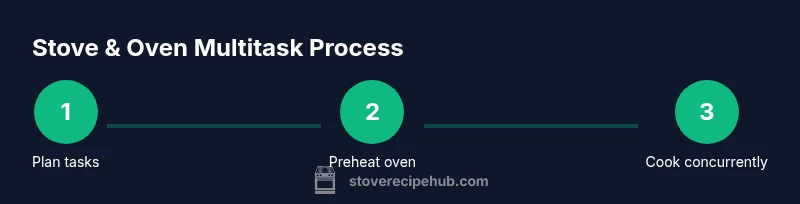
Take 5 minutes to map which components will be in the oven vs on the stovetop. Assign tasks to each surface to avoid crowding and identify timing dependencies. This planning reduces last-minute juggling and ensures your oven and burners work in harmony.
Tip: Write down the plan or keep a visible checklist on the fridge. - 2
Preheat the oven and prep stovetop tasks
Preheat the oven to the target temperature while you complete the initial prep on the stove. This overlap saves time and sets up smooth transitions when you start cooking. Ensure your cookware is ready and within reach to minimize delays.
Tip: Avoid opening the oven door during preheat to maintain stable temperature. - 3
Start stovetop cooking while the oven heats
Begin with dishes that benefit from searing, sautéing, or boiling on the stove. Keep heat at a level that won’t cause steam build-up or splatter and keep an eye on sauces so they don’t boil over while the oven finishes heating.
Tip: Use a fan or vent hood to control steam and odors. - 4
Monitor temps and adjust heat as needed
Use a timer for each dish and check temperatures at key milestones. If a recipe requires a precise oven temperature, use the thermometer to confirm accuracy and adjust the stovetop heat to maintain harmony across dishes.
Tip: Rotate pans mid-cook if your oven has hot spots. - 5
Finish and rest while you clean as you go
When dishes near completion, switch to lower heat or turn off burners to rest and avoid overcooking. Use resting time for quick cleanup or prepping the next steps to maintain momentum.
Tip: Keep hot items in keep-warm mode if available. - 6
Serve safely and perform post-cook checks
Carefully remove hot pans with oven mitts, check that all components reached safe internal temps, and wipe surfaces. Verify that ventilation remains adequate and the kitchen is left clean for the next round.
Tip: Document any issues for future sessions. - 7
Review and refine your routine
After your session, note what worked well and what could be improved. Small tweaks to timing, rack placement, or task order can yield big gains in future multitask cooking.
Tip: Update your plan for similar dishes next time.
Common Questions
Is it safe to use the stove and oven at the same time?
Yes, it can be safe when you follow basic safety practices: avoid overloading circuits, keep cookware stable, monitor temperatures, and use proper ventilation. Never leave unattended while operating at high heat.
Yes, it’s safe to use both if you stay attentive and follow safety steps.
Will running the oven affect stovetop temperatures?
In most setups, oven use can influence room temperature and burner performance slightly, but you can manage this with sensible heat levels and careful timing. Keep an eye on pot/pan heat and avoid sudden temperature changes.
Yes, there can be a small impact, but you can control it with careful heat management.
Should I preheat the oven while cooking on the stove?
Preheating the oven while you prep on the stove is a common and effective strategy. It reduces total cooking time and helps you synchronize finish times for multiple dishes.
Absolutely—preheat while you prep to save time and coordinate finishes.
What are warning signs of an overload or dangerous setup?
Warning signs include frequent breaker trips, dimming lights, unusually warm outlets, or a burning smell. If you notice any, stop, unplug, and re-evaluate your setup.
Watch for breakers tripping or heat buildup; stop and reassess if you notice anything unusual.
Can this approach differ between gas and electric ranges?
The principles are similar, but gas ranges rely more on venting and airflow, while electric ranges emphasize circuit capacity. Follow manufacturer guidelines for your specific model.
Gas and electric ranges share the same safety mindset, just with different mechanical details.
What’s a simple plan for beginners to try first?
Start with a simple two-dish scenario: roast vegetables in the oven while simmering a sauce on the stove. Expand as you become comfortable with timing and heat control.
Try a simple roast plus sauce to practice coordinating both surfaces.
Watch Video
Top Takeaways
- Coordinate oven and stovetop tasks to save time
- Plan and time tasks with clear milestones
- Use timers and proper safety gear for multitasking
- Avoid crowding burners and keep ventilation clear
- Rotating pans helps with even cooking on the oven