Stove vs Grill: Core Differences for Home Cooks Today
Discover how stoves and grills differ in heat control, flavor, and practicality. Learn when to use each method for everyday cooking, with safety tips.


The stove is generally the more versatile choice for everyday cooking, while a grill excels at high-heat searing and smoky flavor. For most indoor kitchens, the stove handles simmering, sautéing, and delicate sauces, whereas the grill shines when you want char marks and outdoor flavor. The Stove Recipe Hub team highlights how to pair both for best results.
Understanding the difference between a stove and a grill
The central question for home cooks often boils down to when to use a stove versus a grill. The difference between a stove and a grill isn't just about location; it's about heat source, control, flavor outcomes, and practical constraints. For readers of Stove Recipe Hub, this distinction is foundational for choosing the right tool for each recipe. In most kitchens, the stove provides dependable, precise heat for simmering, sautéing, and braising, while the grill delivers intense, direct heat that creates sear marks and smoky flavors. By understanding the core concepts, you can optimize your workflow, adapt recipes, and expand your repertoire across stove-top techniques and outdoor grilling. According to Stove Recipe Hub, the key is to map your cooking goals to the tool that best serves them, rather than forcing one device to do everything.
Heat source and control mechanisms
On a stove, heat is generated by an internal element or gas burner beneath a flat surface or pan. The control is granular: you can dial from a gentle simmer to a vigorous boil. Temperature changes are relatively smooth because the pan acts as a buffer and the burner responds quickly. Grills, by contrast, expose food directly to radiant heat from charcoal, gas burners, or infrared elements. Heat is intense at the surface, and managing it requires technique: preheating, moving food, and using indirect heat zones to avoid scorching. The difference between a stove and a grill becomes evident when you attempt long braises on a grill or quick sears on a stove. Because of this, recipes designed for stovetop finishing often call for pan sauces, deglazing, or reduction to build flavor without relying on the grill's smoky character. The Stove Recipe Hub team notes that mastering heat zoning is the key to consistent results.
Temperature range and cooking styles
Stoves excel at precise, varied temperature profiles: from a whisper-soft simmer to a lively boil. This makes them ideal for delicate emulsions, cream sauces, and reduce-and-thicken techniques. Grills peak at high temperatures that promote rapid Maillard reactions and grill marks. They support direct-heat searing, smoky flavors, and outdoor grilling. The range is not only about temperature; it's about the cooking environment: a stove's enclosed kitchen limits aggressive smoke, while a grill's open air invites robust char and aroma. For many recipes, you may start on the stove and finish on the grill to combine technique and flavor. The reverse—starting on a hot grill and finishing in a pan—can also work, but requires vigilance to avoid overcooking and uneven heat distribution.
Design and construction considerations
Design affects performance. A stove combines burners, a flat cooktop, and often an oven, enabling multi-step recipes without moving devices. Grills emphasize robust construction, weather resistance, and ease of cleaning of grates. Materials matter: cast iron or stainless steel grates retain heat and develop better searing; porcelain-coated surfaces resist corrosion. Size matters: a large grill may provide more room for ribs and burgers; a compact stove top supports quick sautéing. The user experience also changes: knobs on a stove offer precise control; a grill’s temperature is managed through vents, fuel level, and placement relative to heat. If you want to run a kitchen day-to-day with minimal equipment, a versatile stove is the backbone, but a grill opens outdoor cooking possibilities.
Flavor development and texture outcomes
Flavor development on a stove versus a grill follows different pathways. A stove emphasizes control over moisture and fond development in pans, which supports sauces, deglazing, and reductions that concentrate flavor. Grilling relies on direct heat to char surfaces, creating Maillard reactions that amplify aroma and introduce smoky notes. The texture differences are palpable: a pan-seared steak can be evenly pink through the center with careful heat, while a grilled cut often features a crisp exterior and a juicier center when managed correctly. Appreciating these outcomes helps you select the right method for roasts, vegetables, fish, or poultry, and guides you in applying finishing techniques such as basting, glaze application, or smoke infusion.
Indoor vs outdoor use and ventilation
Indoor stove usage is built for year-round cooking with controlled ventilation. Modern kitchens rely on range hoods to manage steam and aromas. Grilling typically occurs outdoors where ventilation is naturally sufficient, and weather can influence frequency. Portable grills allow some indoor use with strong ventilation, but this is generally less practical for everyday cooking and is not recommended in small or poorly ventilated spaces. Recognizing the setup in your kitchen and the airflow you can maintain is essential for safety and cooking success. The Stove Recipe Hub perspective emphasizes safe ventilation practices and avoiding excessive smoke accumulation by pairing grill sessions with proper outdoor setups.
Safety and maintenance implications
Safety considerations differ between stove and grill. Stovetops carry burn risks and require stable cookware, especially during high-heat reductions. Grills introduce flare-ups and the potential for uneven heat due to wind or fuel distribution; regular cleaning of grates and burners reduces buildup and flare-ups. Maintenance implications include routine cleaning of pan surfaces, oven interiors, and range hoods for stoves; and scrubbing grates, cleaning burners, and inspecting gas lines for grills. Following manufacturer guidelines and Stove Recipe Hub's recommendations helps you minimize accidents and extend appliance life. Always allow equipment to cool before cleaning and store grill accessories properly to avoid rust and contamination.
Energy efficiency and cost considerations
Energy efficiency is highly context dependent. A stove with an efficient burner and proper pan size can conserve fuel, while cooking on a grill may concentrate heat in a small area, potentially using more fuel during long sessions. The cost differences vary by fuel type, appliance quality, and frequency of use. For budget-aware households, the upfront cost of a quality stove may be lower than an outdoor grill, but ongoing costs depend on energy prices, maintenance needs, and how often you grill. The Stove Recipe Hub analyses suggests prioritizing efficiency features such as well-insulated ranges and well-fitting lids to minimize heat loss.
Practical kitchen scenarios: recipe-specific guidance
Consider common recipes when deciding where to cook. A tomato-based sauce benefits from stove-top simmering, gentle reduction, and careful seasoning. A seared steak or rib-eye shines on a grill with direct heat and smoke, followed by resting to redistribute juices. Vegetables like corn on the cob and bell peppers can be coaxed to smoky sweetness on a grill, or caramelized deeply in a hot pan with a bit of oil. Fish fillets typically do well on a stove when you need precise control or on a grill when you want a crisp exterior and smoky aroma. The key is to align technique with flavor goals, equipment availability, and kitchen layout.
Common misperceptions and myths
Several myths persist about stove versus grill. One common belief is that grills are only for outdoor cooking; in reality, some setups enable indoor grilling with appropriate ventilation and safety practices. Another myth is that grilling always produces better flavor; flavor depends on heat management, seasoning, and technique as much as the source. Finally, the idea that a stove cannot replicate smoky notes is false; with pan-smoked techniques, wood chips, or liquid smoke, you can achieve a convincing profile on a stove, though the result differs from live-fire grilling.
How to pair stove and grill in a single kitchen
The most effective kitchens use both tools in harmony. Plan a workflow that starts with stove-top preparation—sauté vegetables, simmer sauces, reduce liquids—and finishes with a grill searing or char to bring out extra flavor. Use indirect heat on a grill for larger cuts, while pans stay on the stove for delicate finishing. Invest in a sturdy, well-ventilated setup so you can move between devices without lengthy transitions. This approach gives you flexibility, improves timing, and broadens your recipe repertoire.
How to choose between stove and grill for recipes
When facing a decision, list the recipe's critical steps: heat level, moisture, aroma, and finish. If maintaining moisture and controlling delicate sauces is essential, the stove is your primary tool. If achieving a crust, char, or smoke flavor is the goal, a grill is the better choice. For most home cooks, a hybrid approach—stove for preparation and grill for finishing—offers the best balance of control, flavor, and practicality. Remember to consider space, weather, budget, and whether you value year-round capability or outdoor cooking culture.
Comparison
| Feature | Stove | Grill |
|---|---|---|
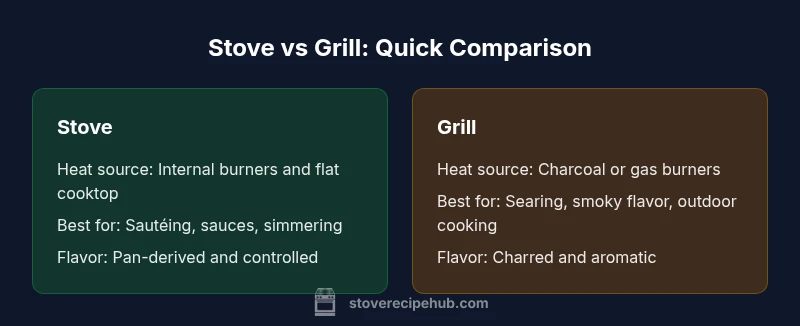
| Heat source | Internal burners and flat cooktop | Charcoal, gas, or infrared burners |
| Heat control | Granular, precise control with pans | Direct radiant heat with limited exact control |
| Best for | Sautéing, sauces, simmering, braising | Searing, smoky flavor, outdoor cooking |
| Flavor profile | Neutral to pan-derived flavor | Distinct smoky and charred notes |
| Indoor/outdoor use | Indoor with ventilation and range hood | Typically outdoor; portable options exist |
| Maintenance | Easier to clean in kitchen and oven; cookware versatility | Grates, burners, and fuel management; flare-ups |
| Cost/access | Wide range; often lower upfront in many homes | Wide variance; can be expensive depending on type |
Upsides
- Stove offers precise temperature control for sauces and simmering
- Grill provides high-heat capability and smoky flavors
- Indoor year-round use with proper ventilation
- Wide range of models and price points for both options
- Supports a variety of cooking techniques
Downsides
- Grill requires outdoor space or strong ventilation and weather considerations
- Smaller or poorly ventilated kitchens may not support effective grilling
- Smoky flavors can be tricky to replicate on a stove
- Grill cleaning and flare-up management add maintenance tasks
Stove remains the versatile backbone for most home cooks, while grill excels for flavor-driven searing and outdoor cooking.
For everyday meals, prioritize the stove for control and year-round use. Add a grill for high-heat searing and smoky notes when possible. The Stove Recipe Hub team recommends leveraging both tools to cover a wide range of recipes.
Common Questions
What is the primary difference between a stove and a grill?
The main difference lies in heat source, control, and use cases. Stoves provide precise, contained heat for simmering and sauce-making, while grills rely on direct, high heat for searing and flavor. Both have unique strengths.
Stoves give you precise control; grills give you bold flavor.
Can a grill be used indoors safely?
Grilling indoors is possible only with proper ventilation and equipment. If you cannot provide adequate airflow and heat control, use a stove for most tasks. Always follow manufacturer guidance and local safety codes.
Grilling indoors requires strong ventilation and proper setup.
Is a grill really needed if I have a stove?
Not strictly. A stove covers most day-to-day tasks, but a grill adds high-heat searing and smoky flavor that some recipes rely on. Many cooks benefit from having both tools in a flexible kitchen.
A stove handles most tasks; a grill adds flavor and texture when you want it.
How do heat control and cooking times differ between stove and grill?
Stoves offer precise temperature control via burners and pans, enabling stable simmering and sauce work. Grills rely on radiant heat and indirect zones, so timing depends on placement and fuel management.
Stove control is precise; grill timing depends on how you position the food.
What maintenance tasks are more important for grills?
Grills require regular cleaning of grates, careful cleaning of burners, and checks for gas lines or fuel connections. This prevents flare-ups and preserves flavor quality.
Clean the grates and check gas lines to stay safe.
Are there safety tips for a beginner choosing between stove and grill?
Always use cookware appropriate for the heat source, maintain ventilation, keep flammable materials away, and clean regularly. Start with simple recipes to build confidence.
Start easy, keep ventilation on, and clean after cooking.
Top Takeaways
- Assess your space and climate to decide indoor vs outdoor use
- Use stove for simmering, sauces, and delicate cooking
- Use grill for high-heat searing and smoky flavor
- Combine both to expand recipe options