Difference Between Stove and Oven: A Practical Guide
An analytical comparison of the difference between stove and oven, detailing heat delivery, use cases, energy, maintenance, and a decision framework for home cooks.


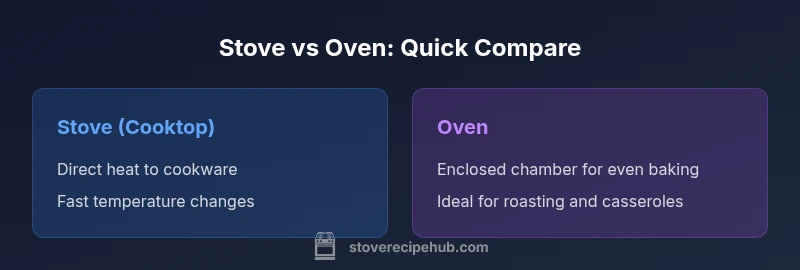
Stove vs oven: the stove (cooktop) provides direct heat to pots and pans, while the oven is a heated, enclosed chamber for baking and roasting. They share heat sources but serve different tasks. Understanding their roles helps plan meals, select cookware, and optimize energy use. This guide outlines the differences, practical uses, and how to choose between them.
Understanding the difference between stove and oven
For most home cooks, the phrase difference between stove and oven describes two distinct cooking tools that share a kitchen footprint but serve different roles. The stove (or cooktop) delivers heat directly to pots and pans, using burners or electric coils, while the oven encloses food in a heated chamber for baking, roasting, and braising. The cooktop is prized for rapid temperature adjustments and high-heat searing, whereas the oven excels at even heat distribution, controlled baking, and long, unattended cooking. According to Stove Recipe Hub, recognizing these core design differences helps you plan meals, manage cookware, and optimize energy use. As you learn, you’ll see that many recipes rely on a coordinated sequence—sauté on the stove then finish in the oven for even results. This distinction is particularly important when you are upgrading a kitchen or choosing between a freestanding range and separate appliances.
Heating methods and temperature control
The most immediate difference in operation is heating method. The stove provides direct heat to cookware via gas flame or electric coils, giving near-instant adjustments and high-heat capabilities. The oven, by contrast, uses thermostats and thermal circulation to heat a sealed space more evenly. Temperature control on the cooktop is reactive—adjust the flame, and your pot responds quickly. The oven offers precise temperatures and, with convection options, better air movement for uniform cooking. Understanding when to apply high searing on the stove and when to rely on the oven’s consistent heat is a practical skill for everyday meals. The difference between stove and oven becomes most visible when you attempt delicate sauces that require steady simmering versus long, slow roasting.
How the difference between stove and oven shapes recipes
Recipes often require both heat sources to achieve the best texture and flavor. Searing meat or reducing sauces happens best on the stove, where you can control surface temperatures and evaporate moisture quickly. Finishing a dish in the oven helps achieve even browning and tenderness without constant monitoring. When a recipe specifies preheating and then baking, you are leveraging the oven’s enclosed, steady heat. The difference between stove and oven matters here, because choosing the right phase and equipment can cut cooking time and improve results. In small kitchens with limited space, understanding this relationship lets you combine the two efficiently within a single cooking session.
Cooking outcomes and best-use scenarios
On a stovetop, you gain speed and control for tasks like boiling water, sautéing aromatics, and pan-frying. The open flame or coil delivers direct heat to cookware, which is ideal for reducing sauces, deglazing, and quick task finishing. The oven shines for baking breads, cookies, casseroles, and roasted vegetables where uniform heat yields consistent moisture and browning. The difference between stove and oven becomes evident in texture and crust formation: crusty edges from a hot pan on the stove versus a soft crumb inside from slow, even heat in the oven. For many households, the most practical approach is to think in stages: prepare on the stove, then transfer to the oven to finish.
Energy use, efficiency, and cost considerations
Energy use differs between the two appliances. A stove top can be energy-efficient for fast tasks and smaller portions, while an oven often consumes more energy due to preheating and longer cooking times. Efficient cooking on a stove includes using the right pan size, proper lid use, and keeping the burners clean to maximize heat transfer. When aiming for energy savings, consider batch cooking in the oven to reduce preheat frequency, or stagger tasks so you only preheat once for a multi-dish meal. Stove Recipe Hub Analysis, 2026 notes that energy efficiency depends on usage patterns and appliance design, so the best choice hinges on your typical meals and kitchen workflow. This is a reminder that the difference between stove and oven is not just about capability but also about how you plan meals.
Size, placement, and kitchen workflow
The physical footprint and placement of a stove versus an oven influence kitchen layout and workflow. A freestanding range combines both into one unit, saving counter space but demanding adequate ventilation and electrical or gas connections. A separate cooktop plus wall oven offers flexible layouts, easier upgrades, and potential ergonomic benefits. The difference between stove and oven in layout decisions matters for ergonomics, reach, and safety. Think about the most frequent tasks in your kitchen and arrange components so you can move seamlessly from prep to cook to finish. When you design or remodel, consider tablespace for pans, a nearby prep area, and adequate venting to handle heat and steam.
Maintenance, safety, and cleaning
Maintenance considerations differ as well. Stove tops require regular surface cleaning, burner inspection, and ensuring grates and coils are in good condition for efficient heat transfer. Ovens require periodic cleaning of racks, seals, and the oven cavity, as well as checking convection fans if equipped. Safety factors include proper ventilation, especially with gas stoves, and avoiding overheating residue buildup. A small habit of wiping spills promptly prevents baked-on stains and corrosion. The difference between stove and oven becomes practical through simple routines: wipe the cooktop after use and schedule a light oven cleaning every few months depending on usage.
Common misconceptions and myths
A common myth is that a larger oven automatically makes meals faster; in reality, the heat distribution and preheating time influence performance as much as size. Another misconception is that stoves are only for one-pot meals; modern cooktops with multiple burners enable simultaneous tasks, from boiling to searing while keeping sauces warm. Some assume that gas stoves always vent poorly; when properly vented, they can offer precise control with efficient heat delivery. The difference between stove and oven is best understood by testing tasks you perform regularly and noting which appliance handles each step most effectively.
Tips to optimize performance and practical decisions
To get the most from either appliance, organize cooking into stages: prep on the stove, then move to the oven for finishing. Use the right cookware—heavy-bottom pans for the stove and oven-safe trays for baking. Preheat the oven only as long as necessary and use convection when available for even heat distribution. For energy efficiency, batch similar tasks and reuse heat where possible rather than starting new preheats for every dish. The key to leveraging the difference between stove and oven is to map your recipes to the strengths of each appliance, keeping timelines synchronized so you minimize idle heat.
Authority sources
- Energy.gov: Cooking energy efficiency and appliance guidelines
- EPA.gov: Indoor air quality and ventilation considerations for cooking appliances
- NIST.gov: Temperature control standards and heat transfer basics
Comparison
| Feature | Stove (Cooktop) | Oven (Enclosed) |
|---|---|---|
| Heating Method | Direct heat transfer via burners/ coils | Enclosed heated chamber with convection options |
| Primary Use | Sautéing, boiling, pan-searing, quick tasks | Baking, roasting, casseroles, slow cooking |
| Temperature Control | Instant control with knobs; reacts quickly | Thermostatic control with precise temps |
| Heat Distribution | Direct surface heat to cookware | Even heat distribution within cavity |
| Preheating Needs | Often no preheat for top tasks | Typically requires preheating for bake/roast |
| Space/Footprint | External cooktop footprint; needs ventilation | Built-in or standalone, occupies interior space |
| Typical Cost Range | Lower upfront for standalone cooktops; fuel varies | Higher upfront for ranges or built-in ovens |
Upsides
- Immediate, precise heat control on the cooktop
- Versatile for sautéing, searing, and deglazing
- Often lower upfront cost and simpler installation
- Easier access to cookware and faster cleanup
Downsides
- Ovens require preheating and use more energy per batch
- Limited to what you can fit on the cooktop at once
- Gas stoves require ventilation to handle byproducts
- Some models lack advanced convection for baking
Stove tops excel for speed and control; ovens shine for even, unattended cooking.
If you prioritize quick, high-heat tasks, the stove is your go-to. For baking, roasting, and long, even cooks, the oven delivers the best results. A balanced kitchen often uses both in tandem, leveraging each appliance’s strengths.
Common Questions
What is the main difference between stove and oven?
The stove provides direct heat to cookware on the surface, while the oven heats food inside an enclosed chamber for baking and roasting. They serve complementary roles in most kitchens and require different cooking strategies.
Stove heats on the surface; oven heats inside. They work best when you use each for its strengths.
Can I use a stove as an oven?
You can simulate some oven tasks on a stove by using covered pots and lids, but you cannot reliably replicate baking or roasting results that rely on enclosed, even heat. Some recipes benefit from finishing on the stove after oven work.
A stove can mimic a few oven tasks with covered pots, but it won’t fully replace baking effects.
Is energy use higher for ovens?
Ovens typically consume more energy per batch due to preheating and longer cooking times, but energy use depends on the dish, pan size, and efficiency features like convection. Plan meals to consolidate oven use where possible.
Ovens often use more energy because they preheat and bake longer, but it varies by dish.
Are there combo appliances that blend both functions?
Many kitchens use a range that combines cooktop and oven in one unit, offering integrated controls and space efficiency. Separate cooktops and wall ovens provide layout flexibility but may require more planning for ventilation.
Ranges combine both, but you’ll get more layout freedom with separate pieces.
How should I clean stove tops vs ovens?
Stove tops benefit from regular wipe-downs and burner maintenance. Ovens require cavity cleaning and rack care; use appropriate cleaners and avoid harsh scrubbing that can damage seals. Regular care extends appliance life.
Wipe the stove often; clean the oven cavity and racks as needed to keep performance up.
What factors should guide buying decisions?
Consider your typical meals, kitchen layout, and energy source. If you bake or roast often, prioritize an efficient oven; if you do quick meals and searing, a responsive stove is valuable. A combined range can simplify setup.
Think about how you cook most—baking favors the oven; quick stovetop cooking favors the stove.
Top Takeaways
- Use stove for quick, high-heat tasks
- Rely on oven for even baking and roasting
- Plan meals in stages to optimize energy
- Consider layout to maximize workflow
- Maintain ventilation for gas stoves