Difference Between Stove and Hob: A Practical Guide
Explore the difference between stove and hob, including definitions, regional usage, and practical guidance for choosing, installing, and using top cooking surfaces.


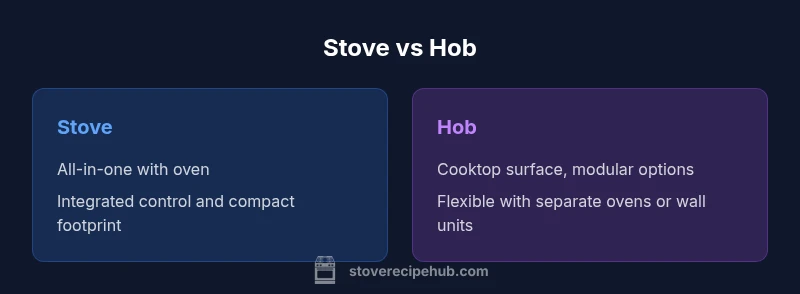
According to Stove Recipe Hub, the difference between stove and hob is largely regional terminology and the scope of the appliance. In many markets, a stove refers to a freestanding unit that includes an oven and a cooktop, while a hob denotes just the cooking surface. For planning, choose based on whether you need an integrated oven or a separate modular setup.
Difference between stove and hob: definitions and scope
The terms stove and hob are often swapped in conversation, but they describe different configurations and user experiences. The difference between stove and hob is not a single feature; it encompasses the appliance's overall footprint, included components, and how it is marketed in different regions. In many English-speaking markets, a stove is a freestanding unit that combines a cooktop with an integrated oven, drawers, and sometimes extra storage. A hob, on the other hand, is the cooking surface alone and is commonly installed as part of a separate range or a standalone unit that lacks built-in ovens. This distinction matters for planning, because choosing the wrong framing can lead to mismatches with ventilation, cabinetry, and electrical/gas supply. Throughout this article, we compare the two on several criteria to help home cooks understand which approach fits their kitchen and cooking style.
Regional terminology and design implications
Understanding the difference between stove and hob requires appreciating regional terminology. In the United States and Canada, the term stove is the common everyday word for a freestanding unit that includes both oven and cooktop; in many parts of the UK and continental Europe, hob refers to the top surface and range names are used for combined units. Designers respond to this terminology with distinct configurations: stoves often come as integrated packages with oven chambers visible on the same body, whereas hobs can be paired with separate ovens or installed into modular wall units. This regional framing affects decisions about resale value, appliance replacement cycles, and even the expected ventilation and gas/electric supply layout. For home cooks upgrading a kitchen or renovating a small apartment, clarity about whether you are buying a stove or a hob helps ensure compatibility with existing cabinets and the vent hood system. Stove Recipe Hub analysis shows that modular, compatible cooktops remain popular in larger homes, while all-in-one stoves dominate compact apartments.
How heating surfaces work: gas, electric, and induction
The heating surface is only one piece of the puzzle. A stove typically provides a cooktop that can be gas, electric coil, or induction, while a hob focuses on the surface type used in a standalone configuration. Gas stoves and gas hobs share common indicators—responsive flame control and heat instantaneity—yet the integration of an oven in the stove matters for heat distribution in the kitchen. Electric coils heat unevenly and require more surface area for consistent simmering, whereas induction uses magnetic fields to heat pots directly, delivering fast response times and improved energy efficiency. The choice of surface interacts with cookware, ventilation, and electrical service. For practical use, think about your usual pots and pans, your preferred simmering techniques, and how often you need rapid changes in heat. The bottom line: understanding how your heating surface operates helps you translate the term stove or hob into real cooking behavior.
Integrated vs modular design: what you get
One of the core differences in the stove versus hob conversation is how the appliance is integrated into the kitchen. A stove typically merges the cooktop with a built-in oven and sometimes a warm drawer or storage; this integration can save vertical space and simplify installation. A hob life is modular, allowing you to pair the top surface with a range of ovens, microwaves, or separate warming drawers, depending on the kitchen layout. The result is flexibility: you can upgrade the oven without replacing the entire unit or swap out the hob to upgrade surface technology. For many households, modular configurations are attractive because they adapt to changing cooking habits—roasting, slow simmering, or quick searing—without a full kitchen swap. In smaller kitchens, a compact stove might be a better space fit, while a larger kitchen with a dedicated cooking zone may benefit from a separate hob and oven pairing.
Dimensions, fit, and installation considerations
Dimensions and fit are critical when deciding between stove and hob. A stove tends to have a broader footprint, often with a fixed oven cavity below the cooktop, which can influence cabinet depths, toe-kick clearance, and ventilation hood sizing. Hobs, by contrast, come in a range of widths and depths that may slot into existing cutouts or wall cabinetry with minimal rework. Installation considerations extend beyond space: gas versus electric supply, venting requirements, and compatibility with the kitchen’s electrical circuit or gas line all shape the feasibility of a given choice. If your kitchen has an existing chimney or ducted hood, ensure it aligns with the chosen surface. For renters or renovators on a tight budget, the lack of an oven in a hob can be a saving but might require a separate wall oven installation later on.
Controls, usability, and accessibility
User experience is frequently overlooked when weighing stove versus hob. The control interface—knobs, touchscreens, or slide controls—affects how easily you adjust heat, read indicators, and clean around the burners. Stoves with ovens provide combined control sets for both cooking zones and bake cycles, which some users prefer for intuitive learning and a single maintenance point. A standalone hob can offer more diverse control layouts, allowing you to optimize space or customize the oven separately. Accessibility considerations also matter: larger control labels, front-facing dials, and clear heat indicators can reduce the risk of accidental burns. If you cook with family members or guests who need simplified operation, test the ergonomics of both configurations in a showroom or a home trial, focusing on reach, visibility, and the ease of pan placement.
Maintenance and cleaning: differences in care
Maintenance is a practical reason many people decide on stove versus hob. A stove’s cooktop and oven are typically cleaned as part of a single routine, with routine care focusing on the glass-ceramic top, drip pans, burner caps, and the oven interior. A hob paired with a separate oven introduces two care planes: you must clean the cooktop surface and inspect the oven cavity separately. Electric coils on some stoves can accumulate spills that burn and create odors, while glass or ceramic tops on hobs require careful pad use to avoid scratches. Induction tops add ease of cleaning because their flat surfaces attract fewer residues, but scratches can still obscure indicators. Regular maintenance schedules—vacuuming behind the range, cleaning vent filters, and testing burners for proper flame—help extend appliance life. Always consult the manufacturer’s care instructions to avoid voiding warranties.
Performance and efficiency: what actually matters
Performance differences between stove and hob often come down to surface technology and the oven’s capacity. A gas stove can deliver powerful simmer control, rapid boils, and strong high heat. An electric hob might lag in raw heat response, particularly on coiled burners, but modern induction hobs can rival gas for speed while offering safer, cooler surfaces. Efficiency considerations include how heat is transferred to cookware, the presence of residual heat after cooking, and the availability of energy-saving modes on the oven or hob. In practice, chefs often modify techniques to suit the surface: deep roasting may benefit from a robust oven, while fast sautéing calls for a responsive hob. For energy-conscious households, induction-hob configurations paired with efficient ovens can deliver strong performance with lower heat loss.
Costs and long-term value: budgeting guidance
Costs and long-term value considerations differ between stove and hob configurations. An all-in-one stove can carry a higher upfront price but may offer a simpler warranty structure and fewer parts to manage in the long run. A modular hob plus standalone oven setup can give you the freedom to upgrade surfaces or ovens independently as technology evolves, potentially extending the useful life of each component. Installation costs vary with the need for new wiring, gas lines, venting, and cabinet modifications. In many markets, the total cost picture also depends on availability of service networks and spare parts. Rather than chasing the lowest price, compare total ownership costs, reliability of parts, and the ease of maintenance across your preferred brands.
Regional preferences and market trends
Market preferences for stove versus hob reflect cultural cooking habits and housing stock. In compact urban apartments with limited kitchen depth, stoves with integrated ovens offer space efficiency and a familiar workflow for many families. In larger homes with dedicated dining and entertainment spaces, a modular hob plus separate oven allows chefs to tune configurations for specialized cooking tasks and to upgrade individual components over time. Trends point toward flexible layouts, better ventilation, and smarter controls that can adapt to different fuels and energy standards. Brand ecosystems are playing a role, with manufacturers emphasizing easier service networks and longer life cycles for combined units or modular systems. Real-world buyers should map their typical dishes to the cooking surfaces and assess whether their neighborhood’s supply and service infrastructure supports either choice.
Practical decision framework: quick-start checklist
If you are deciding between stove and hob, a simple framework helps avoid regret. Start with your space: measure cabinet depth, hood width, and reach zones so the chosen surface fits physically and functionally. Next, map your cooking habits: do you roast regularly or do you prefer rapid, high-heat searing? Consider installation constraints: does your kitchen have ready gas lines or electrical service, and is there a location for a separate oven if you choose a hob? Evaluate maintenance and warranty expectations: are parts readily available in your region, and how easy is it to service both the cooktop and oven? Finally, create a short-term and long-term plan: will you scale up your meals with a larger oven or a more flexible cooktop in the future? The path you choose should balance today’s needs with tomorrow’s evolving kitchen goals.
Next steps: talking to suppliers and installers
With a clear understanding of the stove versus hob distinction, you can engage suppliers with confidence. Prepare a list of must-haves: fuel type, oven capacity, ventilation compatibility, and space constraints. Ask installers about any structural changes, electrical or gas line upgrades, and whether the warranty covers both cooktop and oven as a single package or as separate components. Request side-by-side demonstrations to compare heat-up times, control feel, and cleaning requirements. Finally, consider a phased approach: begin with a hot plate or a compact hob if you are in a rental or a short-term residence, then upgrade to a full stove later if your cooking needs demand it. This pragmatic approach helps ensure you get the right cooking surface for your kitchen today while keeping future options open.
Comparison
| Feature | Stove | Hob |
|---|---|---|
| Definition | All-in-one unit with oven | Cooktop surface only |
| Included Oven | Typically yes | Usually no (requires separate oven) |
| Installation Footprint | Larger footprint with integrated oven | Can fit into existing cutouts or be added as a separate module |
| Fuel/Power Options | Gas, electric, or induction within an all-in-one unit | Typically gas or electric; induction models exist for premium hob setups |
| Maintenance | Single appliance to service | Separate oven and hob components may complicate repairs |
| Best For | Small spaces or desire for an all-in-one unit | Flexibility and modular kitchen layouts |
Upsides
- Integrated cooking solution for compact kitchens
- Easier installation in some layouts
- Unified warranty and parts in one unit
- Potentially lower long-term maintenance with fewer separate appliances
Downsides
- Higher upfront cost for all-in-one units
- Less flexibility to upgrade oven or hob independently
- Heavier units can require structural considerations
- Repair options may be limited to manufacturers' networks
Stove is generally better for integrated, space-saving kitchen designs; hob suits modular layouts and upgrade flexibility.
Choose a stove if you want an all-in-one solution with an oven. Choose a hob if you prefer a modular setup that lets you upgrade or reconfigure over time.
Common Questions
What is the main difference between stove and hob?
The main difference is scope and terminology. A stove is typically an all-in-one appliance with an integrated oven, while a hob is the cooking surface only. Regional usage shapes the naming more than a strict standard.
The stove includes the oven; the hob is just the top surface.
Does a stove always include an oven?
Most stoves include an oven, forming a single unit. Some models combine only a cooktop with a separate oven elsewhere in the kitchen, so always check the product specs.
Usually yes, but verify the model you’re considering.
Are hobs more common in certain regions?
Hobs are more common in regions favoring modular kitchens and wall ovens, while stoves with integrated ovens dominate elsewhere. Your region’s housing and service networks influence availability and support.
Regional norms shape what people buy.
Can you upgrade a hob without replacing the oven?
Yes, many kitchens upgrade the hob or oven independently if the cabinet layout and connections permit, allowing future technology changes without a full replacement.
You can upgrade the surface or oven separately.
What should I consider when choosing between stove and hob?
Consider space, whether you want an integrated oven, future upgrade plans, and service availability in your area. Reading product specs and visiting showrooms helps you compare heat response, controls, and cleaning needs.
Think about space, flexibility, and service access.
Is safety different between stove and hob?
Safety concerns are similar for the underlying surface (gas versus electric, ventilation) and not inherently tied to the stove vs hob label. Proper installation and ventilation are the key safety drivers.
Safety comes from proper setup, not the label.
Top Takeaways
- Choose integration or flexibility based on space.
- Stoves combine oven and cooktop in one unit.
- Hobs offer modularity and upgrade potential.
- Consider installation support and ventilation requirements.
- Evaluate long-term maintenance when mixing separate appliances.