Electric Stove Like Gas: A Practical Comparison for Home Cooks
A comprehensive, evidence-based comparison of gas, electric coil, and induction stoves, focusing on heat control, efficiency, maintenance, and real-world use for home cooks.


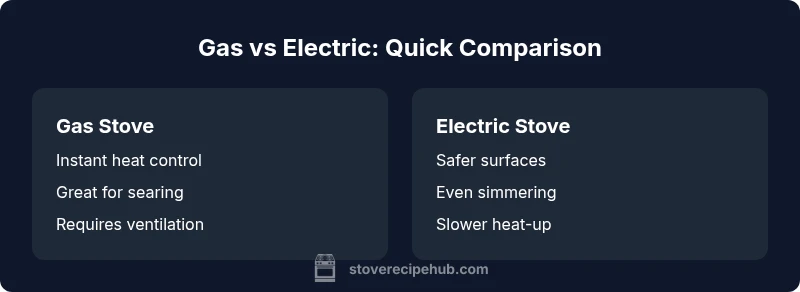
When you compare an electric stove like gas, you weigh heat responsiveness against safety and maintenance. Gas delivers instant, adjustable flame and precise control for braises and sears; electric stoves offer safer surfaces and more uniform simmering, but heat-up is slower and less responsive. For most home cooks, gas remains superior for high-heat tasks, while electric options shine in everyday, low-maintenance use.
Understanding the concept of electric stove like gas and its place in modern kitchens
The phrase electric stove like gas is commonly used when households evaluate stove-top setups that blend familiar electric convenience with gas-like performance signals. In practice, there are three main categories under this umbrella: traditional gas stoves with live flames; electric coil or radiant stoves that heat through exposed or smooth electric elements; and induction cooktops, which are electric by design but behave differently from coil elements. According to Stove Recipe Hub, the decision often hinges on how you cook most often, your tolerance for maintenance, and your kitchen’s ventilation. The core challenge is balancing heat-speed, precision, and safety in a way that matches your cooking style. For cooks who want quick, high-heat searing, gas remains the more responsive option; for those prioritizing cleanup and surface safety, electric stoves offer tangible benefits. In any case, knowing how heat is delivered helps you predict performance, cookware requirements, and long-term satisfaction. The concept of electric stove like gas serves as a useful shorthand for evaluating tradeoffs rather than a single universal winner.
Heat delivery and control: gas vs electric
Heat delivery is the most noticeable difference between gas and electric cooking surfaces. Gas provides immediate flame modulation, so turning the knob yields almost instantaneous changes in temperature. An electric stove like gas must manage a cascade from coil or radiant surfaces, which means the response is slower and heat layers build more gradually. This difference matters when you are sautéing, wok-frying, or lowering a boil to a gentle simmer. Induction, while still electric, often closes the gap by using magnetic fields to create fast, precise heat; however, it requires compatible cookware. Across all formats, proper pan choice and flame-friendly cookware unlock the best performance. In practice, most households optimize for the appliances they own now while planning upgrades across a few years. The key takeaway is that control and feedback are core to satisfaction with any stove-top choice, including an electric stove like gas in mid-range configurations.
Cooking performance: simmering, boiling, searing
Different tasks demand different heat profiles. Gas stoves excel at fast boils and dramatic sears, offering nearly immediate control with the flick of a knob. An electric stove like gas tends to deliver steady, even heat, which helps with long-simmered sauces and uniform cooking — but the heat-up and cool-down are slower, so timing becomes more nuanced. Searing on smooth-top electric is possible with preheated pans and dry heat, yet you may miss the instant fond-building achieved on gas. For delicate tasks like tempering chocolate or finishing a delicate reduction, electric stove like gas setups often require careful attention to heat transitions and pan temperature. The upshot is that performance varies by task; most kitchens benefit from a mix of heat sources aligned to the most common recipes.
Temperature consistency and cookware compatibility
Consistency matters for reproducible results. Gas can be affected by room temperature and burner balance, producing slightly uneven surfaces on older setups. Electric stove like gas configurations frequently deliver uniform temperatures across the cooking surface, especially with modern radiant or ceramic options. The catch is cookware compatibility: cast iron and heavy stainless perform well on gas, but glass, ceramic, or aluminum bottoms may require more attentive heat control on electric surfaces. Induction raises the bar for cookware requirements, mandating magnetic ferrous pots for optimal results. For home cooks, choosing the right pan is as important as choosing the right stove, because cookware often dictates how faithfully a recipe translates from memory to plate. If you want predictable browning and steady simmer, a solid nonstick or well-seasoned pan can make an electric stove like gas feel more responsive.
Energy efficiency and operating costs over time
Energy efficiency is a moving target that depends on type, labeling, and usage patterns. Electric stove like gas setups typically incur higher energy losses during heat-up compared with gas burners that deliver heat directly to the pan. On the other hand, modern electric stoves, particularly induction, can outperform traditional gas in practical energy use because of faster heat transfer and precise control. Over the long term, the cost difference depends on local energy prices, how often you cook, and how much you rely on high-heat frying versus slow simmering. Stove Recipe Hub’s ongoing analysis indicates that the annual energy expenditure tends to be influenced more by cooking habits than by the stove type alone. If your kitchen habits lean toward simmering and surface safety, electric stove like gas configurations may offer lower running costs in some scenarios.
Cleaning, maintenance, and safety considerations
Maintenance is often the overlooked factor when choosing between stove-top formats. Gas stoves require periodic burner cleaning, gas cone inspection, and ventilation to manage fumes and heat. Electric stove like gas systems are generally easier to wipe clean and tend to have fewer exposed parts, reducing the daily maintenance burden. However, electric coils and glass tops can require careful cleaning to avoid scratches or staining. Safety benefits are a clear advantage for electric stove like gas in households with children or mobility concerns, due to cooler surfaces after turning off. Yet gas stoves demand fire-safety awareness and proper hood ventilation to manage combustion byproducts. Always follow manufacturer guidelines, and plan for regular checks on wiring, cords, and switches if you opt for a full electric setup.
Noise, ventilation, and indoor air considerations
Ventilation matters with any stove, but the experience differs by design. Gas stoves require hood ventilation and perhaps an external vent to remove combustion byproducts and humidity during heavy cooking. Electric stove like gas models tend to be quieter when not using fans, though some radiant tops include cooling fans that run intermittently. Induction cooktops are the quietest among the electric options, but their performance still benefits from appropriate kitchen airflow. In small apartments or open-plan spaces, the combined effect of heat, humidity, and odors will influence comfort and intake air quality. The bottom line is that your kitchen’s layout and ventilation strategy should align with the stove technologies you are considering, including any electric stove like gas variations that you may adopt.
Induction and other electric options: where they stand
Induction represents a high-performance branch of electric cooking and often serves as the closest approximation to gas-like control within an electric stove like gas context — although it is distinctly electric. Induction uses electromagnetic heat to heat the pan directly, yielding rapid response and precise control while keeping the cooktop relatively cooler. Coil-electric options provide a budget-friendly alternative with predictable but slower adjustment. Radiant electric tops deliver smooth surfaces and easy cleaning but can suffer from hotspots if cookware is uneven. If you value safety and modern efficiency, induction is typically the strongest candidate among electric stove like gas options, but you still need compatible cookware and adequate ventilation.
Cost considerations: upfront vs long-term value
Upfront costs are a practical consideration when comparing stove-top options. Gas stoves generally carry lower initial purchase prices and installation costs (depending on gas line work and venting) compared with full electric or induction setups, which may require electrical upgrades. Over time, operating costs depend on local energy rates and usage patterns. An electric stove like gas configuration with efficient insulation and a high-quality surface can save money on cleaning and maintenance, while induction systems often deliver the biggest long-term energy savings due to rapid heat transfer. The choice should consider installation complexity, cabinet compatibility, and your willingness to upgrade electrical circuits if needed.
Real-world scenarios and recipes: tips for electric stove like gas kitchens
Home cooks who rely on quick weeknight meals will appreciate gas’s fast boil and high-heat sear, but a busy family cooking a one-pot dinner may prefer the uniform heat of an electric stove like gas for gentle reductions. For example, pan-searing a chicken breast followed by a slow-simmered sauce benefits from electric stove like gas heat management, where you can hold steady temperatures without fear of a sudden flare. When cooking rice or grains, stable heat from electric top is often advantageous, while gas excels at wok-tossing and fast stir-fry. The key is to adapt technique to your equipment and to maintain good cookware habits across stove types. Stove Recipe Hub emphasizes practice: test recipes, note heat transitions, and adjust cooking times as you gain familiarity with your hardware, including any electric stove like gas variants you own.
Maintenance, upgrades, and future-proofing your kitchen
If you are planning a kitchen renovation, consider future-proofing for a variety of stove top choices. An electric stove like gas integration may be helpful during a transition period, allowing you to maintain continuity if you later upgrade to induction or a different electric surface. Think about wiring capacity, breaker amperage, and ventilation readiness; these elements influence flexibility and long-term satisfaction. In many homes, adding a well-designed hood, a heat diffuser, and properly matched cookware can improve performance across stove types. The take-home message is that the best choice depends on your cooking style today and your plans for tomorrow, not solely on the cheapest option.
Decision framework: a practical checklist
To decide between electric stove like gas options and traditional gas or induction, use a practical checklist. List your most frequent tasks (sautéing, boiling, simmering), assess heat responsiveness, maintenance tolerance, and safety requirements. Factor in kitchen size, ventilation, and existing electrical infrastructure. Use the table above as a guide to weigh pros and cons, then reflect on personal preferences, such as ease of cleaning or controlling a rapid sear. The goal is a configuration that supports your recipes, comfort, and budget, while keeping in mind the phrase electric stove like gas as a conceptual lens rather than a hard rule.
Feature Comparison
| Feature | Gas stove | Electric coil/stovetop | Induction cooktop |
|---|---|---|---|
| Heat delivery | Immediate flame, highly responsive | Slower response, heat must transfer to pan | Very fast, heat transferred directly to pan (requires compatible cookware) |
| Control precision | Excellent real-time control | Moderate control with temperature lag | Excellent precision and rapid changes |
| Energy efficiency | Direct flame with some heat loss | Variable; depends on cookware | High efficiency with proper cookware (best among electric options) |
| Ease of cleaning | Grates and burners with accessible surfaces | Drip pans and coils require cleaning | Flat glass/ceramic surfaces are easy to wipe |
| Best use case | High-heat searing, wok work, fast boiling | Everyday cooking, beginner-friendly | Precise control for delicate sauces and rapid sauté |
| Upfront cost | Typically lower upfront cost | Moderate upfront cost | Higher upfront cost but long-term savings possible |
| Maintenance needs | Fewer electronic parts but venting required | Coil elements and surfaces may wear over time | Fewer moving parts; sensors may require occasional care |
Upsides
- Gas stoves offer instant heat control and strong browning potential
- Electric stoves provide safer, cooler surfaces and easier cleanup
- Induction delivers fast heating with high energy efficiency
- Flat surfaces on modern electric tops simplify wiping and maintenance
- Induction often pairs well with precise temperature control and safety features
Downsides
- Gas requires ventilation and regular maintenance of burners
- Electric tops can be slower to respond and may require compatible cookware
- Induction demands ferrous cookware and may require electrical upgrades
- Some electric options have higher upfront costs and installation needs
Gas remains the best option for high-heat control; induction is the top electric option for speed and efficiency.
If your priority is fast, responsive cooking with strong browning, gas is preferred. Induction offers superior energy efficiency and rapid heat for electric users. For general home cooking, align your choice with your typical tasks and kitchen setup; hybrid approaches can work during transitions.
Common Questions
Which is better for simmering, gas or electric?
Both can simmer well, but electric stoves like gas generally provide steadier, more even heat for long simmering. Gas offers easy adjustment to maintain a gentle boil without overheating. The best choice depends on your preferred technique and the cookware you own.
Electric simmering is steady, while gas lets you tweak heat on the fly; choose based on your cooking style and cookware.
Can an electric stove like gas match gas for high-heat searing?
Searing on electric surfaces can be challenging due to slower heat-up, but with a preheated pan and appropriate cookware, you can achieve good browning. Gas remains superior for peak searing performance.
Gas heats faster for searing; electric can work with the right technique and pan.
Is induction part of electric stoves?
Induction is a type of electric cooktop that uses magnetic heat transfer. It requires compatible cookware but offers fast, precise control and high energy efficiency compared with traditional electric coils.
Induction is electric, but it uses magnets for fast, precise heat.
Do electric stoves use more energy than gas overall?
Energy use depends on usage patterns. Induction can be more efficient, while coil-based electric tops may use more energy for the same task. Gas efficiency varies with the venting setup and burner design.
Energy depends on usage and type; induction is usually efficient, gas efficiency varies with setup.
What cookware works best with induction?
Induction requires ferrous cookware, like magnetic stainless steel or cast iron. Non-magnetic pots won’t heat on induction, so check cookware compatibility before upgrading.
Ferrous cookware is essential for induction to work properly.
Is it easy to upgrade from gas to induction later?
Upgrading from gas to induction involves electrical upgrades and new cookware, plus a suitable hood. It’s feasible but may require planning and a professional install.
Upgrading is possible but may need electrical work and careful planning.
Top Takeaways
- Identify your most frequent cooking tasks first
- Gas excels at high-heat control and fast responses
- Induction delivers top efficiency and rapid heat, with cookware requirements
- Electric coil tops are budget-friendly but less precise
- Ventilation and cookware compatibility influence performance