Gas Stove vs Induction: Which Is Better for Home Cooks?
Compare gas stoves and induction cooktops for speed, control, safety, cookware, and cost. Learn which is better for your kitchen workflow and energy goals with practical guidance built for home cooks.


Induction generally outperforms gas for most home kitchens in speed, control, and safety, while gas stoves excel at very high heat and flame-driven texture. If you value precise simmering and easy cleanup, induction is the better baseline choice; if you already own cast iron pans and crave flame-driven searing, gas remains compelling. Your stove choice should hinge on cookware and kitchen workflow.
Is Gas Stove or Induction Better for Most Home Cooks?
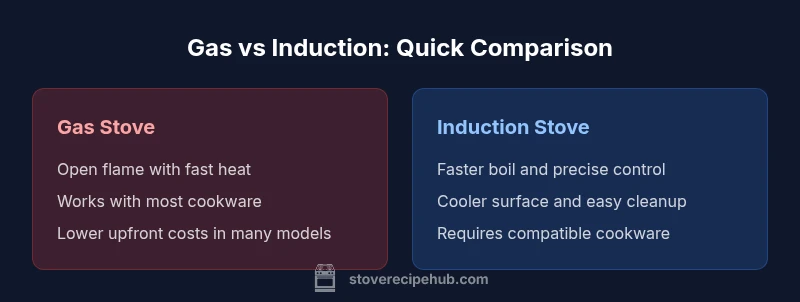
When evaluating whether is gas stove or induction better for your kitchen, you should balance speed, control, and practicality. According to Stove Recipe Hub, the short answer is that induction generally offers faster heating, precise control, and easier cleanup, while gas stoves excel at very high heat and a traditional flame presence that many cooks associate with texture and aroma. For households that prioritize energy efficiency and safety, induction tends to be the recommended baseline. However, if you already own a pantry full of cast iron pans and crave flame-driven searing, gas remains a compelling option. In this guide, we unpack the core differences, help you map to your cooking style, and provide practical steps to decide.
How Induction Works and Why It Excels
Induction cooktops rely on electromagnetic induction to transfer heat directly to ferromagnetic cookware. A copper coil beneath a glass-ceramic surface creates a rapidly changing magnetic field, which excites electrons in the pot and heats the contents. The cooking surface stays cooler than the pan, reducing the risk of burns and making cleanup easier. Induction shines in quick boils, accurate temperature control, and energy efficiency because almost all the energy goes into the pan rather than into surrounding air. For the home cook, this means faster weeknight meals and tighter control over delicate sauces. A key caveat is cookware compatibility: only ferromagnetic pots and pans work well, so you may need to refresh some of your tools if you switch entirely to induction.
How Gas Stoves Respond to Heat and Flavor Development
Gas stoves heat through an open flame, which provides immediate, tunable heat that many cooks associate with excellent control during browning and sautéing. The visible flame and high peak temperatures can deliver quick sears and robust fond development, contributing to flavor in ways that some chefs prize. Gas also tolerates a wide range of cookware, including aluminum and non-ferrous options, and does not rely on electricity to function. The trade-off is heat loss to the surrounding air, more intense surface heating that can complicate cleanup, and a higher risk of uneven heat distribution if the burner and grate design aren’t well matched to your cookware.
Efficiency, Safety, and Cleaning Considerations
A central reason many people shift to induction is improved energy efficiency and surface safety. Induction heats only the pan, so the cooktop remains largely cool to the touch, which lowers burn risk and simplifies cleaning. Gas stoves, by contrast, produce heat and combustion byproducts, which can lead to hotter surroundings and the need for ventilation. Cleaning a gas range usually means scrubbing burners, grates, and spills around the flame pathway, whereas induction tops clean with a simple wipe on a flat glass surface. In terms of safety, induction reduces the risk of gas leaks and combustion byproducts when used correctly—an important consideration for households with children or pets.
Cookware and Compatibility
Induction requires ferromagnetic cookware—think cast iron and many stainless steel pots. If you have non-magnetic aluminum, copper, or glass, you’ll need a magnetic disk or upgrade your pots. Gas stoves don’t impose this limitation, making them universally compatible with most cookware. For households that already own a full set of non-ferrous pans, induction may demand an upfront cookware update, but many cooks find the long-term benefits worth the investment. Always check the cookware’s label or use a simple magnet test to verify compatibility.
Cost of Ownership: Upfront and Running Costs
Initial costs vary: induction cooktops and compatible ranges tend to be pricier upfront than equivalent gas models, especially for built-in kitchen installations. Over time, induction can offer savings in energy use due to its high efficiency, though electricity prices and usage patterns influence total operating costs. Gas can be cheaper per unit of energy in some regions, but added expenses such as ventilation, maintenance, and potential higher heat-related wear may offset the savings. Your decision should weigh not just sticker price but the long-term cost of ownership in your local energy market and your cooking frequency.
Real-World Scenarios: When Induction Wins vs Gas Wins
In rapid boil and precise simmer tasks, induction typically wins, delivering fast energy transfer and steadier temperature control. For high-heat searing, gas can produce more dramatic fond and surface caramelization when paired with an appropriate pan. If you regularly prepare delicate sauces or recipes requiring accurate temperature control at low settings, induction’s precise digital control shines. For outdoor or off-grid cooking or in kitchens with a long history of flame-based recipes, gas may remain the preferred choice. Consider your typical menus, cookware, and ventilation when predicting which option will better serve your daily routine.
Installation and Modifications: What You Need to Know
Switching to induction within an existing kitchen often requires electrical capacity upgrades and, in some cases, professional reconfiguration of the countertop cutouts and ventilation. Gas installations depend on a safe gas line, proper venting, and compliance with local codes. If you’re moving from gas to induction, plan for electrical panel checks and potential relocation of outlets. Conversely, installing a gas range may necessitate a vent hood with adequate exhaust capacity and a stable gas line. In both paths, a licensed technician should perform the work to ensure safety and code compliance.
Maintenance and Longevity: Keeping Your Stove Healthy
Induction tops are relatively low maintenance: regular wipe-downs prevent staining, while frayed cookware or abrasives can dull the surface. Induction coils and sensors are sealed; damage typically requires professional service, but routine cleaning is straightforward. Gas stoves require periodic cleaning of burners, grates, and flame ports to maintain even heating and to minimize clogs. Gas components can accumulate grease and debris, potentially impacting flame performance if not cared for. Regular maintenance prolongs the lifespan of either system and preserves cooking performance.
Environmental Footprint and Energy Use
From an environmental perspective, induction heating generally offers lower embodied energy during operation due to efficient heat transfer and reduced heat loss. The energy mix for electricity, regional generation sources, and device efficiency influence overall impact. Gas stoves burn fossil fuel directly, which contributes to emissions and can be less efficient in real-world kitchen layouts. If environmental impact is a primary concern, induction tends to have the edge, assuming access to clean electricity and an appropriate cookware set.
Decision Framework: A Quick Guide to Choose
Start with cookware compatibility, then assess kitchen layout and ventilation. If most of your cookware is cast iron or stainless steel and you have reliable electrical supply, induction is typically the stronger long-term choice. If you prioritize flame-based control, already own diverse pots, and benefit from lower upfront costs, a gas stove may be better for you. Use a simple test: list your top five weekly recipes and map how each would perform on induction versus gas. This practical mapping often clarifies the best fit for your cooking routine.
Comparison
| Feature | Gas stove | Induction stove |
|---|---|---|
| Heat source | Open flame-based burner | Electromagnetic induction heat in the cookware |
| Heat response | Immediate flame adjustment; intuitive control | Precise, instant heat changes; pan heats directly |
| Cookware compatibility | Works with almost any pan | Ferromagnetic cookware required (cast iron, some stainless) |
| Energy efficiency | Higher heat loss; energy wasted to air | High efficiency; energy focused on pan |
| Safety features | Open flame; potential CO risk; ventilation needed | No flame; surface stays cooler; easier to stay safe |
| Ease of cleaning | Grates and spills around burners; harder to clean | Smooth glass-ceramic surface; wipe clean |
| Upfront cost | Typically lower upfront options | Typically higher upfront options |
| Running cost | Gas price varies with fuel region | Electricity price and usage govern cost |
Upsides
- Induction heats faster and saves time on weeknights
- Safer surface with no open flame reduces burn risk
- Easier cleanup on a flat glass surface
- Excellent control for simmering and precise temperatures
- Generally more energy efficient in typical home use
Downsides
- Higher upfront cost and possible cookware updates
- Requires compatible cookware and possibly new lids, lids, and utensils
- Electrical requirements and vulnerability to power outages
- Less flavor development from surface browning in some recipes compared to gas
Induction is the better overall choice for most homes, with gas offering a strong alternative for specific cooking styles.
Induction provides speed, safety, and precise control that benefits most home cooks. Gas remains a valid option for high-heat searing and existing cookware setups. Your decision should align with cookware compatibility, energy costs, and how you cook most often.
Common Questions
What is the main difference between gas and induction stoves?
Gas stoves rely on an open flame and are compatible with most cookware, offering fast heat and texture. Induction uses magnetic fields to heat only the pan, delivering rapid, precise control with a cooler cooktop surface. The best choice depends on cookware and how you cook.
Gas uses flames; induction heats the pan with magnets for precise control.
Can I use my existing cookware on an induction cooktop?
Only ferromagnetic cookware works on induction. Cast iron and many stainless steel pans are compatible, while aluminum, copper, and most non-magnetic pots may require a magnetic disk or replacement.
If your pans stick to a magnet, they’ll work on induction.
Is induction actually safer than gas?
Induction surfaces stay cooler and don’t involve an open flame, reducing burn risk and gas-related concerns. However, proper electrical setup and ventilation for the home kitchen remain important considerations.
Induction is generally safer for everyday use, with less risk of burns.
Will induction affect flavor or taste?
Flavor buildup often comes from cooking technique rather than the heat source. Induction can reproduce the same searing results when paired with proper cookware and technique, though some chefs feel flame flavor differs.
Flavor mainly comes from technique; induction can do the job with the right pan.
Do I need to install new electrical wiring or gas lines?
Induction requires a sturdy electrical supply, sometimes dedicated circuits, while gas needs a safe gas line and venting. A licensed professional should handle either installation for safety and code compliance.
You’ll likely need licensed installers for hookups and safety checks.
What about maintenance and cleaning?
Induction is easier to clean due to the smooth surface, while gas ranges require regular burner and grate maintenance. Both need periodic checks to ensure burners or coils work properly.
Regular cleaning keeps controls responsive and surfaces pristine.
Top Takeaways
- Check cookware compatibility before buying induction
- Prioritize safety and ease of cleaning with induction
- Gas excels at high-heat searing and flame-based control
- Consider upfront costs and local energy prices in your decision