Why Induction Stoves Are Better: An In-Depth Comparison
An analytical comparison of induction stoves versus gas and electric options. Discover speed, safety, precision, energy efficiency, cookware needs, and maintenance implications for home cooks.


Induction stoves are generally the better option for most home cooks due to their lightning-fast heating, precise temperature control, and cooler, safer surfaces. They use electromagnetic energy to heat only the cookware, which means less wasted heat and easier cleanup. Note that they require ferromagnetic cookware and a reliable electrical supply, and upfront costs can be higher, though long-term energy savings are common.
why are induction stoves better: framing the question for home cooks
The question of whether induction stoves are superior often comes down to practical kitchen realities. For home cooks, the answer hinges on speed, control, safety, and ease of use. The phrase why are induction stoves better appears frequently in buyer guides because it captures a core decision point: do you prioritize rapid heat, safer surfaces, and cleaner operation, or do you favor a wider cookware compatibility and potentially lower upfront costs? By examining these factors side by side, you can translate high-level claims into everyday cooking outcomes.
How induction stoves work: from electromagnetic field to cookware heating
Induction cooktops heat through electromagnetic induction. An alternating current passes through a coil beneath the glass surface, generating a high-frequency magnetic field. When a ferromagnetic pan sits on the surface, the field induces electric currents in the metal, producing heat directly in the cookware. Because the heat is generated in the pan, the cooktop surface stays relatively cool. This fundamental mechanism explains many of induction stoves advantages, including safety and energy efficiency.
Speed and energy efficiency: the core advantage
One of the most cited reasons to choose induction is faster heat-up compared with gas or electric coil stoves. In practice, you’ll notice shorter simmer times and quicker boil times, which translates to time savings and a more responsive cooking process. Energy efficiency follows from the direct heat transfer: less heat escapes into the kitchen, reducing overall energy use. While electricity prices vary by region, many households report lower operating costs over time when switching from gas due to reduced heat loss.
Temperature control and precision: cooking without guesswork
Induction stoves respond almost instantly to changes in temperature, delivering precise control that rivals commercial equipment. A slight turn of the knob or a tap on the touch control results in immediate changes in heat output. This level of responsiveness makes delicate tasks like simmering, tempering sauces, and precise searing more predictable. For recipes that require exact temperatures, induction helps you maintain consistency across multiple attempts.
Safety features and surface design: reducing risk in the kitchen
Safety is a central selling point for induction. The surface itself only heats when a compatible pan is present, and many models include features like auto shutoff, pan-detection, and child locks. Since there is no open flame and the surface cools quickly after you lift your pan, the risk of burns and accidental fires decreases substantially. However, the presence of electricity means you should account for outages and ensure proper electrical wiring to avoid nuisance tripping.
Cookware compatibility: what pans work and why
The induction method relies on magnetic permeability. Cast iron and some stainless steels work well, as do many enameled pans. Nonferrous cookware such as aluminum, copper, or glass typically won’t heat unless an induction-ready bottom is added. Before purchasing an induction stove, check your existing cookware for magnetism. If a magnet sticks to the bottom, you’re likely good to go. If not, you’ll need to invest in compatible pots and pans.
Cleaning, maintenance, and everyday use
Because the cooking zone itself remains relatively cool, grease and spills are less likely to bake onto the surface. A quick wipe with a damp cloth is often sufficient after cooking, and the shiny glass surface is easier to wipe than a traditional gas burner. Fans and cooling systems in some models may require occasional dusting, but maintenance is typically straightforward. This simplicity is a notable contrast with gas stoves, where burner assemblies and drain trays demand periodic cleaning.
Costs, value, and long-term savings: weighing upfront and ongoing costs
Induction stoves typically carry a higher upfront price tag than gas models, and you will also need compatible cookware, which can add to initial costs. On the other hand, operating costs can be lower due to reduced heat loss and faster cooking times. The overall value depends on electricity and gas prices in your area, the cookware you already own, and how often you cook with high-heat methods. In regions with cheap electricity, the long-term savings can be meaningful.
Practical cooking scenarios: where induction shines in real kitchens
In everyday cooking, the rapid heat-up makes boiling water brisk, and the quick response helps when reducing sauces or maintaining a delicate simmer. For recipes requiring precise temperature control, induction shines—think candy-making, tempering chocolate, or sous-vide-style tasks on the stove. At the same time, if your kitchen centers around large, heavy cookware, ensure the induction zone is sized to accommodate these pots. The right pan size and layout matter for best performance.
Limitations and considerations: when induction might not be ideal
Induction is superb when paired with appropriate cookware and reliable electrical access. However, homes with frequent power outages or older wiring may face practical hurdles. Some high-powered induction stoves require dedicated circuits, and in homes with long piping systems, the total installed load can exceed what a single outlet or circuit can safely deliver. Additionally, if you own nonmagnetic cookware, you’ll need to replace it to benefit fully from induction's advantages.
Implementation checklist: upgrading your stove setup
If you are planning an upgrade, start with a needs assessment. List the pans you currently own and check magnetism. Confirm your electrical system can support a high-power cooktop, and plan for sufficient ventilation. Compare models by power levels, safety features, and control interfaces. When you’re ready, budget for an induction-compatible cookware set and consider professional installation for wiring and ventilation.
The bottom line: what to consider before buying
Ultimately, the decision comes down to your cooking style, kitchen layout, and budget. Induction stoves offer speed, precision, and safety that most home cooks appreciate, especially those who regularly sear, simmer, and boil. If you value fast feedback, simple cleanup, and predictable results, induction is likely the better choice—provided you’re prepared for cookware upgrades and electrical considerations.
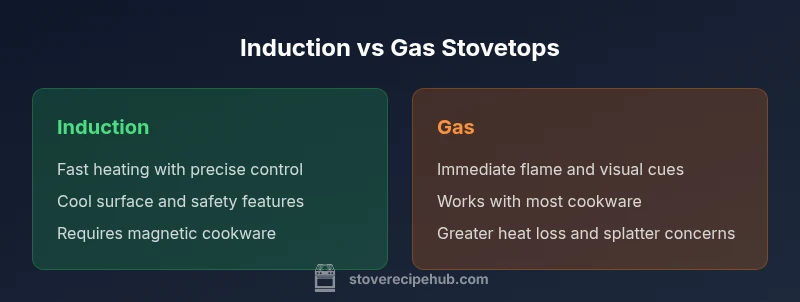
Comparison
| Feature | induction stove | gas stove |
|---|---|---|
| Energy efficiency | high | moderate |
| Heat control precision | very high | moderate |
| Cookware requirements | magnetic ferrous cookware required | works with most cookware including nonmagnetic |
| Safety features | cool surface and auto shutoff, pan-detection | open flame and gas leak risk |
| Cleanup and maintenance | easy to wipe when cooled | grease and burner cleaning required |
| Speed of heat-up | very fast | slower to heat up |
| Power and installation | dedicated electrical circuit required | no special electrical constraints beyond standard outlet |
| Long-term costs | lower operating costs in many regions | potentially higher operating costs depending on fuel |
Upsides
- Fast heating and precise control
- Safer, cool-to-touch surface with fewer burn risks
- Easy cleanup and maintenance compared to gas burners
- Cleaner kitchen environment due to reduced heat loss
- Energy-efficient operation with less wasted heat
Downsides
- Requires magnetic cookware and kitchen retooling
- Higher upfront cost for stove and cookware
- Dependence on reliable electricity; outages disable the stove
- Special ventilation considerations in some layouts
Induction stoves win on speed, safety, and control for most homes
For home cooks who value quick heat, precise temperature control, and easier cleanup, induction is the stronger overall choice. The main caveats are cookware compatibility and electrical requirements, which are manageable with planning.
Common Questions
Are induction stoves faster than gas?
Yes. Induction stoves heat cookware directly, resulting in faster boil and heat-up times compared with gas. The improvement is most noticeable for boiling, simmering, and reduction tasks where precise control matters.
Induction heats up faster because the heat goes directly into the pan, not the stove. For quick meals, it’s noticeably quicker than gas.
Do I need special pots for induction?
Most induction stoves require magnetic cookware. If a magnet sticks to the bottom of your pan, you’re good to go. Nonferrous cookware such as aluminum, copper, or glass typically won’t heat unless an induction-ready base is added.
Yes—only magnetic pots heat well on induction, so check your pans with a magnet.
Is induction safer than gas?
Induction surfaces stay cool to the touch when not actively heating and eliminate open flames. This reduces burn risks and fire hazards, making it safer in many everyday scenarios. Gas has visible flames and potential leaks that require careful handling.
Induction is safer in daily use because there’s no open flame and the surface stays cool when you’re not cooking.
Can you use cast iron on induction?
Yes. Cast iron and many stable stainless steels work well on induction. For best results, ensure the pan has a flat, smooth bottom and magnetism is strong enough to draw a magnet. Some light aluminum pans without a magnetic base won’t heat reliably.
Cast iron usually works great, as long as it’s magnetic. Test with a magnet first.
Is induction more expensive to install and operate?
Induction often costs more upfront for the stove and compatible cookware, but operating costs can be lower due to reduced heat loss. Costs vary with local electricity and gas prices, and maintenance tends to be simpler.
Upfront costs can be higher, but you may save on energy and maintenance over time.
Top Takeaways
- Prioritize speed and control with induction for everyday cooking
- Check cookware compatibility before buying
- Plan for dedicated electrical capacity and proper ventilation
- Expect higher upfront costs but lower ongoing energy use
- Induction surfaces stay cooler, improving safety in kitchens