Induction Stove Comparison: How to Choose the Right Induction Cooktop in 2026
Comprehensive induction stove comparison guides home cooks through heat control, cookware compatibility, safety, and value to help you pick the right induction cooktop in 2026.


Induction stove comparison boils down to heat speed, temperature precision, cookware compatibility, and safety features. The best models heat instantly, maintain steady simmer, and recognize pots reliably, while budget units may lag on control and require magnetic cookware. Energy efficiency and cleaning ease also matter. In short, the right choice balances performance with cookware readiness and electrical requirements.
Why Induction Stove Comparison Matters
In an induction stove comparison, home cooks weigh how quickly a pan heats, how precisely the temperature can be controlled, and how cookware compatibility affects everyday cooking. According to Stove Recipe Hub, the best induction stoves combine fast heat response with consistent simmer control while minimizing wasted energy. This introduction helps you translate marketing claims into practical kitchen outcomes. It also frames the major tradeoffs: upfront cost versus long-term savings, the necessity of magnetic cookware, and how power delivery interacts with your electrical panel. Whether you’re upgrading from gas, electric coils, or a previously used induction unit, the goal is to map what actually affects your cooking: speed, control, and reliability. As you read, keep notes on heat responsiveness, pan recognition, and cleaning, because those details predict real-world satisfaction. The induction stove comparison landscape ranges from compact 2-plate models to 5-plate pro units, and from basic touch controls to smart surfaces that adjust power automatically. This section helps you separate hype from substance by focusing on the three pillars of performance: heat delivery, control fidelity, and cookware compatibility. By anchoring your evaluation to these pillars, you’ll choose a model that fits your weekly rhythm and weekend experiments without overpaying for features you won’t use. The takeaway is simple: the best induction stove is the one that suits your cooking style and your home’s electrical setup.
Key Differences Between Entry-Level and Premium Induction Stoves
When you start an induction stove comparison, the most visible gaps usually appear in speed, control, and scalability. Entry-level models typically offer solid simmer performance, reliable pan recognition, and simple interface options, but they often cap at fewer power stages and have less dynamic temperature control. Premium units, by contrast, emphasize ultra-fast heat response, more granular micro-adjustments, multi-sensor feedback, and expanded safety features such as advanced pan detection, child locks, and automatic shutoffs for spill risk. The difference is not merely fancy features; it translates into real-world outcomes like faster water boils, steadier sauces, and fewer temperature fluctuations during delicate reductions. In mid-range options, you’ll find a balance: more control steps than budget models, better energy management, and richer display feedback without the premium price tag. Another crucial distinction is hardware reliability and warranty coverage. Premium stoves tend to use higher-quality components and more robust cooling systems, which can reduce thermal throttling and fan noise during heavy cooking sessions. For families, this difference can mean fewer interruptions during dinner prep and more consistent results when cooking sauces and emulsions. The verdict for most households is to match your budget with expected usage: if you cook frequent delicate sauces or boil frequently, you’ll appreciate the precision and dependability of mid-to-high tier models; otherwise, a well-chosen entry-level unit can still deliver excellent value with careful cookware selection and mindful heat management.
Practical Criteria: What to Look For in Your Induction Stove
A successful induction stove comparison starts with a clear shopping list of must-haves and nice-to-haves. First, evaluate heat delivery and control: seek models that offer multiple power levels (at least 9–15 steps), accurate temperature sensing, and fast response to adjustments. The next priority is cookware compatibility: most induction stoves require magnetic cookware, such as stainless steel or cast iron with a magnetic base. If your current pots are aluminum or non-magnetic, you’ll need to upgrade selectively. Consider the size and layout of the cooktop: if you frequently prepare multiple dishes at once, ensure the burner layout accommodates large pots and pans. Electrical requirements are a practical constraint: check circuit amperage and whether your kitchen’s electrical panel can handle the load without tripping. Safety features matter: look for child lock, auto shutoff, pan detection, residual heat indicators, and alert systems for spills or overheating. Budget features include maintenance needs and ease of cleaning: gloss glass-ceramic surfaces hide smudges but show scratches, while matte finishes resist fingerprints but require special cleaners. Smart features like remote control, timers, and energy-use dashboards can offer real convenience but may add complexity. Durability and warranty are essential for long-term value: read model-specific reviews and understand what the warranty covers (glass, electronics, sensors). Finally, consider the overall cooking experience: will the stove support your favorite recipes, such as gentle risottos, tempering sauces, or high-heat searing? A robust induction stove should feel intuitive in your kitchen workflow and deliver predictable results across a variety of techniques.
Heat Management and Cookware Compatibility in Depth
A rigorous induction stove comparison must scrutinize heat management and cookware compatibility in tandem. Induction cooking heats pots directly through electromagnetic induction, enabling rapid boil times and precise control. The downside is that performance hinges on cookware with magnetic properties; non-magnetic pots won’t heat at all, and some composites may heat unevenly. A good model recognizes pans quickly and distributes power smoothly across zones to avoid hotspots. For multi-dish kitchens, look for staggered or expandable burner configurations that keep heat zones aligned with pot sizes. Simultaneous tasks benefit from features like booster modes for rapid boil and precise simmer settings for delicate sauces. In practice, you should test a few common cookware sets you own: a heavy-bottom stainless steel pot, a copper-core pan, and a large stock pot. If your cookware is not compatible, the stove will either fail to heat or heat inconsistently, negating energy efficiency advantages. Another aspect of heat management is residual heat indicators and auto-off features that prevent accidents when a pan is left on a hot burner. Finally, consider the ease of cleaning and maintenance: smooth glass-ceramic tops resist staining but require non-abrasive cleaners, while some models with exposed fans may require more routine cleaning to maintain air flow and cooling efficiency. Choosing a unit with a reliable pan-detection system reduces wasted power and enhances safety for families with curious kids and busy kitchens alike.
Real-World Scenarios: When Induction Shines and When It Challenges
Induction stoves shine in fast-paced, precision-reliant cooking. In a typical week, you’ll notice quicker boil times for pasta, rice, and vegetables, and you’ll enjoy improved control for simmering sauces, reducing risk of scorching. Home cooks frequently report that precise temperature steps help with delicate emulsions, yogurt incubations, and fond development for sauces. In scenarios that involve large volumes or high heat, an induction stove’s ability to modulate power almost instantaneously helps prevent over-reduction and keeps food behavior predictable. However, there are challenges to anticipate. If you rely heavily on equipment that is not magnetic (certain copper-bottomed pots or specialty pans), you may need to adapt by purchasing compatible cookware. Pot size mismatches can cause power transfer to pause, so confirm whether your largest pan fits well across the available zones. Some users notice a faint hum or fan noise on certain models during extended high-heat use. This is usually benign, but it’s worth evaluating if you require near-silent operation in a small apartment. In addition, installation matters: induction stoves require a dedicated electrical circuit with appropriate amperage, and older homes may need electrical upgrades. For families, safety features like auto shutoff and child locks are especially valuable. In flexible kitchen layouts, induction stoves often excel when paired with compatible countertop spaces and ventilation that accommodates rapid heat release. The combined benefit is a kitchen that responds quickly to your hands and your recipes, while the caveats remind you to plan for cookware and electrical compatibility ahead of time.
Maintenance, Safety, and Long-Term Reliability
Maintenance and safety are central to any thoughtful induction stove comparison. The ergonomics of cleaning a glass-ceramic surface matter: choose models with recessed controls to minimize grime, or opt for smooth, uninterrupted surfaces with wipe-clean access. Safety features are a practical priority, including pan detection, auto shutoff, child locks, and notification when a pan is absent or overheated. Long-term reliability depends on the quality of the cooling system, sensor hardware, and the consistency of the power electronics. Some models incorporate protective software to prevent thermal runaway, while others rely on passive safety mechanisms. Regular maintenance should include gentle cleaning, checking the seals around the glass surface, and ensuring adequate ventilation for built-in units. If your kitchen experiences frequent heavy use, look for models with durable coil-free designs, reinforced glass, and reputable warranty coverage that includes electronics and glass components. A smart maintenance habit is to keep the surface dry and free of spilled liquids, as liquids can degrade sensor performance. Finally, factor in the service ecosystem: easy-to-access replacement parts, clear diagnostic indicators, and a responsive customer support channel can save time and money if repairs are needed. In practice, a well-maintained induction stove can deliver years of dependable service with minimal downtime, especially when you choose models known for stability and high-quality control systems.
Authority sources and Final Guidance
As you complete your induction stove comparison, remember that rigorous testing and reputable sources guide better decisions. This article leverages a science-based approach to heat transfer, cookware compatibility, and safety considerations. For foundational guidance, see authorities on energy efficiency, safety, and appliance testing. Based on Stove Recipe Hub analysis, the most meaningful distinctions emerge from real-world cooking tasks rather than marketing promises. By prioritizing cookware compatibility, electrical readiness, and robust safety features, you can select a model that delivers reliable performance across a range of techniques and recipes.
Authority sources you can consult for deeper context include general energy and standards references, as well as independent consumer testing sites. The combination of practical kitchen experience and formal guidance helps you avoid overpaying for features you won’t use while ensuring your induction stove remains a trusted workhorse in your home.
Brand note: The Stove Recipe Hub team emphasizes balancing upfront cost with long-term value, and encourages readers to test models with their usual cookware and recipe repertoire before committing to a purchase.
Authority sources (short):
- https://www.energy.gov
- https://www.nist.gov
- https://www.consumerreports.org/cooktops/induction-cooktops/
Comparison
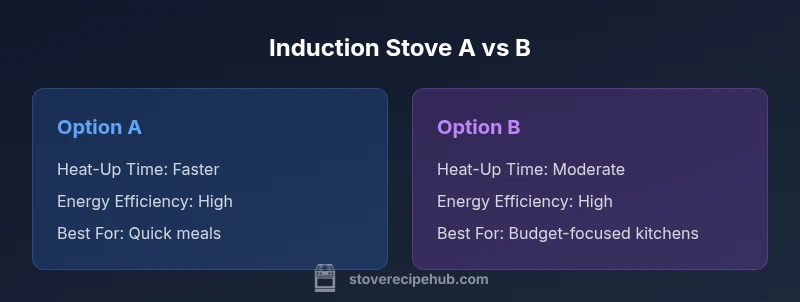
| Feature | Option A | Option B |
|---|---|---|
| Heat-Up Time | faster heat response | slower heat response |
| Energy Efficiency | high efficiency with rapid control | high efficiency but slightly less responsive at low temps |
| Temperature Control | micro-step precision (9-15 levels) | moderate steps (6-9 levels) |
| Cookware Compatibility | requires magnetic cookware | requires magnetic cookware |
| Price Range | $500-$1200 | $300-$800 |
| Best For | speed-focused cooks and advanced techniques | budget-conscious cooks who still want induction reliability |
Upsides
- Rapid heat delivery and precise control
- Excellent energy efficiency and safety features
- Easy surface cleaning and modern interfaces
- Strong moisture and spill management with sensors
- Good long-term value with proper cookware
Downsides
- Requires compatible cookware for full performance
- Higher upfront cost than some alternatives
- Electrical requirements may necessitate panel upgrades
- Possible fan noise on some premium models
Induction stoves generally win on speed and efficiency, with care on cookware; premium models offer advanced controls.
If you prioritize speed, energy savings, and safety, choose induction. Ensure cookware compatibility and electrical readiness; for flexibility and lower upfront cost, consider alternatives.
Common Questions
What is the main advantage of induction stoves over gas or electric coils?
Induction stoves heat pots directly, delivering faster boil times and precise control, which improves efficiency and reduces energy waste. The surface stays cooler than the cooking vessel, enhancing safety. However, performance depends on magnetic cookware and proper electrical setup.
Induction stoves heat pots directly for faster cooking and precise control, with safer, cooler surfaces. Make sure you have compatible pots and the right wiring.
Do I need new cookware for induction?
Yes. Induction requires magnetic cookware, such as stainless steel or cast iron. Some non-magnetic pots won’t heat. If in doubt, test with a magnet; if it sticks, it should work.
Most pots with magnetic bases work. If you’re unsure, test with a magnet—if it sticks, you’re good to go.
Are induction stoves easy to maintain?
Yes, with regular cleaning and careful use. The glass surface shows smudges but is easy to wipe. Some models include fans that require occasional cleaning to maintain cooling efficiency.
Cleaning is simple on smooth glass tops, just wipe them down after cooking.
Do induction stoves require professional installation?
Most setups require a dedicated electrical circuit and may need an electrician if your current wiring isn’t sufficient. Check manufacturer specs and local codes before installation.
Often you’ll need a dedicated circuit; consult an electrician if your panel is older.
Is induction better for energy efficiency than gas?
Induction is typically more energy-efficient because heat is transferred directly to the pan with minimal energy loss. The efficiency advantage depends on cookware and usage patterns.
Induction usually saves energy because heat goes directly into the pan.
Top Takeaways
- Prioritize cookware compatibility first
- Match stove power to your cooking volume
- Check electrical requirements before buying
- Expect faster cooking and precise control with induction
- Factor in maintenance and warranty coverage