Is a Range the Same as a Stove? A Comprehensive Comparison
Discover if a range is the same as a stove. This analytical comparison covers cooktops, ovens, installation, costs, and safety to help you choose the right kitchen appliance.


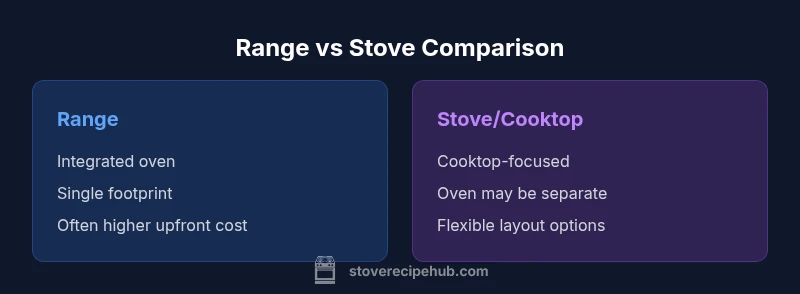
Is a range the same as a stove? In short, no. A range combines a cooktop with an integrated oven, and sometimes a warming drawer, while a standalone stove or cooktop focuses on the burners and may require a separate oven module. The quick takeaway: ranges offer full kitchen functionality, but may demand more space, installation, and upfront cost depending on your needs.
Is a range the same as a stove? Defining the terms
There is a lot of confusion around kitchen appliance terminology. For home cooks exploring stove-top cooking, the phrase “is a range the same as a stove” often comes up. In most markets, a range is a freestanding unit that combines a bake oven with a cooktop on top. A stove, conversely, is a term that typically refers to either a standalone oven with a separate cooktop or a cooktop-only appliance. The distinction matters for functionality, footprint, and how you plan your kitchen workflow. In everyday use, many retailers and manufacturers lump range and stove nomenclature under broad “range-stove” categories, but the practical differences remain clear. For the purposes of this guide, we’ll treat range as the full appliance with oven and cooktop, and stove as the cooktop or the separate oven alternative. According to Stove Recipe Hub, precise terminology helps prevent buying mismatches when upgrading a kitchen.
How the terms entered common usage
Historically, “range” emerged to describe a freestanding unit that could perform multiple cooking tasks, including baking, roasting, and broiling, all in one footprint. “Stove” tends to be used more loosely—the word can refer to the entire appliance in some regions, or to just the top heating elements in others. This regional variance makes it essential to read product specs rather than rely on a single label. The Stove Recipe Hub Team notes that customer confusion frequently stems from marketing terms rather than actual capabilities, so a careful read of oven capacity, burner configuration, and control layouts is worth the extra minutes of research.
Quick orientation: what you’ll get with a range
A typical freestanding range provides a cooking surface (gas or electric) and an integrated oven beneath. Some models add features like a second oven, a warming drawer, or a convection setting. The integrated oven means you can bake and roast without purchasing a separate wall oven. When considering a kitchen remodel or new build, imagine the workflow: do you bake often and would you benefit from a built-in oven in the same footprint as your cooktop? A range tends to suit cooks who value all-in-one convenience and a streamlined kitchen layout.
Quick orientation: what you’ll get with a stove or cooktop
A stove-cooktop setup focuses on the top heating surface and may be paired with a separate oven compartment, wall oven, or freestanding range. Cooktop-only configurations are common in kitchen islands where space or ventilation constraints limit the full appliance. In some regions, the term “stove” is used interchangeably with “range,” which can lead to miscommunication. The main takeaway is to verify the oven presence, oven size, and whether the oven is built-in or modular when shopping.
Brand and terminology influence decisions
Branding often drives terminology as much as function. Stove Recipe Hub emphasizes that the practical difference—whether there is an oven integrated into the unit—matters far more than what a retailer calls the appliance. When you’re shopping, compare the actual features, dimensions, and electrical/ventilation requirements across models labeled as ranges or stoves, and don’t rely on label alone. This distinction becomes particularly important in homes with limited kitchen space.
Practical implication for buyers
If your kitchen design prioritizes a single, cohesive appliance with baking and roasting on the same footprint as your cooktop, a range is typically the better choice. If space is constrained, or you already own or plan a separate wall oven, a cooktop plus oven arrangement might be more economical or flexible. The key is to evaluate how often you bake, roast, or broil, and whether total footprint, installation, and maintenance align with your goals.
Comparison
| Feature | Range (freestanding) | Stove/Cooktop (with or without separate oven) |
|---|---|---|
| Integrated oven | Yes, built-in under the cooktop | Often no built-in oven; may require separate unit |
| Cooktop vs baking capacity | Single appliance handles both cooktop and baking tasks | Cooktop-focused; oven separate if included |
| Footprint | Larger footprint; designed as a single unit | Can be smaller upfront if paired with another oven |
| Ventilation considerations | Typically requires hood/venting designed for range | |
| Electrical/Gas requirements | Often needs higher electrical or gas capacity due to oven | |
| Cost range (upfront) | Generally higher upfront cost for unit with built-in oven | |
| Resale/value | Higher perceived value for all-in-one kitchen units | |
| Best for | Cooks wanting all-in-one convenience; baking integrated |
Upsides
- All-in-one functionality with integrated oven
- Unified aesthetic and potentially easier installation
- Often higher resale value and space efficiency in a single footprint
- Convenient for frequent bakers and roasters
Downsides
- Higher upfront cost and possibly higher repair bills
- Larger footprint may not fit small kitchens
- Installation can be more complex due to venting and wiring
- If the oven fails, you lose both bake and cooktop performance
Ranges are not the same as stoves; ranges bundle bake functionality with cooktop power.
Choose a range if you want an integrated oven and cooktop in one footprint. Choose a cooktop with a separate oven if you need layout flexibility or have space constraints.
Common Questions
What exactly distinguishes a range from a stove?
The main distinction is built-in oven presence. A range usually includes an integrated oven beneath the cooktop, while a stove or cooktop may not include an oven or may require a separate unit. Verifying oven size and configuration is essential.
The key difference is that a range includes an oven in the same unit; a stove or cooktop may not. Always check the oven presence and size when shopping.
Is a range more expensive than a standalone stove?
In general, ranges with an integrated oven tend to have higher upfront costs than cooktops alone or separate oven configurations. Total expense depends on fuel type, features, and installation requirements.
Ranges usually cost more upfront due to the built-in oven and extra features. Costs vary with fuel type and installation.
Can I install a range in a small kitchen?
Yes, but careful measurements and venting requirements are crucial. Some compact ranges exist, and they can be paired with space-saving ventilation. If you have limited space, a cooktop with a separate oven might be more flexible.
A small kitchen can fit a range, but you’ll need to plan venting and space carefully. A cooktop plus oven could be a better fit in tight spaces.
Which is better for baking at scale: range or separate oven setup?
If you bake frequently, a built-in oven in a range provides seamless workflow and even heat distribution. A separate wall oven can also work well, especially if you already have a dedicated baking area.
For frequent baking, a range with an integrated oven is convenient, but a separate wall oven can be a good alternative.
What maintenance should I expect for ranges vs stoves?
Ranges require maintenance for both the cooktop and the oven, including cleaning racks, seals, and venting. Cooktops alone need burner maintenance and periodic calibration. Always follow manufacturer guidance for safe operation.
Expect maintenance for both the cooktop and oven on a range; cooktops need burner upkeep and calibration in some cases.
Are there safety considerations I should know?
Yes. Ensure proper ventilation, fire suppression readiness, and safe clearance around the appliance. Gas ranges require gas line compliance and regular leak testing; electric ranges rely on electrical safety practices.
Ventilation and gas line safety are important for gas ranges; electrical safety matters for electric ranges.
Top Takeaways
- Range = cooktop + integrated oven in one unit
- Stove/cooktop may be standalone or paired with a separate oven
- Assess space, baking needs, and ventilation before choosing
- Verify specs, not just labels, when shopping
- Consider long-term maintenance and installation costs