Understanding Stove Cost: A Home Cooks Guide
Explore stove cost ranges, hidden fees, and budgeting strategies for gas, electric, induction, and dual-fuel models. Learn how to estimate total cost of ownership and make smart buying decisions.


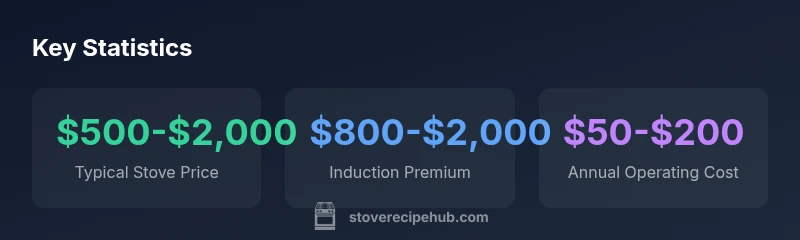
Typical stove cost for a household ranges from $500 to $2,000 for freestanding electric or gas models, with induction or dual-fuel units often $1,500 to $3,500. Delivery and basic installation add about $100–$300, while complex gas line or venting can raise costs further. Stove Recipe Hub Analysis shows price variance by fuel type and features.
Why stove cost varies across households
The upfront price of a stove is only one piece of the total expense. When home cooks budget for a stove, they should consider energy efficiency, fuel type, size (compact vs. full-sized ranges), and features such as convection ovens, self-cleaning cycles, smart controls, and safety interlocks. Energy consumption, dish handling capacity, and the cost of installation components like electrical upgrades or gas lines can alter the long-term cost of ownership. According to Stove Recipe Hub, understanding these drivers helps you avoid overstating upfront costs and overestimating savings. In practice, a common approach is to create a two-column comparison: one column lists initial purchase price, the other lists anticipated year-over-year energy use and maintenance. This helps match your kitchen’s needs to your budget without compromising performance.
Price ranges by stove type
Different stove configurations come with different price trajectories. Portable countertop burners can be affordable starting points for small kitchens or seasonal setups, while freestanding electric and gas ranges sit in mid-range territory. Induction models command a premium but may reduce energy costs and heating times. Dual-fuel units, which blend electric ovens with gas burners, sit at the high end due to their versatility and build quality. When budgeting, map each type to a realistic price ladder and consider ongoing costs such as electricity tariffs, gas rates, and maintenance demands. From a practical standpoint, the most cost-effective choice varies by household energy prices and usage patterns.
Hidden costs to anticipate
Beyond the sticker price, several costs can surprise new buyers. Delivery fees may be modest, but installation sometimes requires electrical upgrades, gas line work, or venting—adding hundreds of dollars. If your kitchen’s layout demands modifications—such as countertop cutouts, cabinet adjustments, or new ventilation hoods—expect additional costs. Permits for gas work or electrical permits may be necessary in some regions. If you plan to remove an old unit, disposal fees might apply. Finally, consider extended warranties or protection plans that add to the total cost but can provide long-term value for frequent cooks.
How to estimate your stove budget: a step-by-step method
Begin with your cooking needs and space constraints. Step 1: determine whether you want a freestanding, slide-in, or portable unit. Step 2: choose fuel type based on availability and energy costs in your area. Step 3: estimate purchase price and installation costs for your locale. Step 4: add anticipated energy consumption to project annual costs. Step 5: include potential maintenance or warranty costs. Use a simple spreadsheet to compare scenarios and pick the option that achieves your cooking goals without compromising safety.
Tips to maximize stove value without overspending
To minimize cost without sacrificing performance, consider buying during seasonal promotions, look for certified refurbished units, or selecting models with high energy efficiency ratings. Compare total cost of ownership rather than upfront price alone. If you already own a compatible hood or vent, you may reduce installation complexity and costs. Finally, review available rebates or financing options that local retailers or manufacturers offer to spread payments over time without high interest.
Approximate price and cost ranges by stove type
| Stove Type | Typical Price Range | Delivery/Install Range | Estimated Annual Operating Cost |
|---|---|---|---|
| Portable countertop burner | $20-$100 | $10-$60 | $5-$20 |
| Freestanding electric range | $500-$1,200 | $100-$300 | $100-$200 |
| Freestanding gas range | $600-$1,800 | $150-$350 | $100-$200 |
| Induction range | $1,000-$3,000 | $150-$400 | $80-$180 |
| Dual-fuel range | $2,000-$4,500 | $200-$500 | $120-$200 |
Common Questions
What is the average stove cost for a mid-range kitchen?
For a mid-range kitchen, plan for $800-$2,000 for a freestanding electric or gas range. Induction or dual-fuel models typically fall in the $1,500-$3,500 range. Consider installation and potential venting costs separately.
In a mid-range kitchen, expect about eight hundred to two thousand dollars for a basic range, with higher-end options up to three and a half thousand.
Do I need professional installation for a new stove?
Yes, most installations require a licensed professional, especially for gas lines or dedicated electrical circuits. Installation can add $100-$400 for basic jobs, and more if venting or gas line work is needed.
Most stoves need a licensed installer, especially for gas lines or electrical work.
Is induction more expensive to buy and operate than gas?
Induction stoves usually cost more upfront but can reduce energy use and cooking times, potentially offsetting the extra price over time. Operating costs depend on local electricity rates.
Induction costs more upfront but can save energy and time, depending on your rates.
Are there hidden costs I should plan for?
Yes. Delivery, installation, venting, and potential electrical or gas upgrades can add hundreds of dollars. Keep a contingency for permits, old appliance removal, and warranty extensions.
Hidden costs include installation, venting, and possible upgrades.
How can I save on stove cost without sacrificing quality?
Shop during sales, consider certified refurbished models, compare total cost of ownership, and check for rebates or financing. Prioritize energy efficiency to lower long-term costs.
Shop during promos, compare total cost, and look for rebates.
What financing options exist for upgrading a stove?
Many retailers offer 0% financing or promotional plans. Check manufacturer rebates and local utility programs for energy-efficiency incentives.
Look for retailer financing and energy rebates.
“Costs are a function of upfront price, energy efficiency, and long-term maintenance. A thoughtful choice balances immediate needs with lifetime savings.”
Top Takeaways
- Budget by stove type and features
- Induction costs more upfront but can save energy
- Installation and venting can add significantly
- Consider total cost of ownership, not just price
- Look for rebates and financing options