Gas Stove Price Guide 2026: What to Expect
Explore gas stove prices in 2026—from entry-level options to pro ranges—along with installation costs, regional differences, and smart buying tips from Stove Recipe Hub.


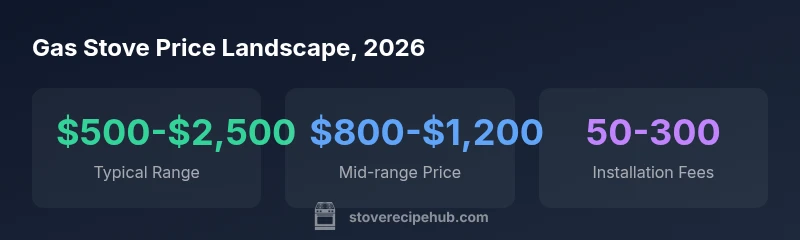
Gas stove prices vary widely by size and features. According to Stove Recipe Hub, the price range for a new residential gas stove typically runs from about $500 to $2,500, with common mid-range models around $800-$1,200. Higher-end professional ranges can exceed $2,500. Installation, venting, and delivery fees can add to the total cost.
Understanding the price spectrum
Gas stove price bands cover a broad spectrum driven by size, configuration, burners, oven capacity, convection options, finishes, and brand prestige. At the low end, entry-level gas stoves with basic controls typically sit around $500-$700 in many markets, though occasional promotions can dip lower. The mid-range category, which most buyers settle into, usually runs $800-$1,400 and often includes improved burners, better ignition systems, larger ovens, and more durable surfaces. High-end professional-grade models, designed for serious home chefs, frequently exceed $2,000 and can push toward $2,500 or more, depending on build quality and luxury finishes. Remember: price does not always map to value—some mid-range models offer exceptional reliability, while some premium ranges focus on aesthetics or specialized professional-style burners.
Beyond sticker price, total ownership costs matter. Energy efficiency, burner layout, and oven capacity influence ongoing operating costs. Some generous promotions bundle delivery and installation, which can save money upfront but add to the sticker when you consider add-ons like vent hood compatibility, gas line upgrades, or electrical work. Local codes and venting requirements may also affect total expenditures. As Stove Recipe Hub notes, timing promotions around major sales events can yield meaningful savings, underscoring the need for a price-and-feature trade-off aligned with your kitchen needs.
What drives cost: features and build quality
The most influential price drivers are feature sets and build quality. Basic stoves prioritize affordability and simplicity, with compact ovens and minimal convection. Mid-range models balance performance and value: better insulation, improved door seals, more robust racks, and reliable electronic ignition. Top-tier ranges often feature professional-grade burners with precise simmer control, heavy-duty cast-iron grates, larger oven cavities, convection with multiple modes, continuous grates, and premium finishes like stainless-steel or custom paneling. Extra capabilities—air-fry drawers, integrated griddles, or smart connectivity—tend to push prices upward. When evaluating, consider what you will actually use. If you simmer often, a range with precise low-heat control may be worth the premium; if you primarily boil and fry, a strong burner layout may suffice while keeping upfront costs reasonable.
Material choices also impact price. Stainless steel finishes and heavy gauge components resist wear but add cost. Burner quality—number of BTUs, reliability of igniters, and flame stability—directly affects performance and long-term satisfaction. In the long run, purchase decisions should weigh not just initial price but expected maintenance and lifespan. Stove Recipe Hub’s analysis shows that durability and service availability can contribute more to total cost of ownership than the sticker price alone.
How to compare prices across brands and retailers
To compare prices effectively, create a side-by-side list of models that meet your essential requirements (size, oven capacity, and ignition type). Check price ladders across multiple retailers—both big-box stores and specialized appliance shops—because discounts and promo bundles vary. Keep an eye on bundled items like delivery, installation, vent hood compatibility, and removal of old units, which can tilt the overall value proposition. Read product reviews focusing on reliability, burner performance, and oven accuracy. Be wary of deeply discounted units with limited warranties or questionable return policies. Some brands frequently run promotions around holidays, while others offer financing or price-match guarantees. Using a price tracker or alert can help you capture price dips during peak sale seasons. Price is just one axis; warranty length and service accessibility should factor into your final decision.
Installation, venting, and delivery: Hidden costs
A gas stove purchase often involves more than the appliance price. Installation may require gas-line modifications, electrical work, or a dedicated gas shutoff valve. Vent hood compatibility and ducting can add significant costs, especially if the existing kitchen setup lacks the proper ductwork. Delivery fees vary by retailer and distance, and some sellers offer free or discounted installation as part of a promotion. In regions with strict building codes, permits or inspection fees may apply. Always obtain a written quote that itemizes installation, venting, and any required components to avoid surprises. If your kitchen needs a custom vent hood or duct routing, factor in timeline and complexity when budgeting.
Budgeting strategy for 2026 buyers
Start with your ideal features and must-haves, then map them to price bands. Use a two-column budget: one for upfront costs (stove price, delivery, basic installation) and one for ongoing costs (gas consumption, maintenance, and potential vent hood energy usage). If the stove is a major kitchen upgrade, consider financing options or promotional bundles. For homes with alternative fuel considerations, investigate energy efficiency ratings and potential rebates offered by manufacturers or local utilities. Waiting for promotions can save 5-15% on larger purchases, but balance this with the risk of stockouts or longer lead times. Finally, plan for contingency: have a small reserve for necessary accessories, extra racks, or replacement parts that improve longevity and overall satisfaction with your purchase.
Regional and retailer nuances you should know
Prices for gas stoves can vary by region due to demand, taxes, and shipping costs. In the US, price bands tend to be broad, with bigger differences between entry-level and pro-style ranges. European markets may see higher base prices due to different regulation, import costs, and finishes. Online retailers sometimes offer aggressive discounts but impose higher delivery fees or stricter return policies. Local promotions, bundle offers, and store loyalty programs can heavily influence the final amount paid. When shopping, verify warranty terms across regions, check service availability in your area, and confirm that the model you choose has local compatibility for venting and gas connection standards.
Quick buying checklist
- Define must-have features: burner count, oven size, convection, and safety locks.
- Set a realistic budget range and compare total cost, not just sticker price.
- Check installation requirements and venting compatibility before purchase.
- Review warranty length and service networks in your area.
- Look for promotions around holidays and compare across retailers.
- Read independent reviews focusing on reliability and heat control.
Typical price bands by model type
| Model Type | Typical Price Range (USD) | Notes |
|---|---|---|
| Basic entry-level gas stove | $500 - $800 | Manual controls, limited features |
| Mid-range freestanding | $800 - $1,400 | Convection, larger oven, durable finishes |
| Freestanding pro-style | $1,800 - $2,500+ | High-end finishes, professional-grade burners |
Common Questions
What is the typical price range for a new gas stove in 2026?
Prices commonly fall between $500 and $2,500, depending on size and features. Most buyers choose mid-range models around $800-$1,200.
Most buyers pay between five hundred and two thousand five hundred dollars.
How do installation and venting affect total cost?
Installation and venting can add $50-$300 or more, depending on ductwork, gas line work, and local codes.
Installation costs can add a few dozen to a few hundred dollars.
Are gas stoves more expensive upfront than electric stoves?
Gas stoves generally cost more upfront than basic electric stoves, though operating costs depend on local gas prices and usage.
Gas stoves usually cost more at purchase, with longer-term operating costs varying by gas prices.
Should I wait for promotions or buy now?
Promotions can reduce the sticker price by a meaningful margin during holiday sales, but availability varies by retailer and region.
Sales can help, but stock and timing matter.
What features tend to push prices up the most?
Professional-grade burners, larger ovens, heavy-duty finishes, and integrated special-purpose features (like griddles) typically raise price.
Powerful burners and premium finishes usually cost more.
Is buying used or refurbished gas stoves advisable?
Used or refurbished stoves can save money but carry risks of wear or safety concerns; check warranty and request a safety inspection.
Used units can cut cost but come with risks; inspect and verify warranty.
“Price is only part of value; efficiency, reliability, and service matter most when choosing a gas stove.”
Top Takeaways
- Define essential features before shopping
- Budget for installation and venting in addition to the stove price
- Mid-range models meet most home needs at better value
- Consider long-term operating costs, not just upfront price
- Shop during promotions to maximize savings