Stove Hot Pot Mastery on the Stove
Learn to craft a stove hot pot on a standard stove with broth, proteins, and vegetables. This guide covers equipment, safety, step-by-step techniques, and flavor-enhancing tips for a delicious, shareable meal.


You can craft a delicious stove hot pot on any stove by preparing a flavorful broth, assembling proteins and vegetables, and simmering ingredients at a steady, gentle boil. Start with safety checks, organize mise en place, and keep the pot bubbling gently rather than roaring. This method works on gas or electric ranges and scales for any family size.
What is a stove hot pot and why it matters on a home stove
A stove hot pot is a simmering pot of flavorful broth in which proteins, vegetables, and starches are cooked in sequence right on your kitchen stove. The method emphasizes heat control, shallow simmering, and quick ingredient turnover to keep textures bright and flavors fresh. According to Stove Recipe Hub, success starts with a flexible broth base and a calm, consistent simmer. This approach makes weeknight dinners feel festive and interactive, without needing a specialized burner or table pot. You’ll learn how to shift flavors with aromatics, sauces, and finishings, while keeping safety front and center. Whether you’re cooking for two or a hungry crowd, a well-managed stove hot pot becomes a reliable, social meal that showcases technique and patience at the same time.
Equipment considerations for reliable stove-top cooking
Choose a wide, sturdy pot with a thick base to distribute heat evenly and prevent scorching. A compatible lid helps maintain steady simmer and reduces evaporation. For the burner, ensure your stove can sustain a gentle simmer without frequent flares. Accessories like long tongs, a slotted spoon, and a ladle keep hands safe and ingredients clean as you add items to the pot. If you’re using an apartment stove or a small kitchen, a compact pot with a heat-diffusion disk can help stabilize the heat. The goal is to have a controllable simmer that remains steady for the duration of cooking, not a vigorous boil that can toughen proteins or overcook delicate greens.
Broth as the flavor backbone
A well-made broth anchors the entire pot. Start with a base of aromatics (garlic, ginger, scallions), add a splash of soy sauce or miso for depth, and balance with a touch of sweetness if desired. You can customize for spice with chili, peppercorns, or a droplet of sesame oil at the end. The broth should remain savory and aromatic without becoming overly salty. If you’re unsure about salt, taste early and adjust in small increments. A good broth sets the stage for the proteins and vegetables to shine, which is the core of stove hot pot technique.
Ingredient planning for a smooth flow
Plan ingredients based on their cooking times: quick-cooking proteins go in early, sturdier vegetables last to avoid mush, and starches should be added just before serving. Chop everything in advance and arrange ingredients in order of cooking time so you don’t cross-contaminate or slow the simmer. This approach keeps the pot moving efficiently and ensures everyone gets a satisfying bite at the same time. Don’t forget dipping sauces and optional garnishes that elevate the final experience.
Heat management and safety essentials
Maintaining a steady simmer is crucial. A vigorous boil can emulsify fats and break delicate ingredients, while a dull simmer may leave flavors underdeveloped. Use the pot’s lid to control evaporation and rebuild the simmer after each addition. Keep a kitchen timer and a thermometer handy to monitor temperature if you’re cooking proteins like chicken or seafood. Always practice basic food safety: separate raw ingredients from ready-to-eat items, and keep the cooking area clean to minimize cross-contamination. With these habits, stove hot pot becomes both a cooking exercise and a mindful eating ritual.
Practical mise en place for a smooth cook
Mise en place means having everything ready to go before you start simmering. Pre-portion sauces, slice proteins, and trim vegetables. Use labeled bowls to keep ingredients distinct and ensure you add them in the correct order. A well-organized setup reduces wait times, keeps the pot at a healthy simmer, and prevents last-minute scrambling. For best results, maintain a clean work surface and have a backup plan in case you need to adjust heat or swap ingredients.
Step-by-step cooking flow you can follow on a stovetop
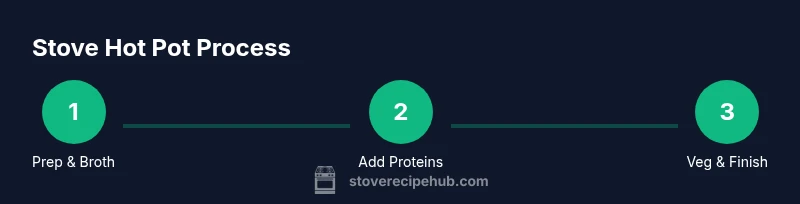
This section focuses on the nuts and bolts of cooking with a stove-top pot. Begin by warming the pot with a little oil to prevent sticking, then build the broth base. Introduce proteins first to start flavor extraction, followed by vegetables with the longest cooking times. Add quick-cooking items near the end, then finish with a final seasoning and aromatics. Adjust heat to keep a gentle simmer and taste as you go. Serving ideas include a simple dipping sauce trio and a light garnish of herbs.
Finishing touches and serving ideas
Finish with a bright acid or a touch of sesame oil to lift the broth’s aroma. Offer a curated set of dipping sauces for variety: a salty soy-based sauce, a tangy vinegar-based sauce, and a spicy chili sauce. Serve with rice or noodles to soak up the broth, and provide small bowls for individual portions. Encourage guests to add ingredients in small batches so textures stay intact and flavors stay vibrant. A well-balanced final pot is both comforting and celebratory.
Troubleshooting common issues on a busy stove
If the pot runs too hot and starts to boil aggressively, reduce the flame and briefly lift the lid to re-stabilize. If vegetables cook too quickly and become limp, remove and refresh the broth, then lower the heat before reintroducing. For bland broth, adjust with a splash of soy sauce, miso, or a hint of citrus. For crowd cooking, pre-portion ingredients and preheat the pot to ensure consistent simmer across servings. Staying patient and attentive keeps the pot delicious and seasonably balanced.
Scaled cooking: adjusting for a crowd on a home stove
When cooking for more people, increase broth quantity proportionally and maintain heat stability, possibly using a second pot. Keep ingredient footprints orderly so you can add items in predictable order. Consider offering two flavor profiles (mild and spicy) to accommodate different palates. Clear communication with guests about cooking times can prevent bottlenecks and ensure everyone enjoys a steady stream of hot, flavorful bites.
Authority sources and further reading we trust
For safe handling and cooking practices, refer to official guidelines from credible sources such as the FDA and CDC. These organizations emphasize proper temperature control, avoiding cross-contamination, and maintaining clean cooking surfaces to ensure a safe, enjoyable stove hot pot experience. Additional insights from university extension programs can offer region-specific flavor ideas and technique refinements.
Tools & Materials
- Deep stock pot with wide base (6-8 qt)(Thick base for even heat; compatible with your stove type)
- Lid for pot(Keeps simmer steady and reduces evaporation)
- Long-handled tongs(Safe handling and quick adding/removing of ingredients)
- Slotted spoon(For lifting ingredients without draining broth)
- Ladle(Portion broth and test seasoning)
- Sharp chef’s knife(For precise slicing of proteins and vegetables)
- Cutting board(Flat, stable surface for prep)
- Measuring spoons and cups(Helpful for consistent seasoning)
- Bowls for ingredients and sauces(Label ingredients to avoid cross-contamination)
- Thermometer (optional but recommended)(Monitor internal temperature for proteins)
Steps
Estimated time: 60-90 minutes
- 1
Prepare workspace and preheat pot
Set up your station with bowls for proteins, vegetables, starches, and sauces. Rinse produce and dry thoroughly. Place a small amount of oil in the pot and heat gently to prevent sticking as you start the broth base.
Tip: Keep a timer handy; you want a steady, gentle simmer, not a rolling boil. - 2
Build the broth base
Sauté aromatics (garlic, ginger, scallions) briefly, then add your liquid base (water, stock, soy-make). Simmer to meld flavors, about 5-10 minutes. Taste and adjust salt or sweetness gradually.
Tip: Avoid over-salting early; you’ll balance with ingredients later. - 3
Prep proteins and marinate lightly
Slice proteins into bite-sized portions. If you have time, a 15-minute light marination with a splash of soy and a little starch can help with texture.
Tip: Uniform sizes help cook evenly and ensure everyone has a good bite. - 4
Chop vegetables in cooking order
Group items by cooking time and texture. Hard vegetables like carrots go in earlier; leafy greens and mushrooms later to keep integrity and color.
Tip: Keep greens in loose piles so they don’t bruise when stirred. - 5
Bring to a gentle simmer and start the pot
Aim for a steady bubble around the perimeter. Add proteins first to extract flavor, then add longer-cooking vegetables half-way through the simmer.
Tip: Keep heat steady and avoid multiple rapid additions that crash the simmer. - 6
Add fast-cooking items and taste
Introduce delicate greens, noodles, and quick-cook proteins near the end. Taste and adjust seasoning, finishing with a splash of citrus or sesame oil if desired.
Tip: Taste early and adjust with small increments to avoid over-seasoning. - 7
Finish with sauces and serving plan
Prepare dipping sauces or a simple soy-vinegar mix. Have bowls ready for each guest and announce when common ingredients are ready to share.
Tip: Offer a variety of textures and flavors to satisfy different palates. - 8
Safety wrap-up and clean-up
Before serving, ensure hot surfaces are cool enough to touch and remind guests to use clean utensils. After the meal, wash pots and tools promptly to prevent residue build-up.
Tip: Never leave a hot pot unattended; safety comes first.
Common Questions
What is a stove hot pot and how is it different from traditional hot pot?
A stove hot pot is a single pot simmered on a standard stove, using a flavorful broth and a sequence of ingredients. Unlike restaurant-style setups, it relies on careful heat control and timing to cook everything evenly in one shared pot.
A stove hot pot uses a single pot on a home stove with careful heat control to cook ingredients in a flavorful broth.
What equipment do I need to make stove hot pot on a standard home stove?
You’ll need a deep, wide pot with a lid, long tongs, a slotted spoon, a ladle, a sharp knife, cutting board, and bowls for ingredients and sauces. A thermometer is optional but helpful for keeping proteins out of the danger zone.
A wide pot, long tongs, a slotted spoon, a ladle, a sharp knife, and cutting board are essential. A thermometer helps with safety.
Can I use a nonstick pot for stove hot pot?
Yes, but avoid very high heat that could damage the coating. Use medium heat for simmering and stir gently to protect delicate ingredients.
Yes, but keep heat moderate and stir gently to protect the nonstick surface.
How should I manage temperature to avoid overcooking?
Aim for a gentle simmer, not a rolling boil. This preserves texture and prevents broth from boiling over when you add ingredients.
Keep it at a gentle simmer to prevent overcooking and spills.
How long does it take to prepare stove hot pot for a family?
Expect about 20-30 minutes for prep and 15-25 minutes of simmering, depending on ingredient quantity and stove power.
Prep usually takes around 20-30 minutes, with 15-25 minutes of simmering.
What safety mistakes should I avoid when cooking stove hot pot?
Don’t leave the pot unattended on high heat. Avoid cross-contamination by using separate utensils for raw and cooked ingredients. Keep surfaces clean and dry to prevent slips and accidents.
Don’t leave it unattended and use clean utensils to avoid cross-contamination.
Watch Video
Top Takeaways
- Prepare a flavorful, balanced broth as the foundation
- Plan ingredients by cooking time to maintain texture
- Maintain a gentle simmer for best results
- Prioritize safety and clean-up as you cook